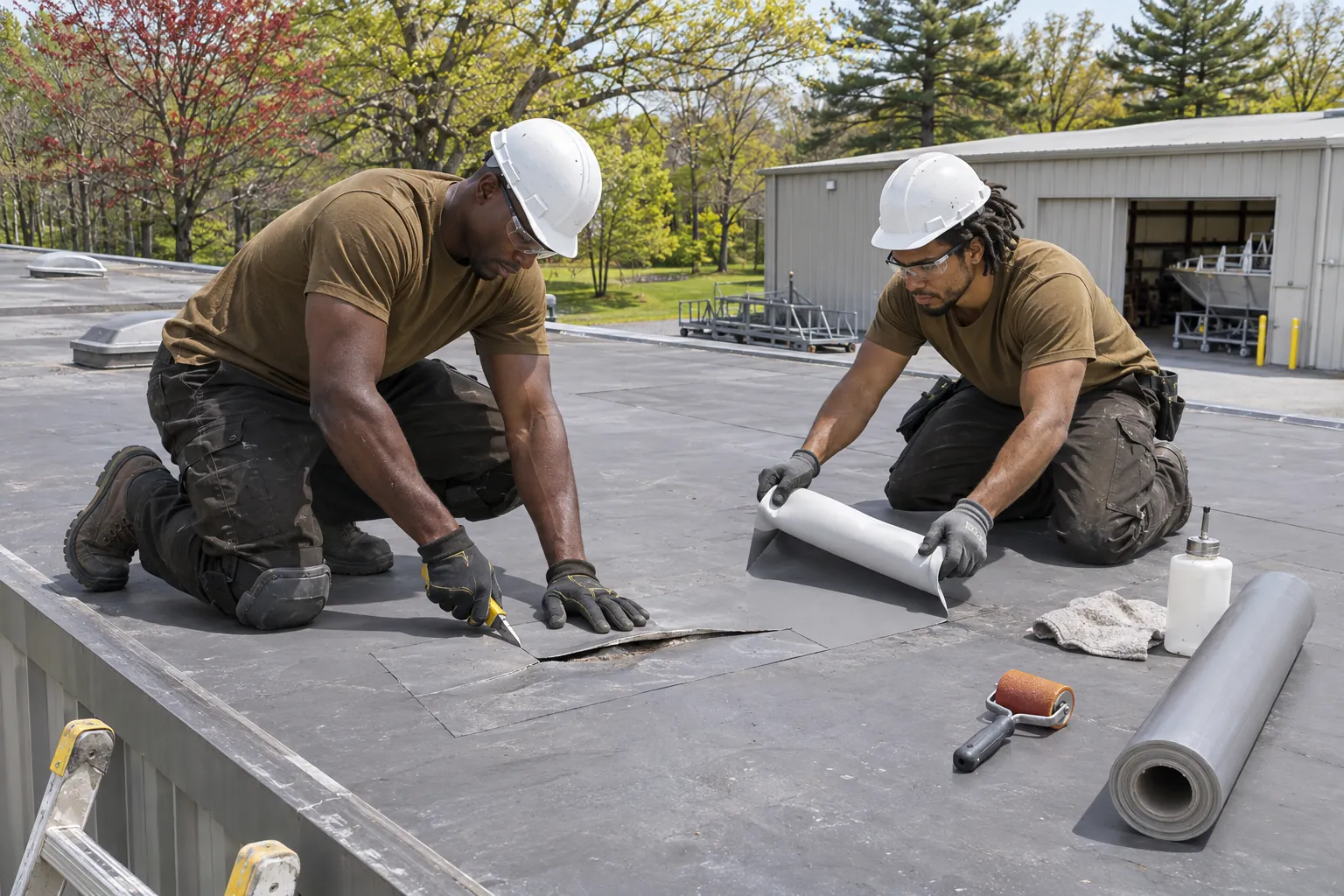
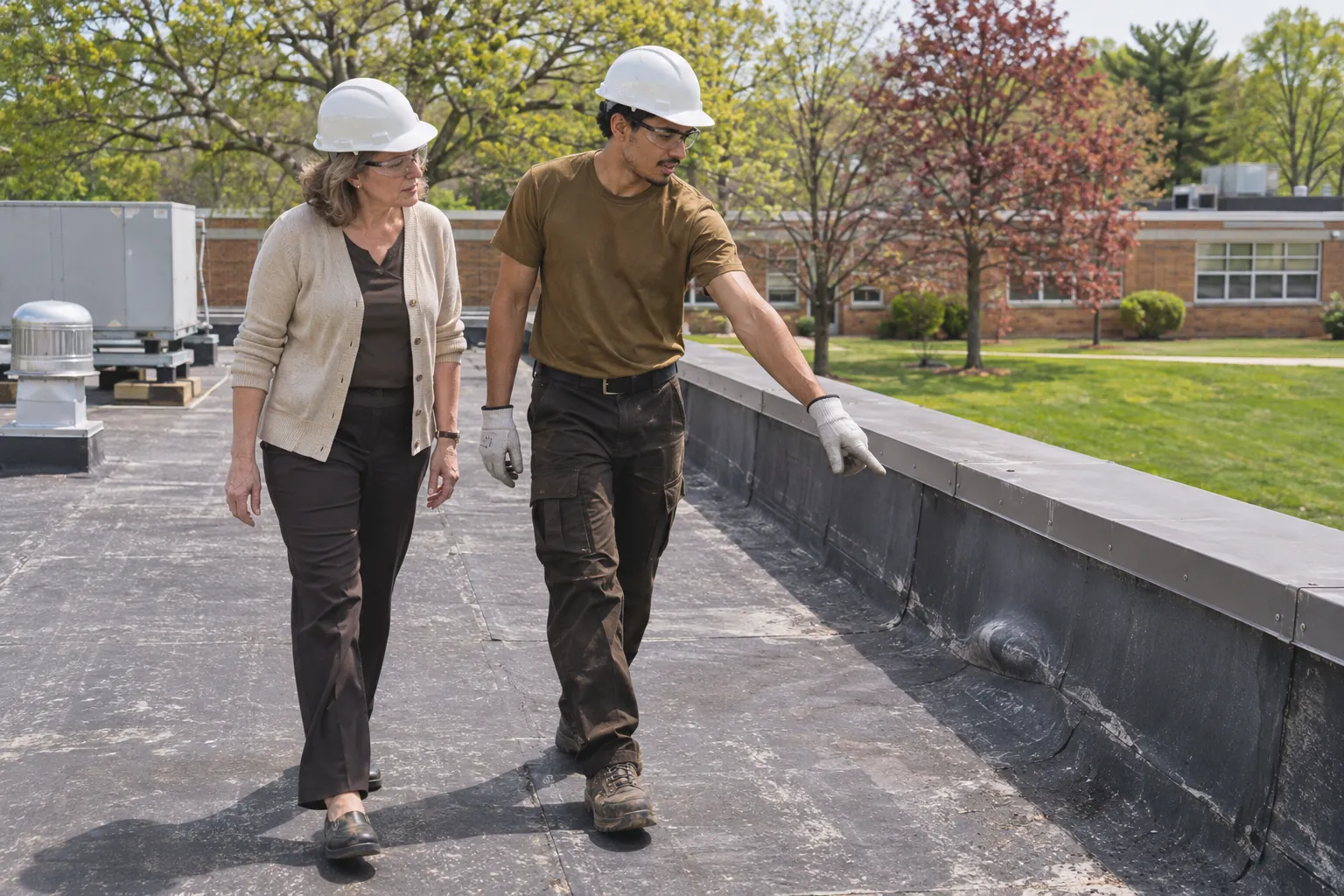
Seams on the Main Flat Roof
Field seams and curb corners on the main building open first from heat cycles and service traffic.
Sealed seams and rewrapped curbs stop the leaks closest to people, files, and computers in the main building.
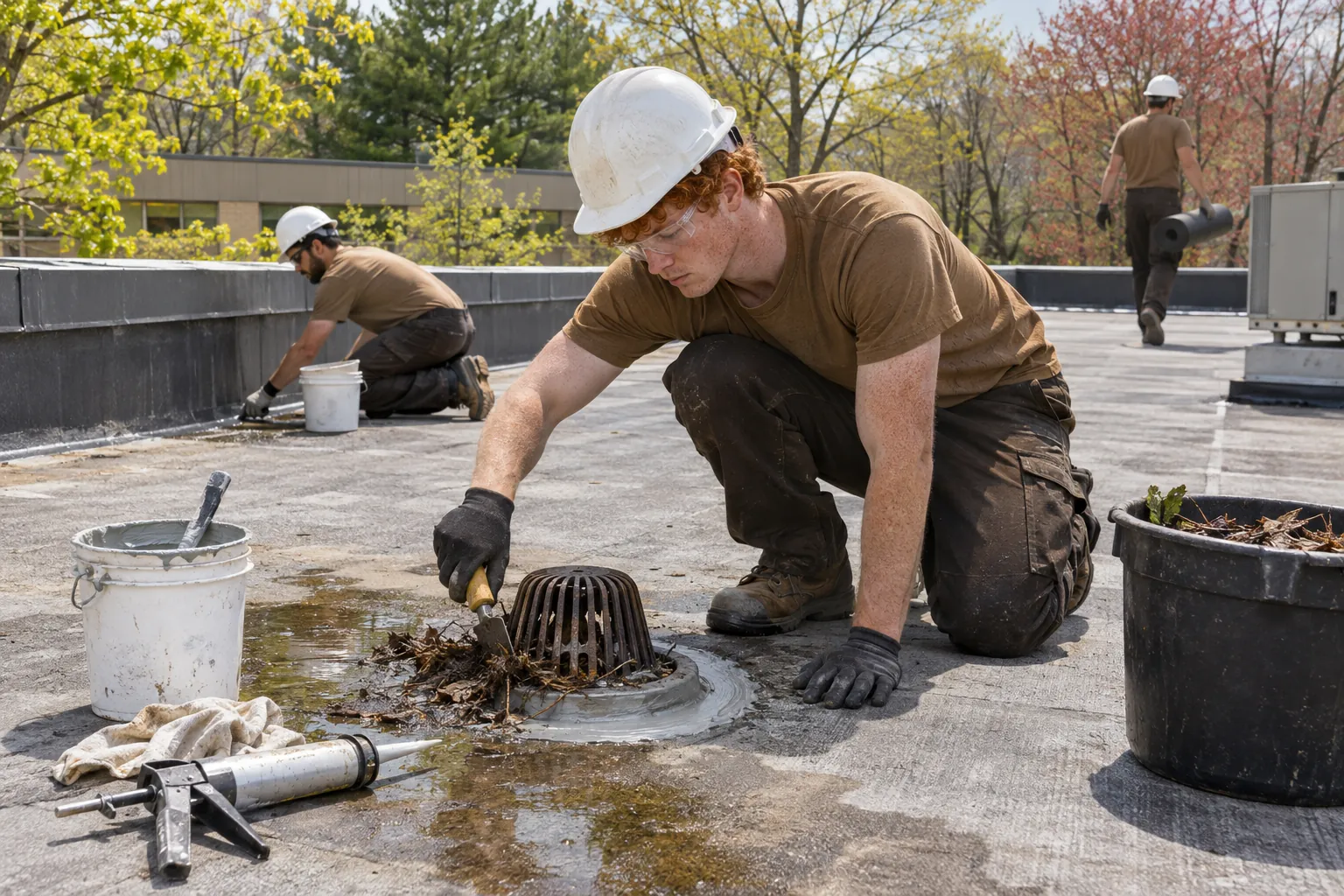
As a Westbrook commercial roof repair contractor, we inspect every building on a property, then repair flat, metal, and built-up roofs in one planned visit.


Plenty of properties here hold more than one building: an office with a flat roof, a metal shop out back, a storage shed with an older built-up roof. Westbrook commercial roof repair on these sites works best when every roof gets looked at in the same visit instead of one emergency at a time.
Each roof type fails differently. Membranes open at seams and curbs, metal panels leak at screws and laps, and built-up roofs blister and crack at the edges. One inspection sorts them by urgency, so the owner can repair the worst now and plan the rest for a later season.
Different roofs on the same lot show different warning signs. These are the ones that bring owners to call.
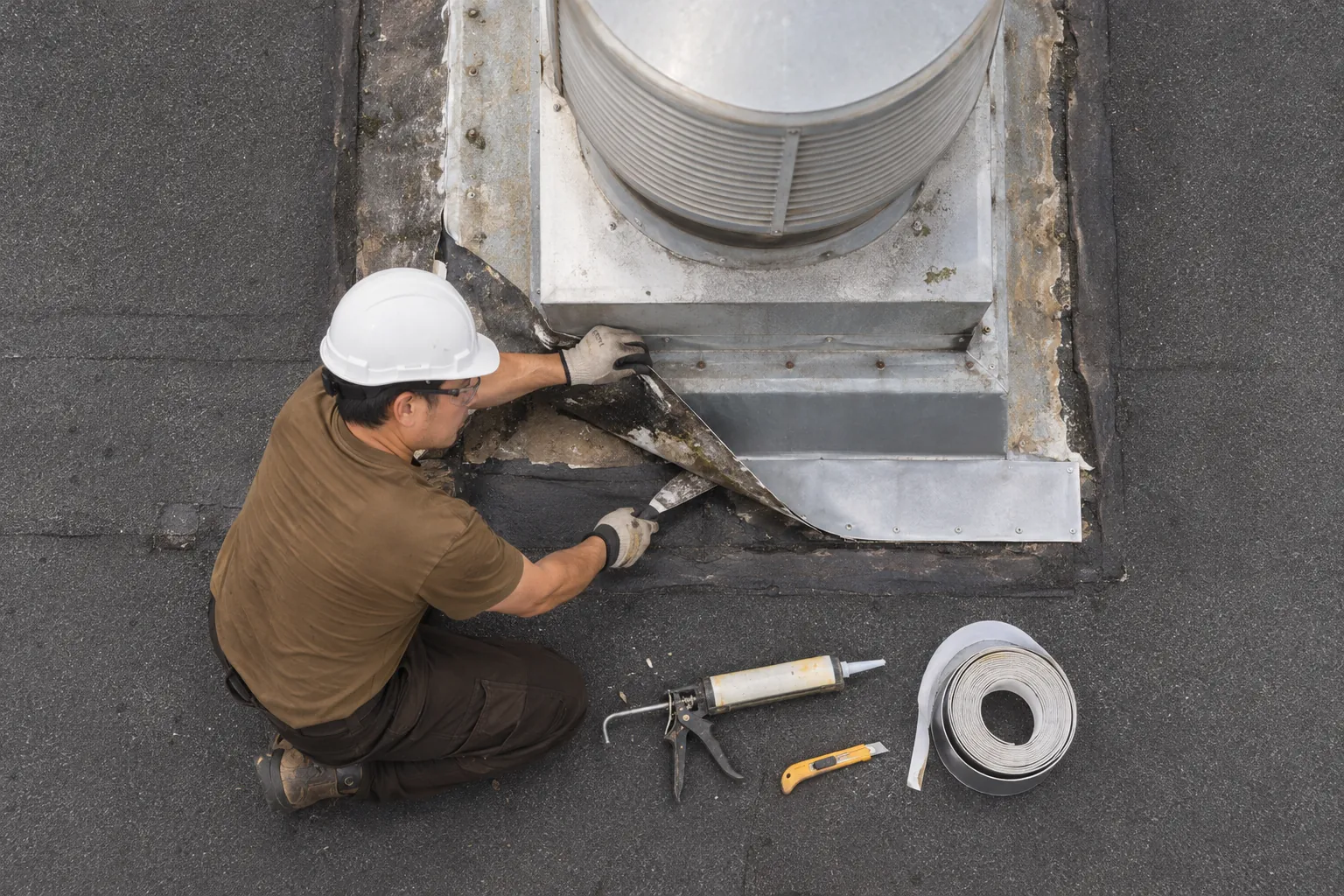
Membrane seams near a rooftop unit or a vent boot have opened, letting water run along the deck to the stain below.
We trace back from the stain, clean and seal the open seam or boot, and rewrap any curb flashing that has split.
Worn rubber washers on panel screws and loose end laps let rain in, most often near the ridge and along the eave.
Failed screws are replaced with oversized fasteners and new washers, and end laps are cleaned and resealed with butyl tape.
Moisture trapped between layers of a built-up roof heats up and lifts the top plies into bubbles that crack open.
Blisters are cut, dried, and patched with matching plies, and cracked flashing at the shed's edges is rebuilt.
Gutters and downspouts from one roof empty onto a lower roof or against a wall, overloading the flashing there.
Discharge points get redirected, splash pads or extensions are added, and flashing where the roofs meet is resealed.
Treating the whole property at once keeps one roof's problem from becoming another building's leak.
Field seams and curb corners on the main building open first from heat cycles and service traffic.
Sealed seams and rewrapped curbs stop the leaks closest to people, files, and computers in the main building.
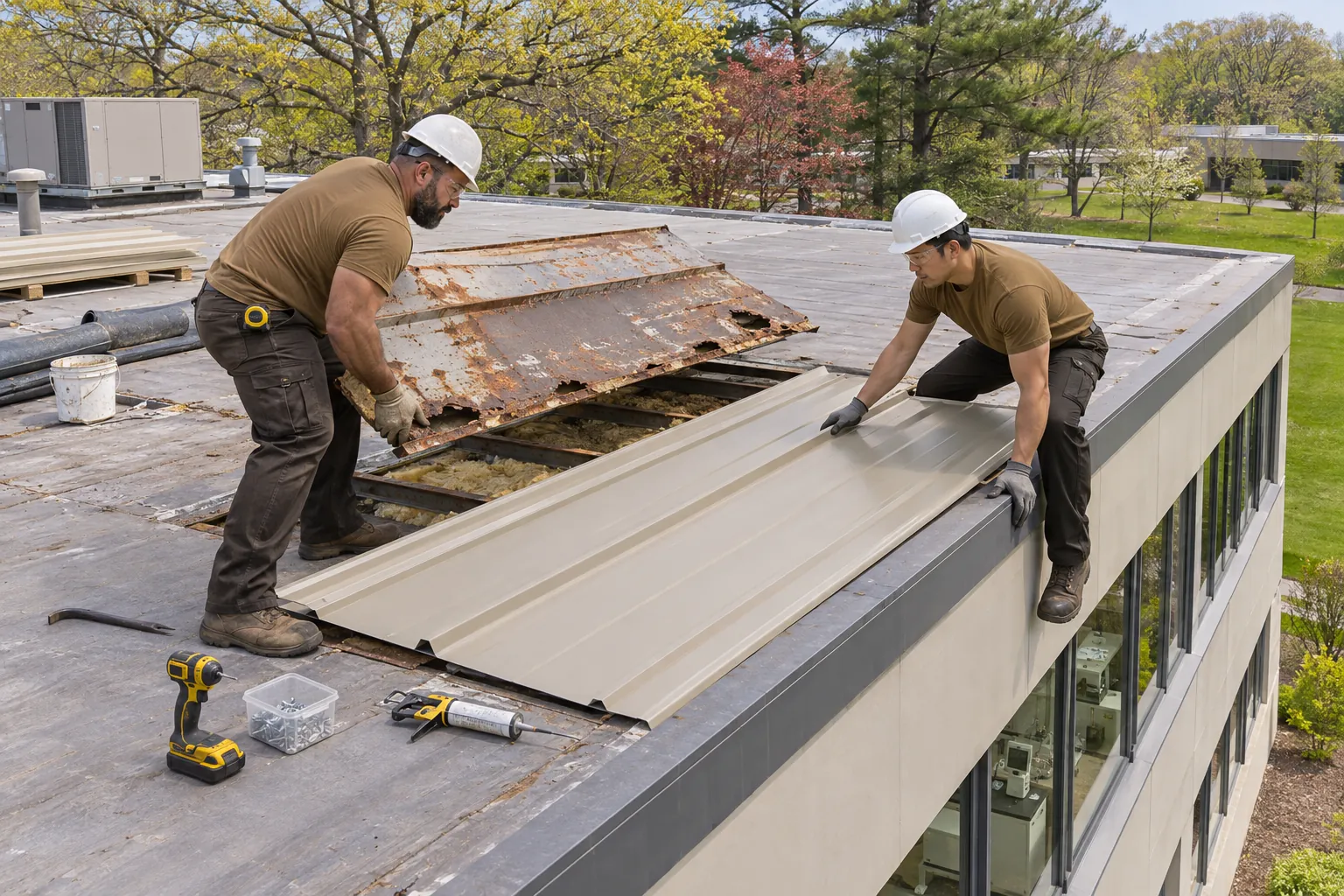
Rubber washers dry out and screws back out on metal sheds and shops across the lot.
New fasteners along the worst rows close dozens of small leaks in one pass.
Gravel stops and edge flashing on aging built-up roofs crack and let water under the plies.
Rebuilt edges with matching felts keep water off the deck of the oldest building.
Runoff from upper roofs and gutters wears the flashing on lower roofs and walls nearby.
Redirected downspouts and resealed transitions keep each roof handling only its own water.
Each building on the property gets the repair that fits its roof. These four cover most Westbrook sites.

Main offices and storefronts with flat roofs get seam repairs, drain work, and new curb flashing, planned with the rest of the property so one setup covers several roofs and nobody pays for repeat trips.
Flat Roof Repair details
Metal shops and sheds on the same lot get fastener replacement, lap sealing, and rusted panel swaps with matching profiles during the same visit as the flat roof work.
Commercial Metal Roof Repair details
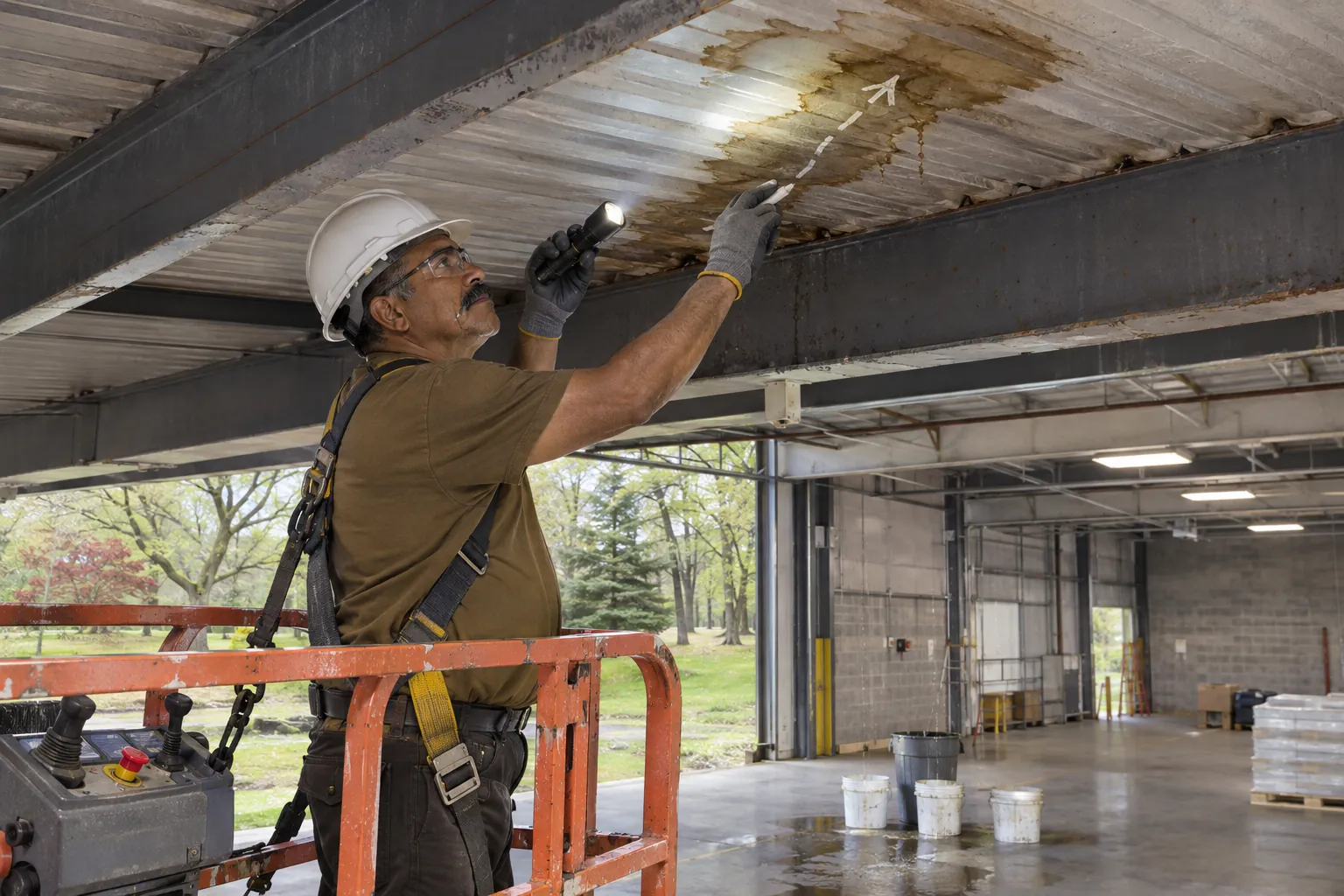
When it is unclear which building the water starts on, tracing from each stain uphill finds the open seam, screw, or flashing on the right roof before anything gets cut open.
Commercial Roof Leak Repair details
Larger shop or production buildings on the parcel get equipment curbs, exhaust areas, and worn walkways repaired in sections that keep the work inside going.
Industrial Roof Repair details
Request an estimate and list each building with its roof type and where the water shows. We plan one visit that covers all of them.
One inspection and one ranked list lead to repairs the owner can schedule building by building.
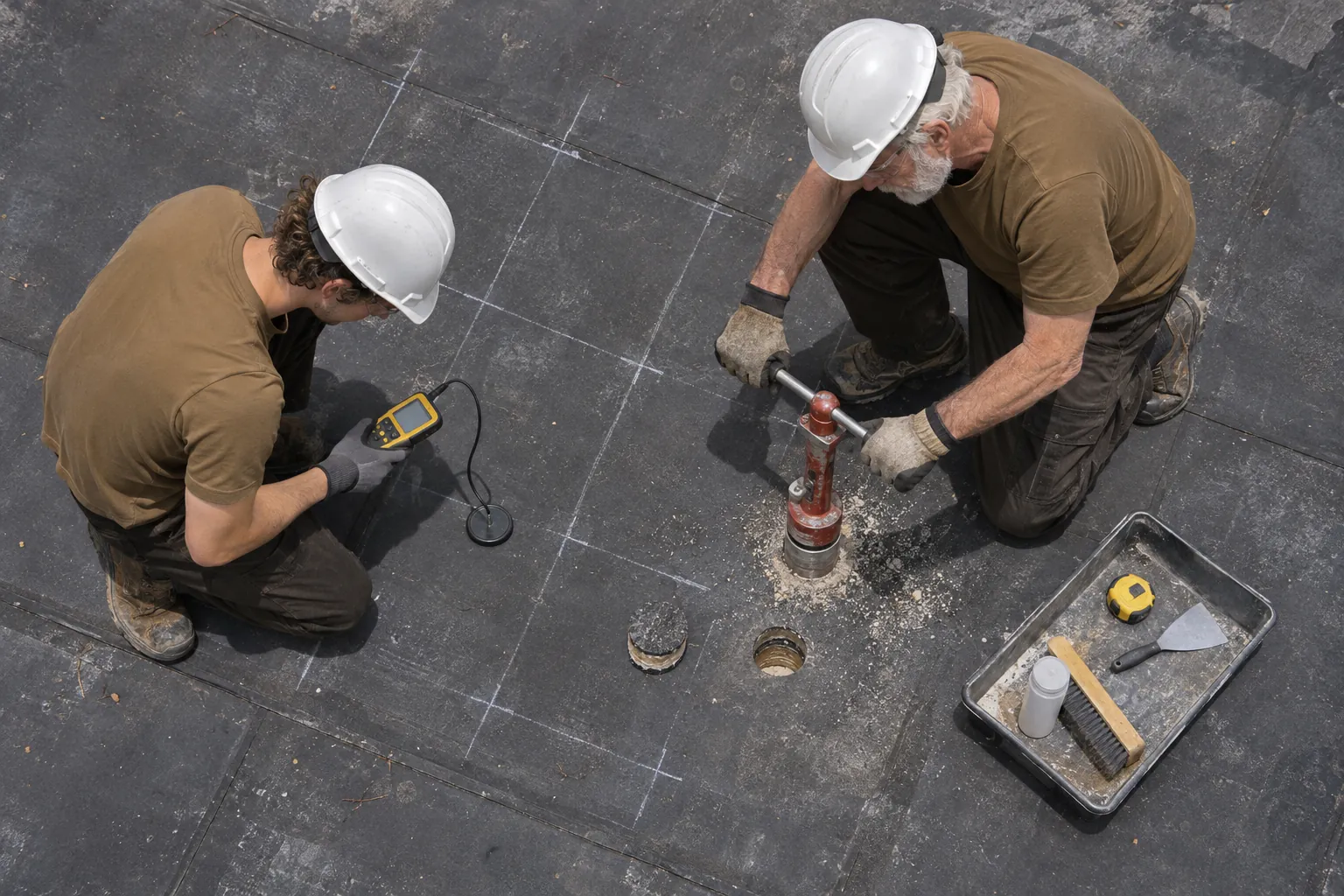
Inspection covers the main roof, outbuildings, and the transitions between them. Seams, fasteners, edges, drains, and gutters are photographed on each building.
Findings go on one list in order of how much water each problem admits. Owners see which leak to stop now and which panel or seam can wait.
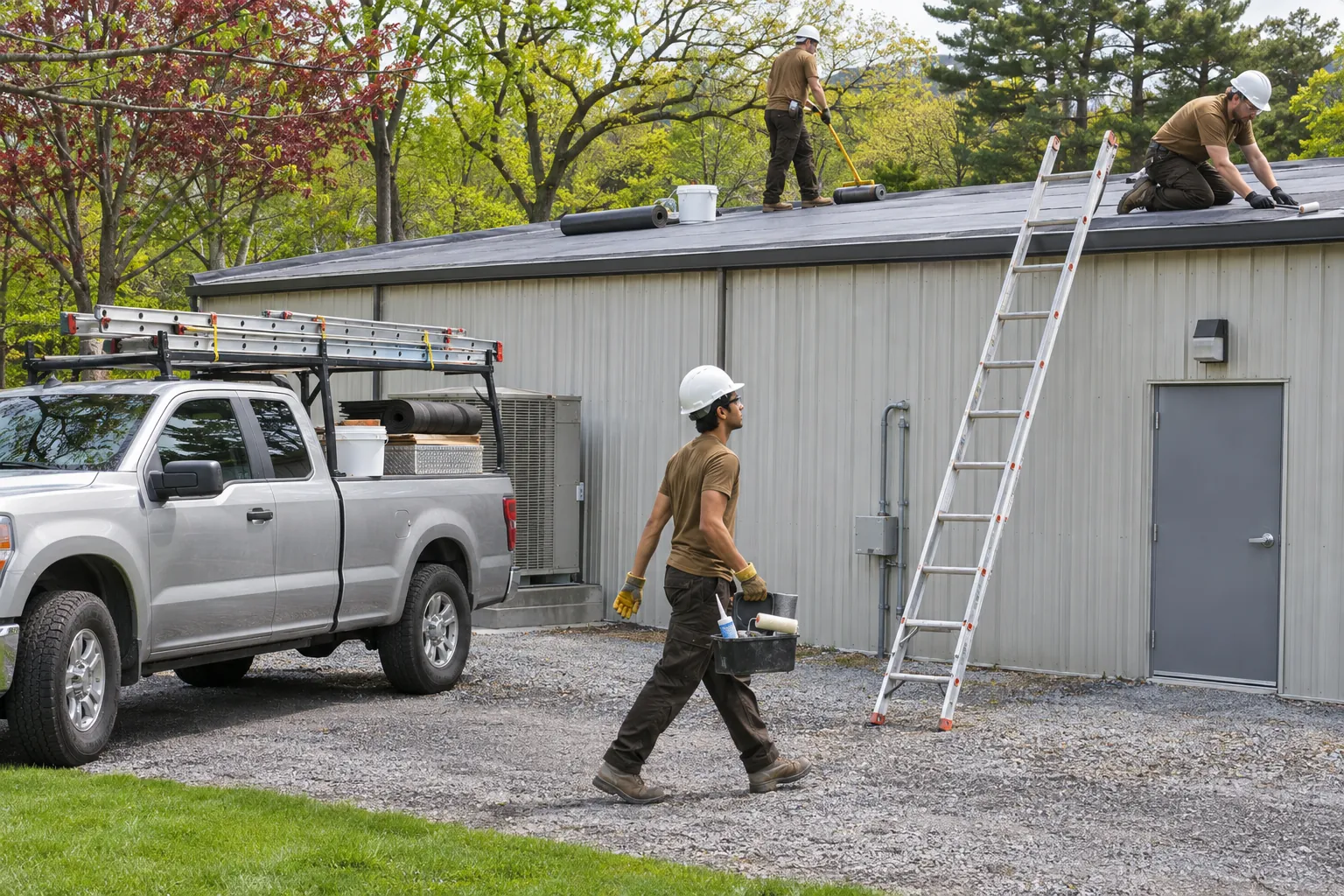
Crew, ladders, and materials stay on site while each approved repair is made, from curb flashing on the office to screws on the back shed.
Photos and notes are grouped by building, so the next inspection starts from a clear record of every repaired seam, panel, and edge.
Westbrook is one of fifteen towns where we take commercial roof repair work. Property in another town? Call us or send us a message and we will let you know if we can reach it.

Businesses
It covers every roof on the property in one inspection: flat roofs on offices or shops, metal panels on outbuildings, and older built-up roofs on sheds. Each problem is photographed and ranked, then repaired with materials that match that roof. One setup for the whole site keeps the work organized and the visit short.
Finding Help
Call or request a free estimate and list the buildings on the lot, their roof types if known, and where leaks show. That lets us bring the right materials for membrane, metal, and built-up repairs and plan one visit that reaches every roof instead of several trips.
Priorities
Start with the roof over people, records, or equipment that water would damage most, then the one letting in the most water. A leak over an empty shed matters less than a drip over an office. The ranked list from the inspection puts those choices in front of you with photos.
Mixed Roofs
Yes. Repair crews carry membrane, seam tape, and flashing for flat roofs along with fasteners, butyl tape, and matching panels for metal roofs. Bringing both on one trip avoids paying for a second setup. Panels in an unusual profile sometimes need ordering, so those swaps get scheduled once they arrive.
Records
A record shows which seams, curbs, and panels were repaired and when. On the next inspection, new damage stands out against the old repairs, and you can see if one roof keeps failing. That history also helps when deciding whether an older building's roof is ready for replacement.
Tell us how many buildings sit on the property and where water shows. We inspect them all and repair them in one visit.