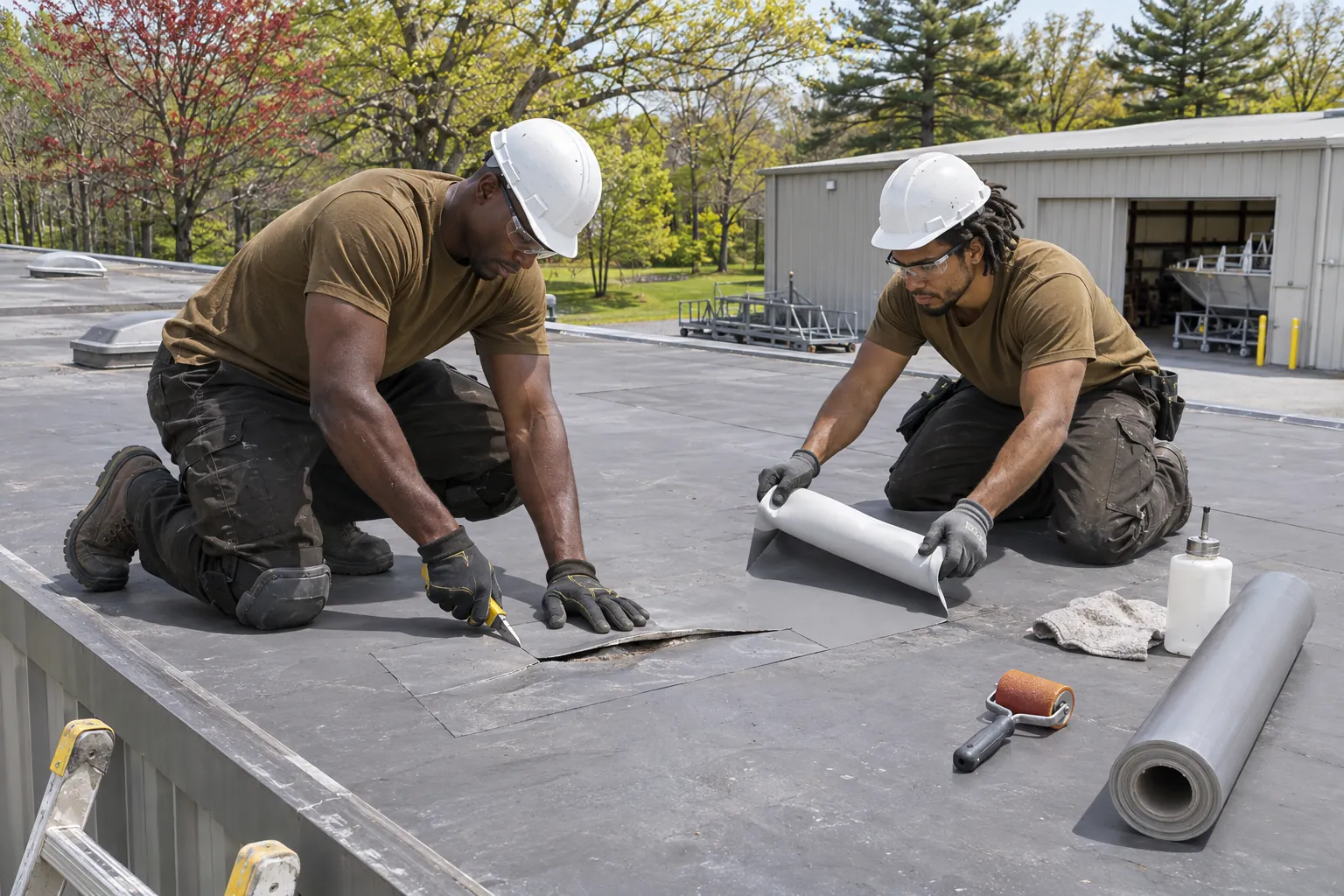
Roof Edges
Every gust tugs at perimeter metal, and fasteners that loosen in one storm let go entirely in the next.
Refastened edge metal with added cleats holds the membrane down at the perimeter, where wind uplift is strongest.
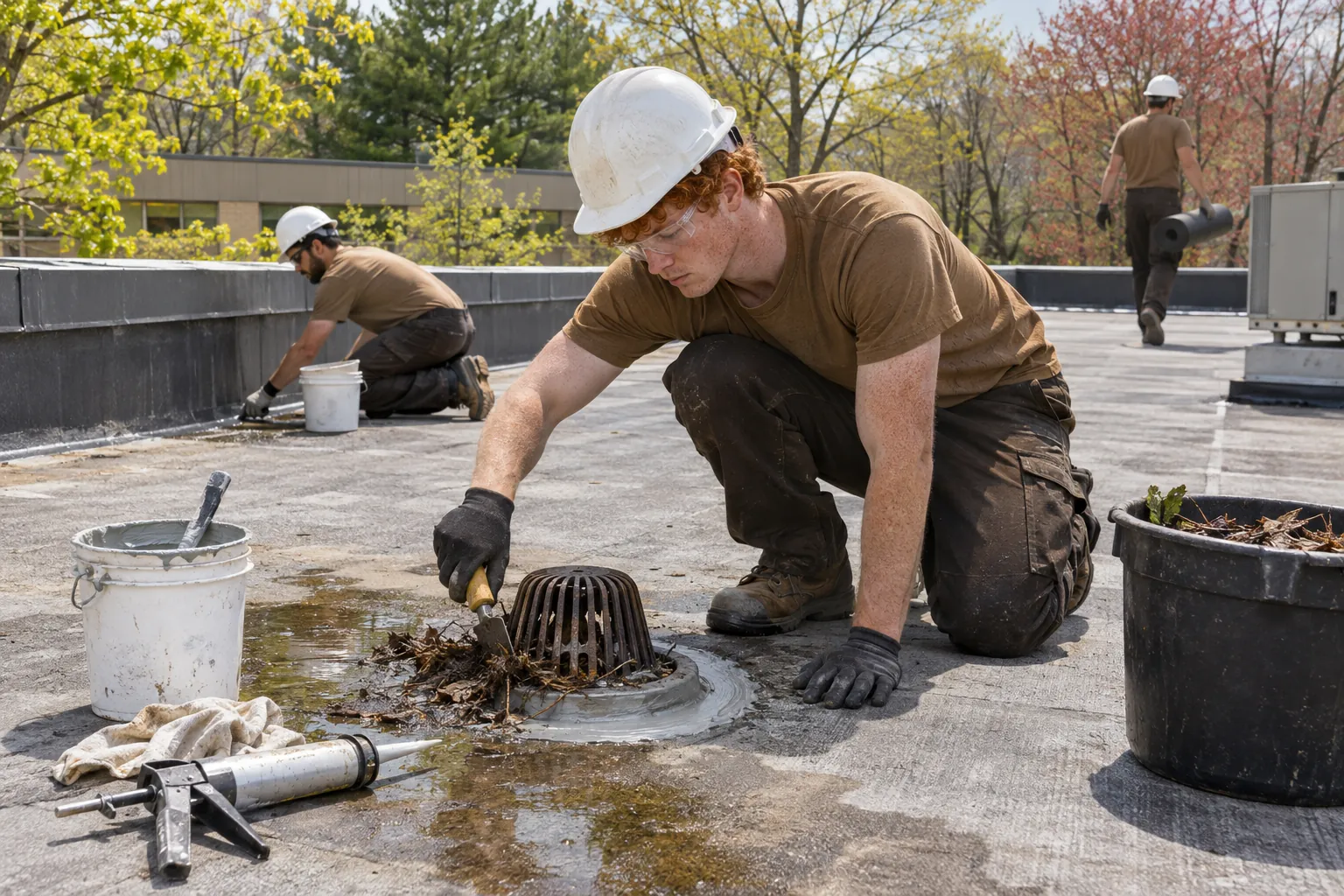
As a Poquonock Bridge commercial roof repair contractor, we check and repair roofs after nor'easters, starting with lifted edges, loose perimeter metal, and drains clogged with debris.


Poquonock Bridge commercial roof repair calls often follow a nor'easter, when hours of wind-driven rain and strong gusts hit the roof from one direction. Edges, perimeter metal, and wall flashings take the worst of it, and debris piles into drains.
A storm check covers the whole perimeter along with the spot that leaked. Lifted edge metal left alone becomes the place wind catches during the next storm, so we refasten and reseal it while the crew is already on the roof.
After a hard storm, these are the problems owners call about most, with the roof detail behind each and the repair we make.
Wind gets under loose edge metal or coping cleats and pries the perimeter up, often tearing the membrane that turns down the wall.
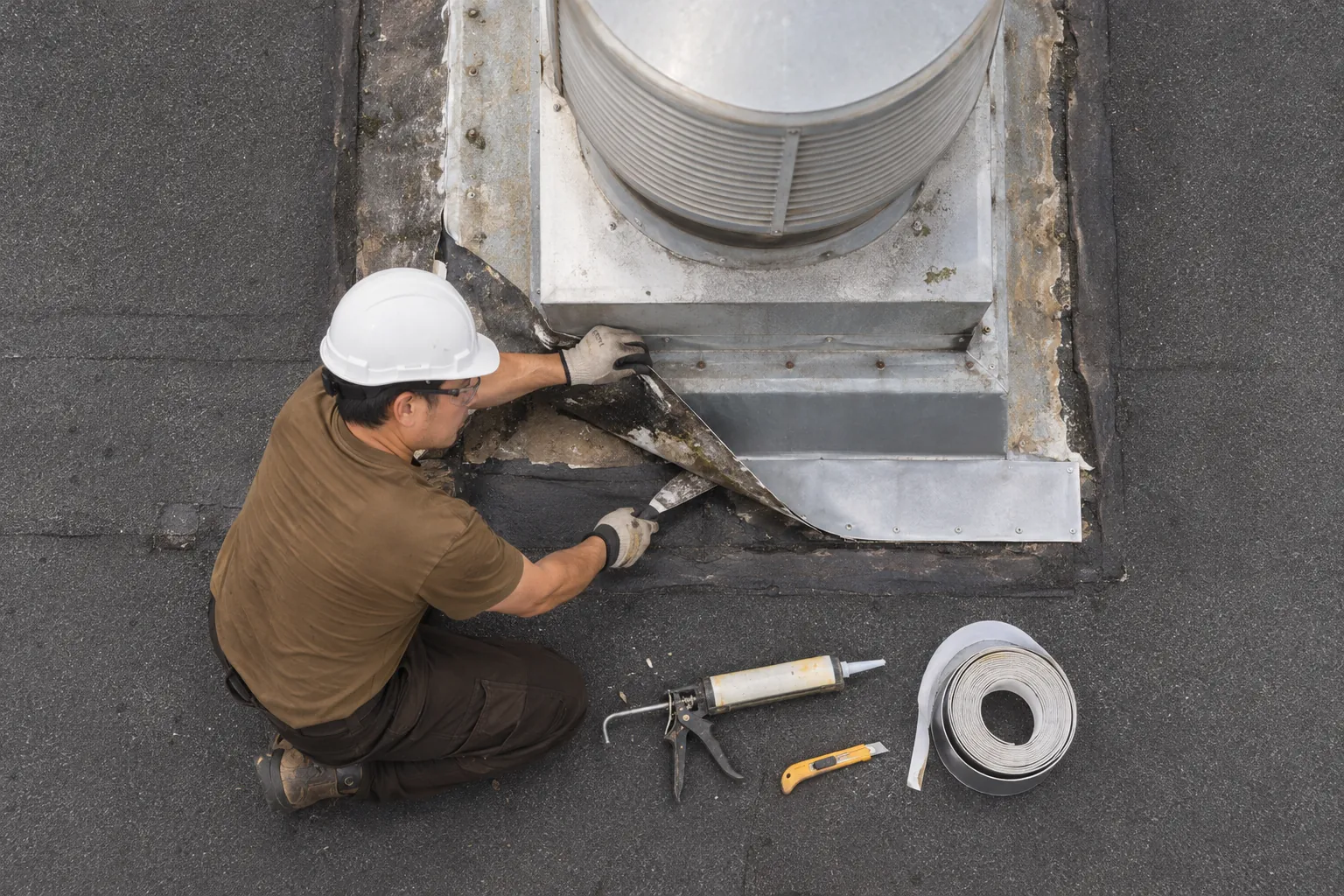
We refasten or replace the edge metal, reseal the membrane at the perimeter, and add cleats where the old ones pulled out.
Gusts push water into wall flashing, window heads above the roof, and laps facing the storm, openings that ordinary rain runs past.
The windward walls and laps get checked first, and every open joint is resealed or reflashed before the next storm arrives.
Branches and leaves blown onto the roof pack into drain strainers and scuppers, so rain backs up across the membrane.
Drains get cleared, strainers reset, and the membrane around each outlet inspected for punctures from blown debris.
Flying debris or a lifted edge can slice the membrane in the open field, and water then spreads into the insulation below.
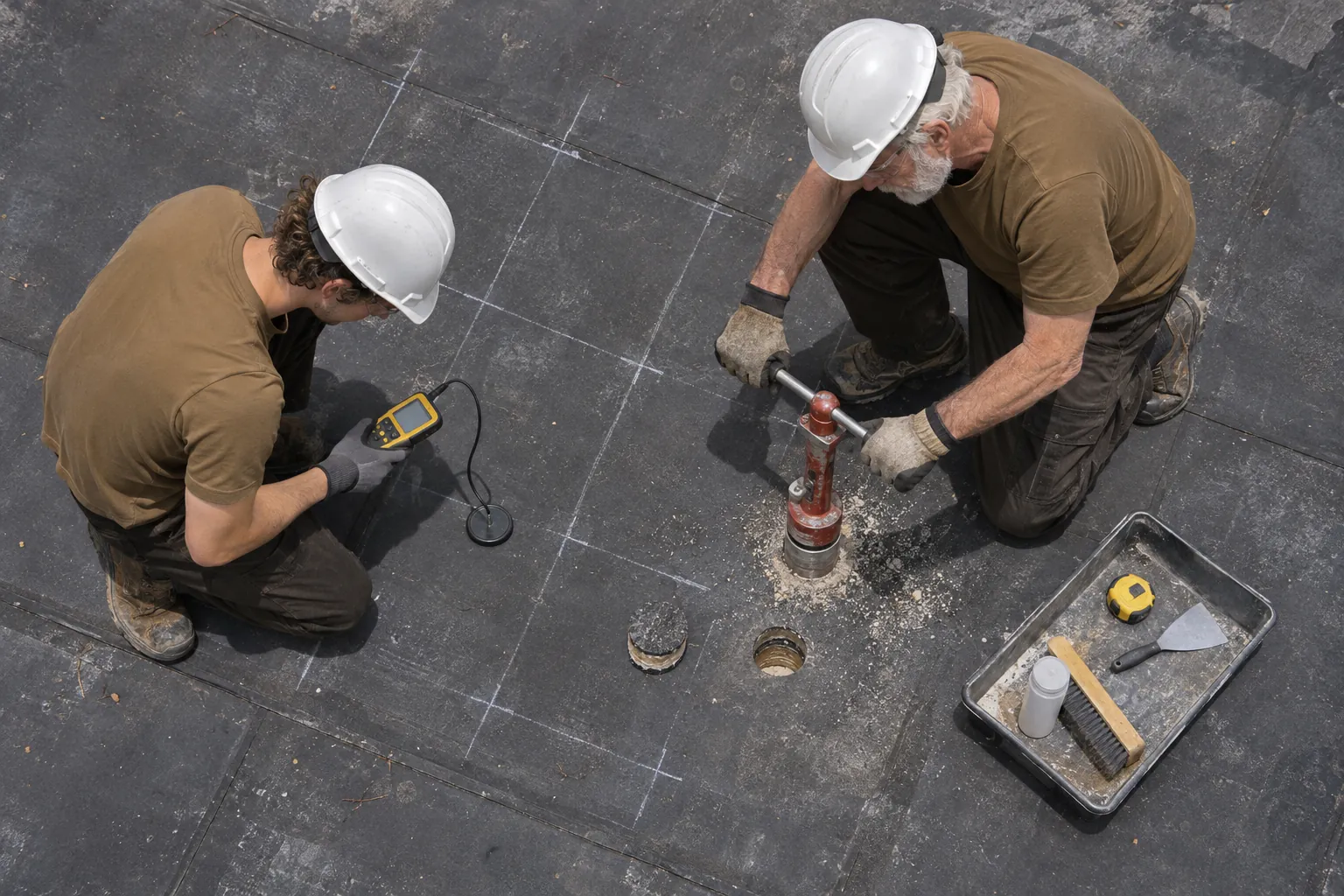
Moisture readings map any wet area, wet insulation gets replaced, and a heat-welded or adhered patch closes the tear.
Fixing storm damage soon after it happens keeps a small opening from turning into the next storm's bigger leak.
Every gust tugs at perimeter metal, and fasteners that loosen in one storm let go entirely in the next.
Refastened edge metal with added cleats holds the membrane down at the perimeter, where wind uplift is strongest.
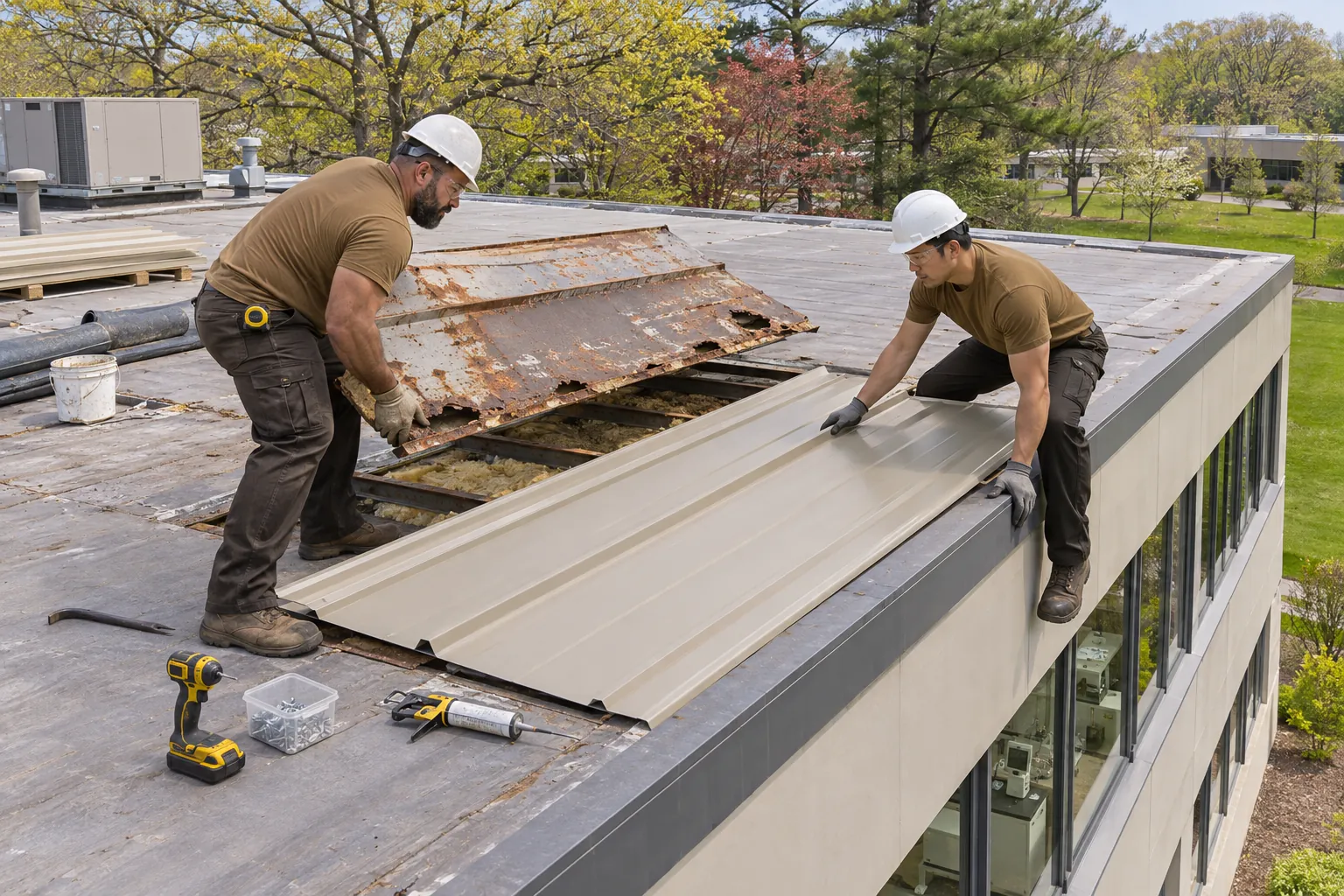
Wind-driven rain finds small gaps at counterflashing and coping joints that stay dry in ordinary weather.
Resealed and reflashed joints on the storm-facing walls close the openings that only show up during nor'easters.
Storm debris clogs outlets right when the roof needs them most, leaving water to sit on seams.
Clear drains and reset strainers move storm water off quickly, which spares the seams from long soaking.
Roof damage left undocumented is hard to sort out later with an insurer or a landlord.
Dated photos of each torn seam, lifted edge, and clogged drain give you a clear record before and after the repair.
Retail plazas, offices, and shop buildings here face the same storms, and each roof type takes a different kind of repair.

Flat roofs get torn membrane patched, perimeter edges resealed, and clogged drains cleared, with wet insulation replaced where storm water got under the field.
Flat Roof Repair details
Metal roofs get lifted trim and ridge caps refastened, wind-loosened screws replaced, and panels with storm dents or open laps repaired or swapped out.
Commercial Metal Roof Repair details
Leaks that appear only in wind-driven rain get traced to the walls, laps, and flashings facing the storm before any repair starts.
Commercial Roof Leak Repair details
Industrial buildings get equipment curbs, exhaust fan hoods, and loose rooftop items checked after high winds, with flashing resealed where anything shifted.
Industrial Roof Repair details
Call and tell us which side of the building took the wind, where water showed inside, and whether any metal is hanging loose. Stay off the roof until it is checked.
After a storm, these four steps move from a safety check to a closed repair and a clear record for your files.
First on the roof, any hanging edge metal, coping, or flapping membrane gets tied down or removed so it can't blow off or injure anyone below.
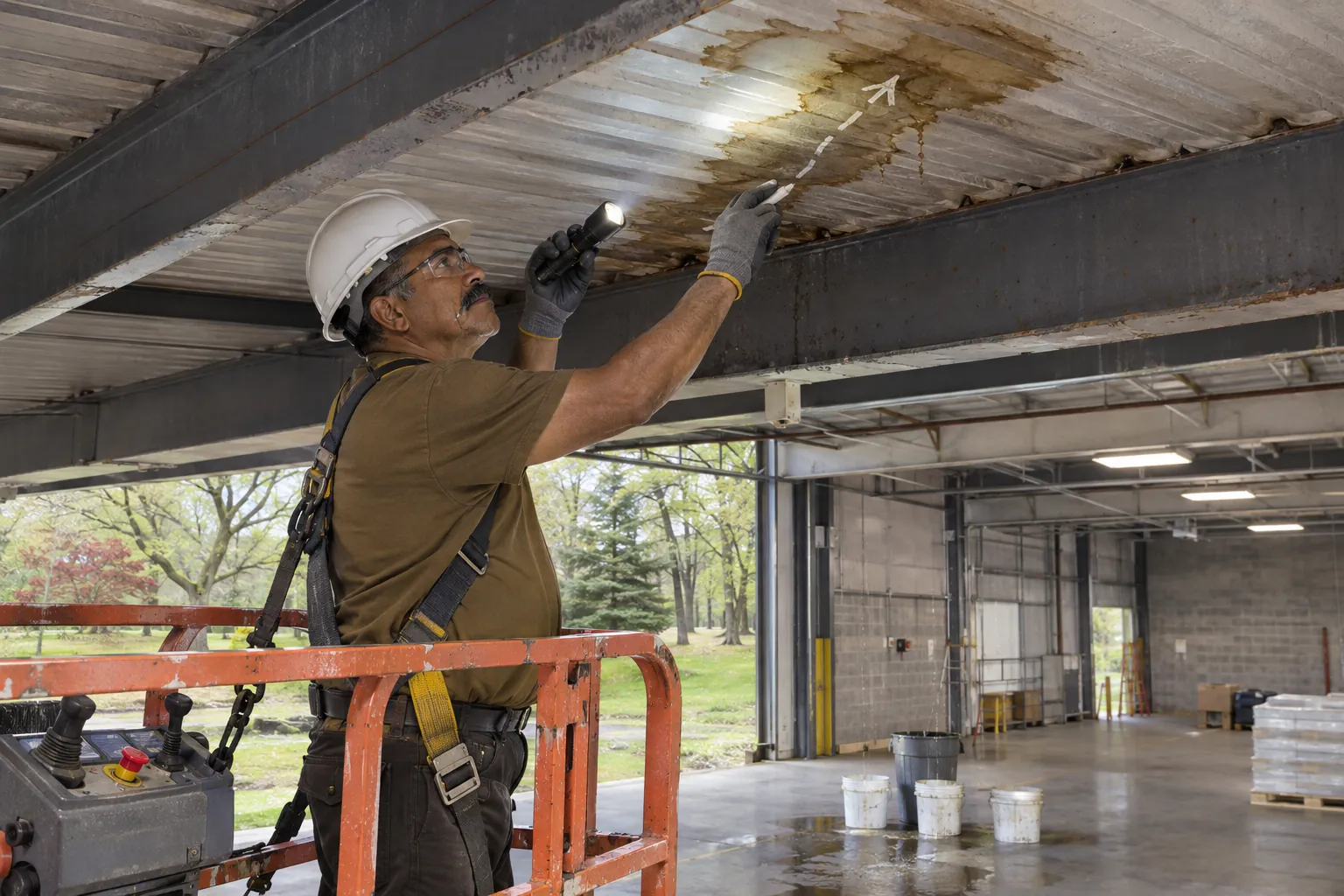
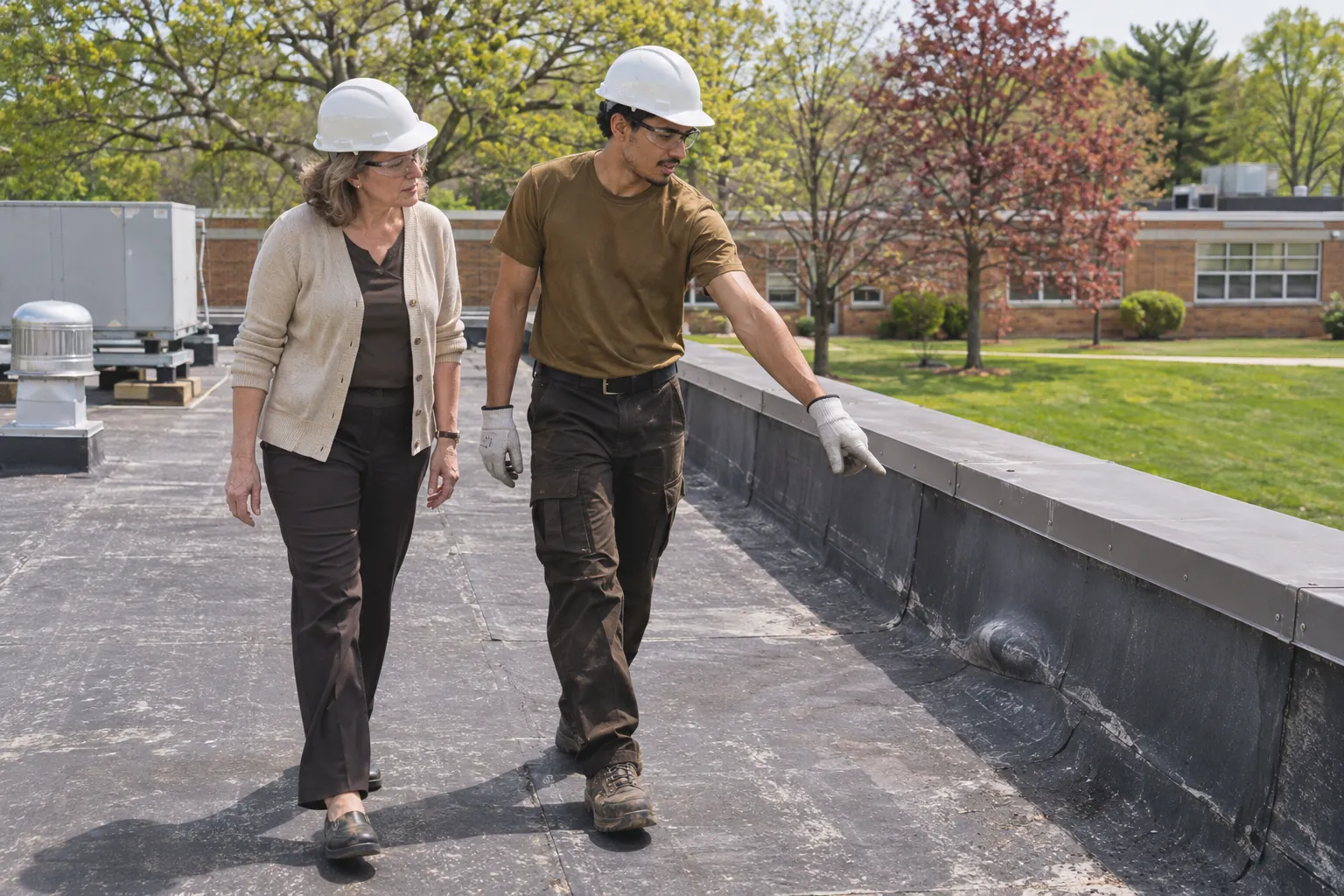
Next comes a full lap of the roof edge, windward walls, rooftop units, and every drain, with photos taken of each problem as it is found.
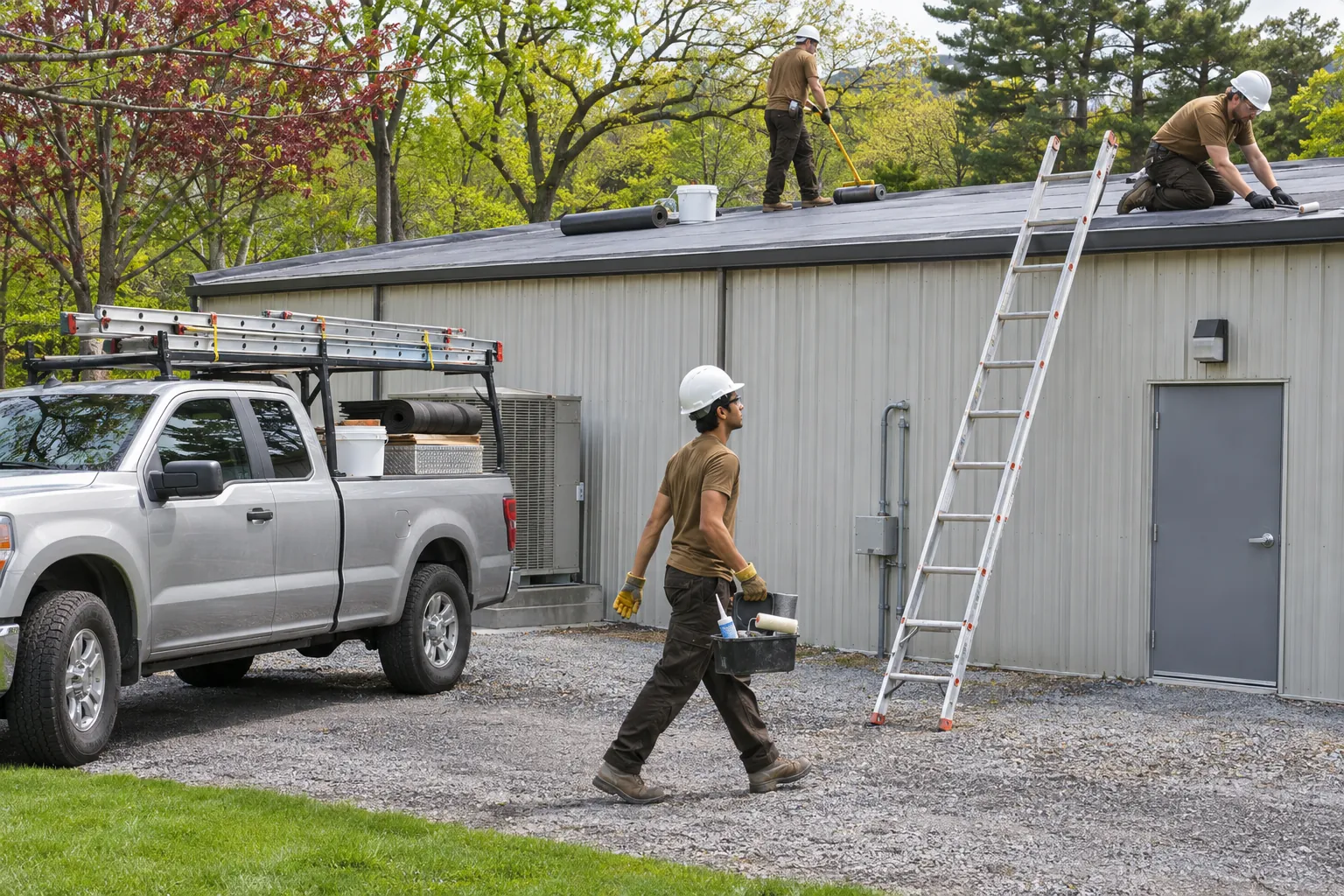
Torn membrane, loose edge metal, open flashing joints, and clogged drains get fixed in order of how much water each one can let in.
Before-and-after photos with notes on each roof repair go to the owner or property manager, ready for an insurance claim or lease discussion.
We handle commercial roof repair in Poquonock Bridge and fourteen other towns near Groton. Not on the list? Call us or send us a message to see if we can help.

Repair Cost
The amount of edge metal to refasten or replace, the size of any torn membrane, and how much insulation got wet set most of the cost. Debris removal, drain repairs, roof height, and how many walls need new flashing also change the price we quote after inspecting.
Finding Help
Call with the address, which side of the building faced the wind, and where water shows inside. We set up a storm check, secure anything loose first, and photograph each problem at the edges and drains so you have records for the owner, landlord, or insurer.
Inspection Timing
Plan a check once the wind has dropped and the roof is safe to walk, ideally before the next rain. Lifted edges and torn seams that go unrepaired let in more water with every storm, and early photos make damage easier to document for an insurer.
Insurance
Yes. Dated photos of lifted edge metal, torn membrane, and clogged drains, taken before and after the repair, give your insurer a clear record. We note where each problem sits on the roof and what was done, and you decide how to use that file with your carrier or landlord.
Roof Edges
Wind speeds up as it passes over the building's edge, creating uplift that is strongest at corners and perimeters. Edge metal held by a few corroded fasteners or a failed cleat peels up there first, and once it lifts, the membrane underneath can tear. Extra fastening and new cleats keep it down.
Tell us what the wind did to your roof, and we'll secure it, repair the openings, and send you photos.