Equipment Curbs
What Wears Out
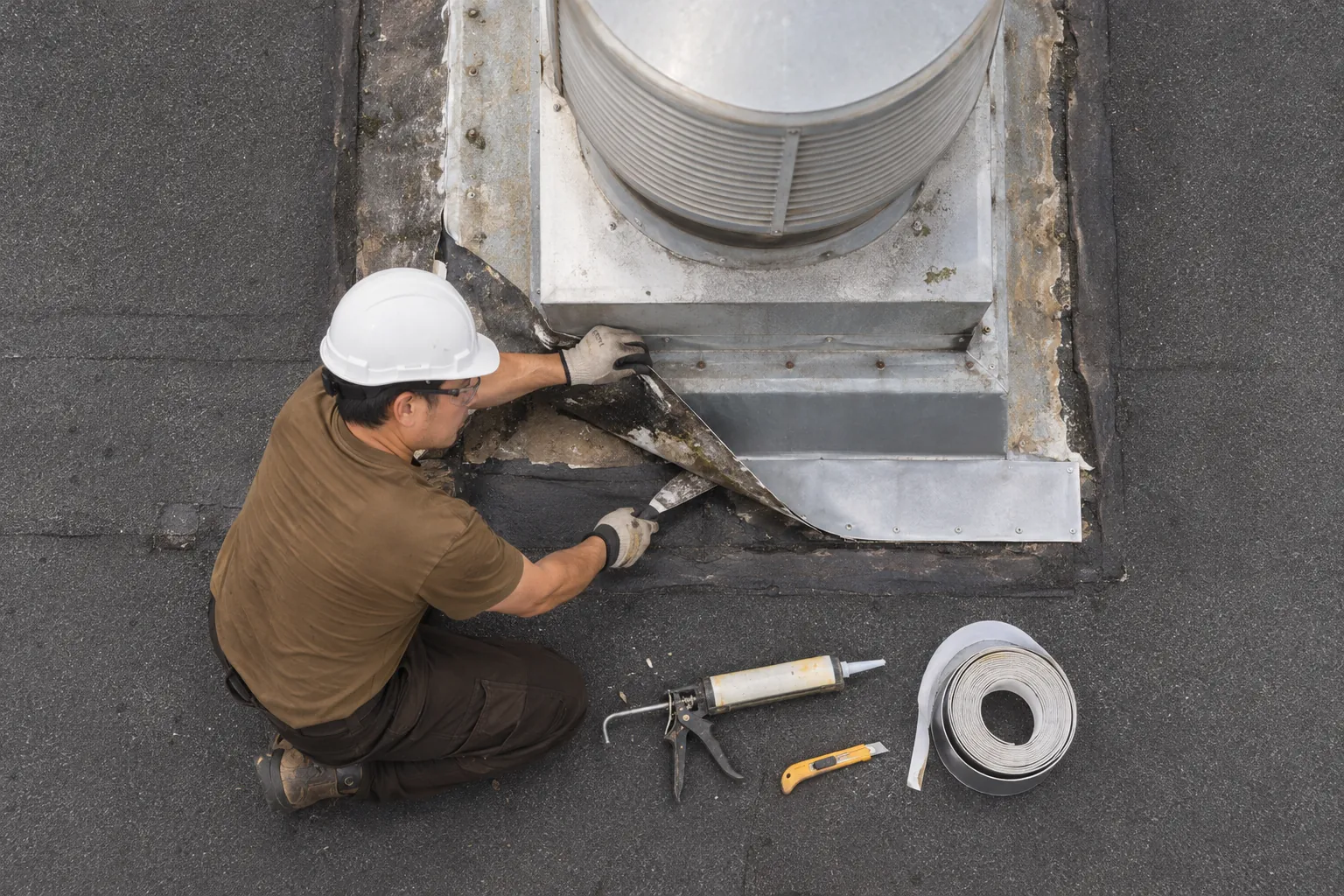
Heavy units sit on curbs whose flashing cracks from vibration, heat, and repeated service visits.
What The Repair Does
Rebuilt curb flashing and tight counterflashing keep water off the equipment and the floor below.

As a Groton industrial roof repair contractor, we repair membrane, metal, and flashing around fans, curbs, and wide spans on plants and fabrication buildings.
Groton industrial roof repair ranges from one fan curb to a full section of a plant roof. The table shows how scope grows.
A leak at one fan or curb
Damage limited to the curb flashing
Reflash the curb with heat-rated material
Single leaks near equipment
Several leaks in one bay or zone
Wet insulation and worn membrane in that zone
Repair the zone in phases around production
Plants with one worn area
Leaks across many bays
Wet insulation across much of the roof
Plan a phased replacement
Roofs at the end of their life
Plant roofs carry equipment, exhaust, and foot traffic that ordinary roofs never see.
Heat, grease, and process exhaust soften or crack membrane around the fan, and the curb flashing pulls loose from vibration.
We replace the damaged membrane, reflash the curb with material rated for the heat, and add a containment pad where grease collects.
Technicians cross the same route to reach equipment, and tools, boots, and dropped screws puncture the membrane along it.
Punctures get patched and walkway pads go down along the service route, so traffic stays off the membrane.
Skylight curbs and crane bay roof transitions add joints, and building movement works them open over time.
Curb and transition flashing is rebuilt, cracked skylight panels are noted for replacement, and joints are resealed.
Salt air near the water and exhaust from welding or coating work corrode edge metal, fasteners, and gutters.
Corroded edge metal and fasteners are replaced with materials suited to the exposure, and the roof edge is sealed again.
Industrial repairs protect the production floor as much as the roof.
Heavy units sit on curbs whose flashing cracks from vibration, heat, and repeated service visits.
Rebuilt curb flashing and tight counterflashing keep water off the equipment and the floor below.
Grease and heat break down membrane around fans long before the rest of the field wears.
Heat-rated membrane and grease pads stop that damage from spreading outward.
Foot traffic, dropped tools, and carts puncture membrane between roof hatches and units.
Patched punctures and walkway pads give technicians a durable path.
Long roof spans flex more, so seams and fastener plates in the field loosen over time.
Resecured plates and resealed seams keep wide sections tight through wind and temperature swings.
Call with the building use, the equipment near the leak, and the hours the floor runs, so the repair can be staged around production.
Plant repairs start with an inspection and a ranked list, then move zone by zone.
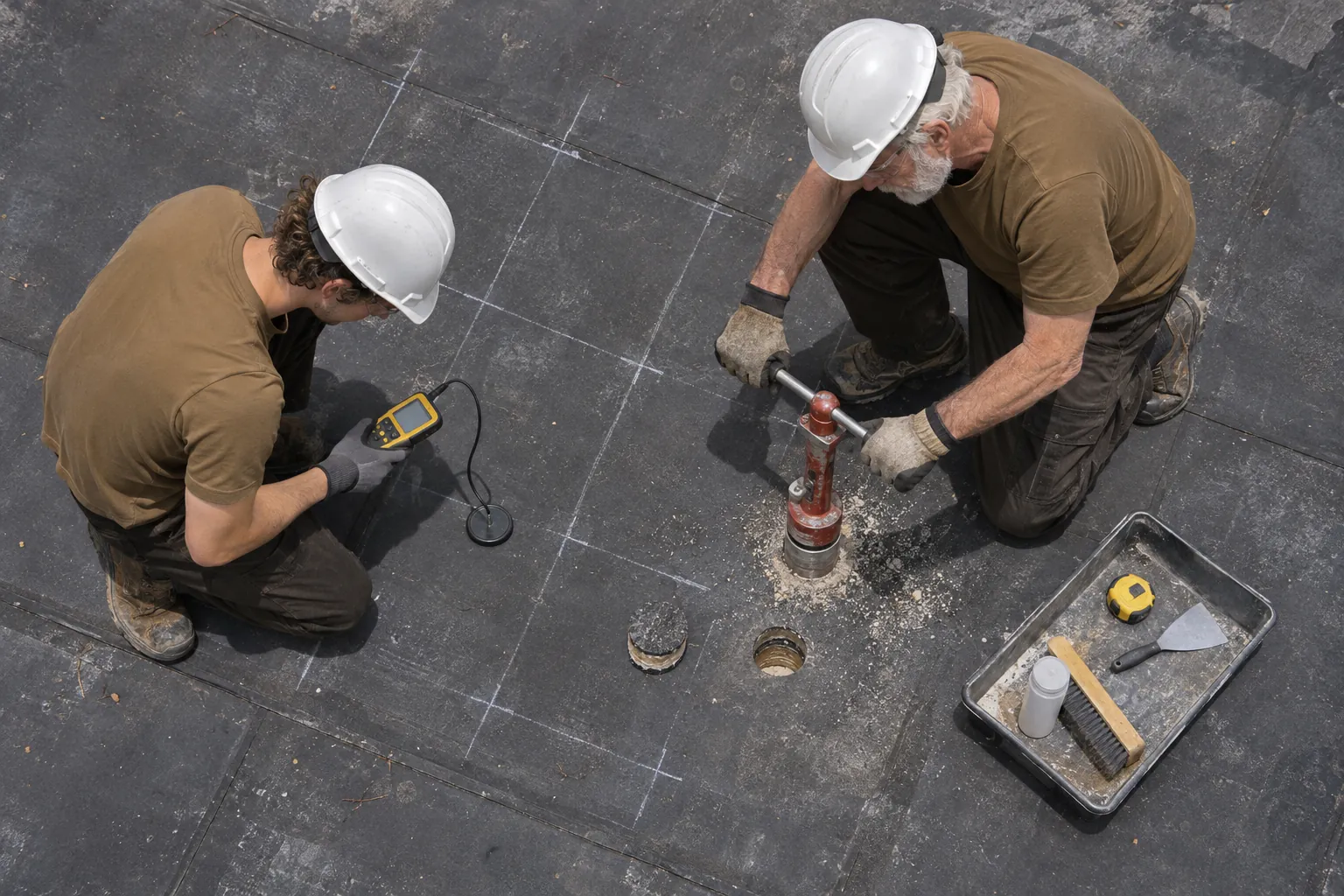
Membrane or panels, seams, curbs, fans, drains, and edge metal get checked, with moisture readings near equipment where heat and exhaust do the most damage.
Findings come back as a list ordered by how much water each problem can let in, with photos, so you can approve work in the order that matters.
Roof access, lifts, and material staging are planned with your shift schedule, and work zones stay clear of exhaust and loading areas.
Each zone is opened, repaired, and closed before the crew moves on, so no section of roof sits open overnight.
Plant roofs mix membrane sections, metal buildings, and hard-to-trace leaks, so these repairs often join an industrial job.
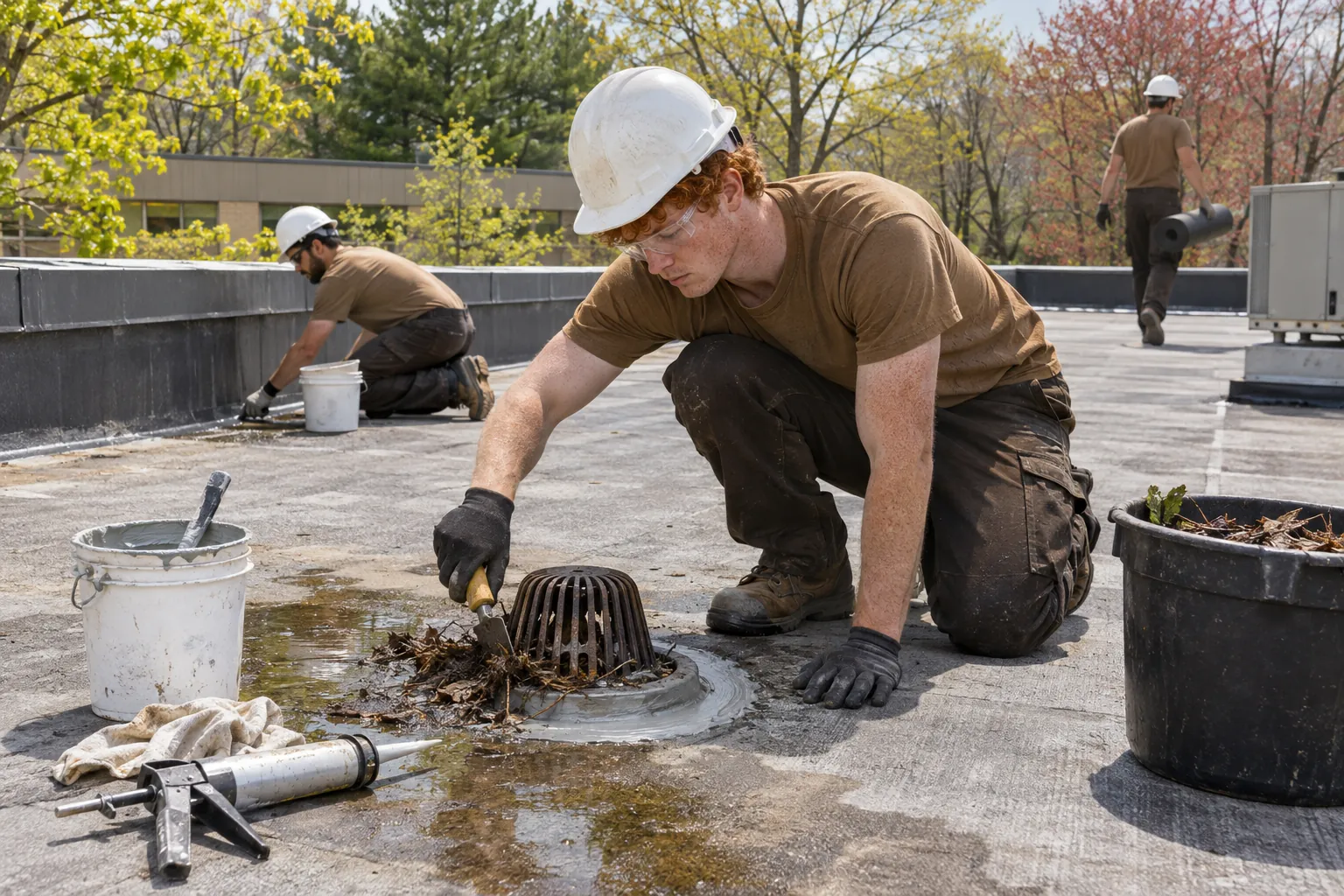
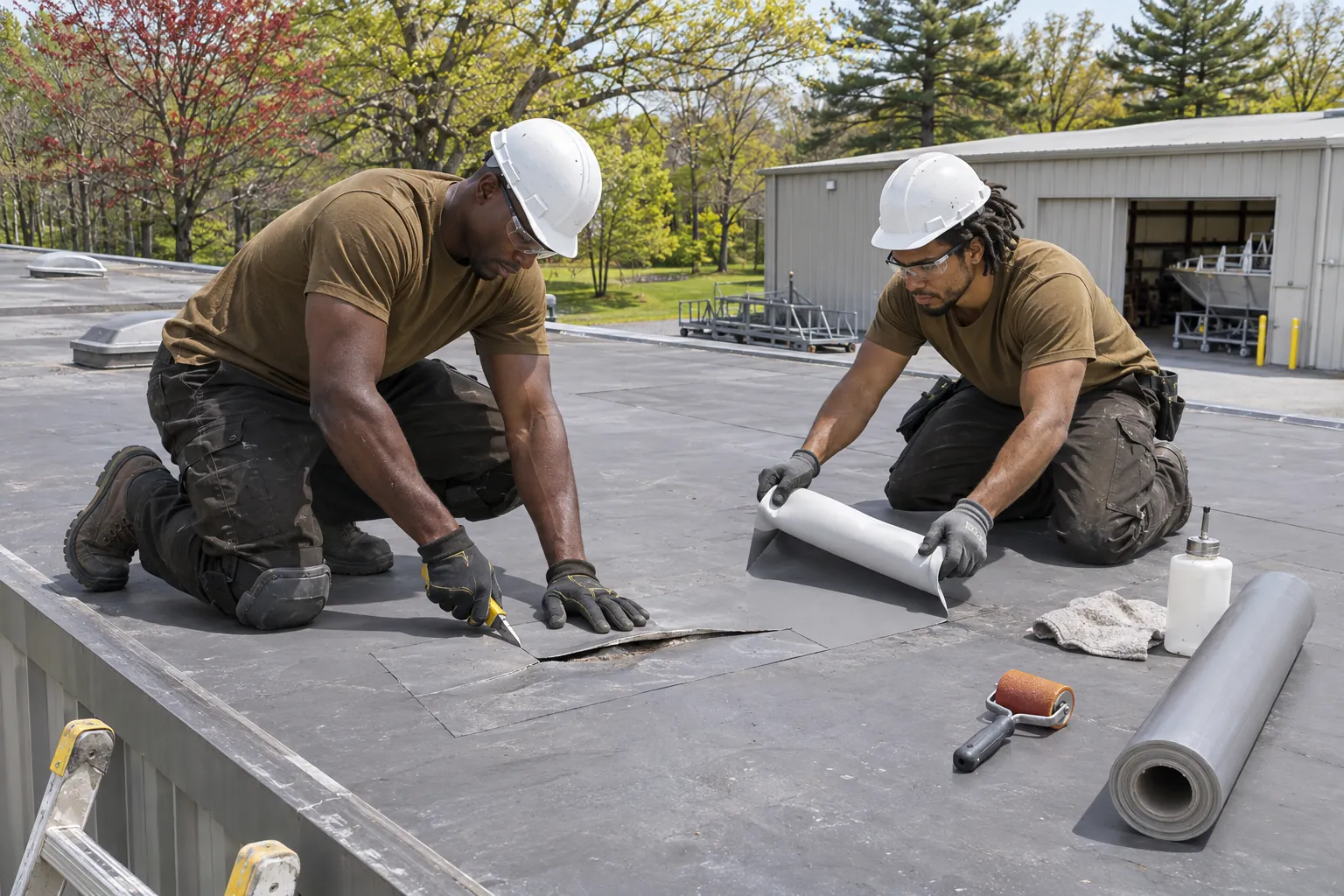
Many plant roofs are membrane over wide spans, so seam, drain, and ponding repairs make up much of the work.
Flat Roof Repair details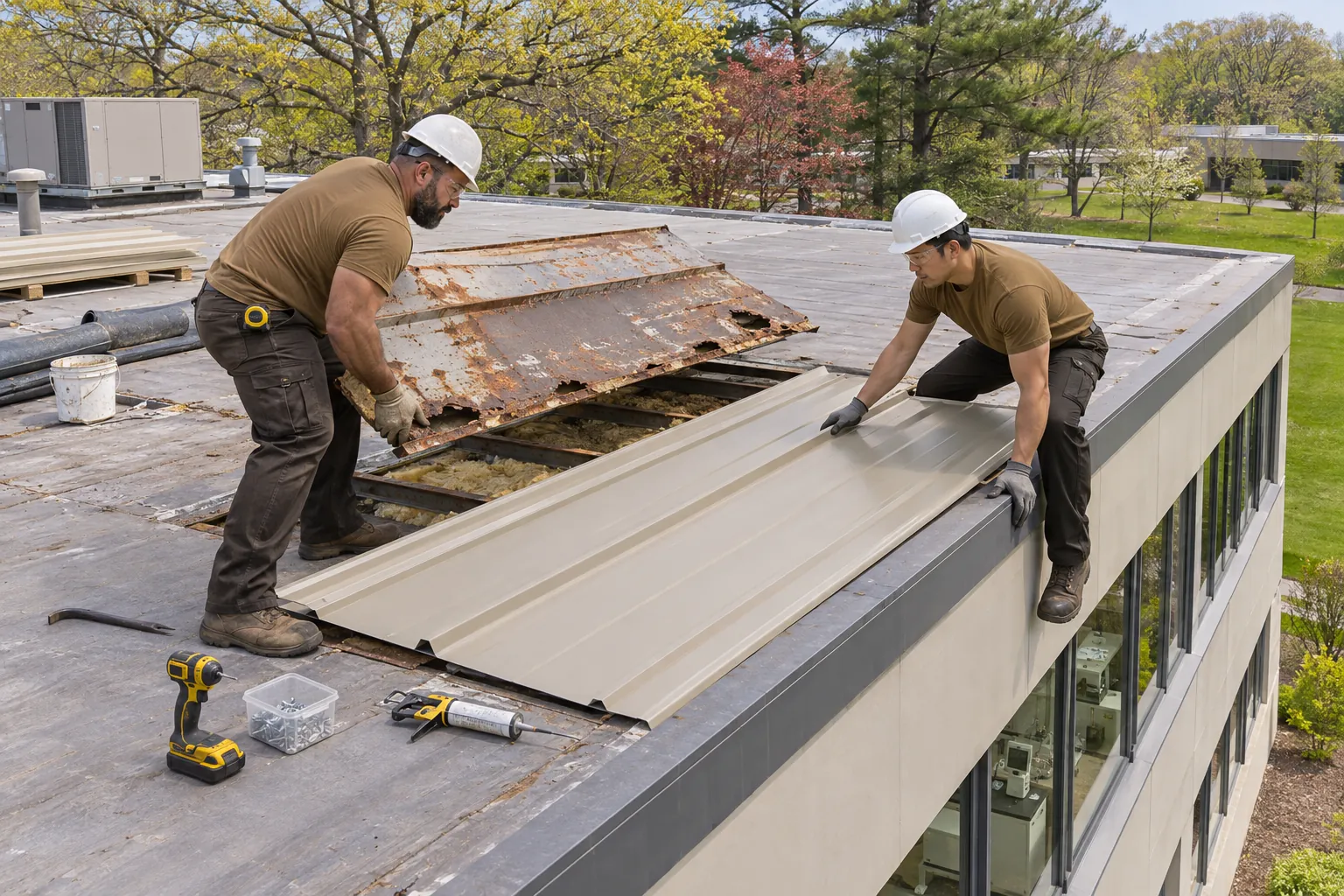
Metal plant roofs lose screws, laps, and trim to vibration and salt air, and those repairs follow the same fastener lines.
Commercial Metal Roof Repair details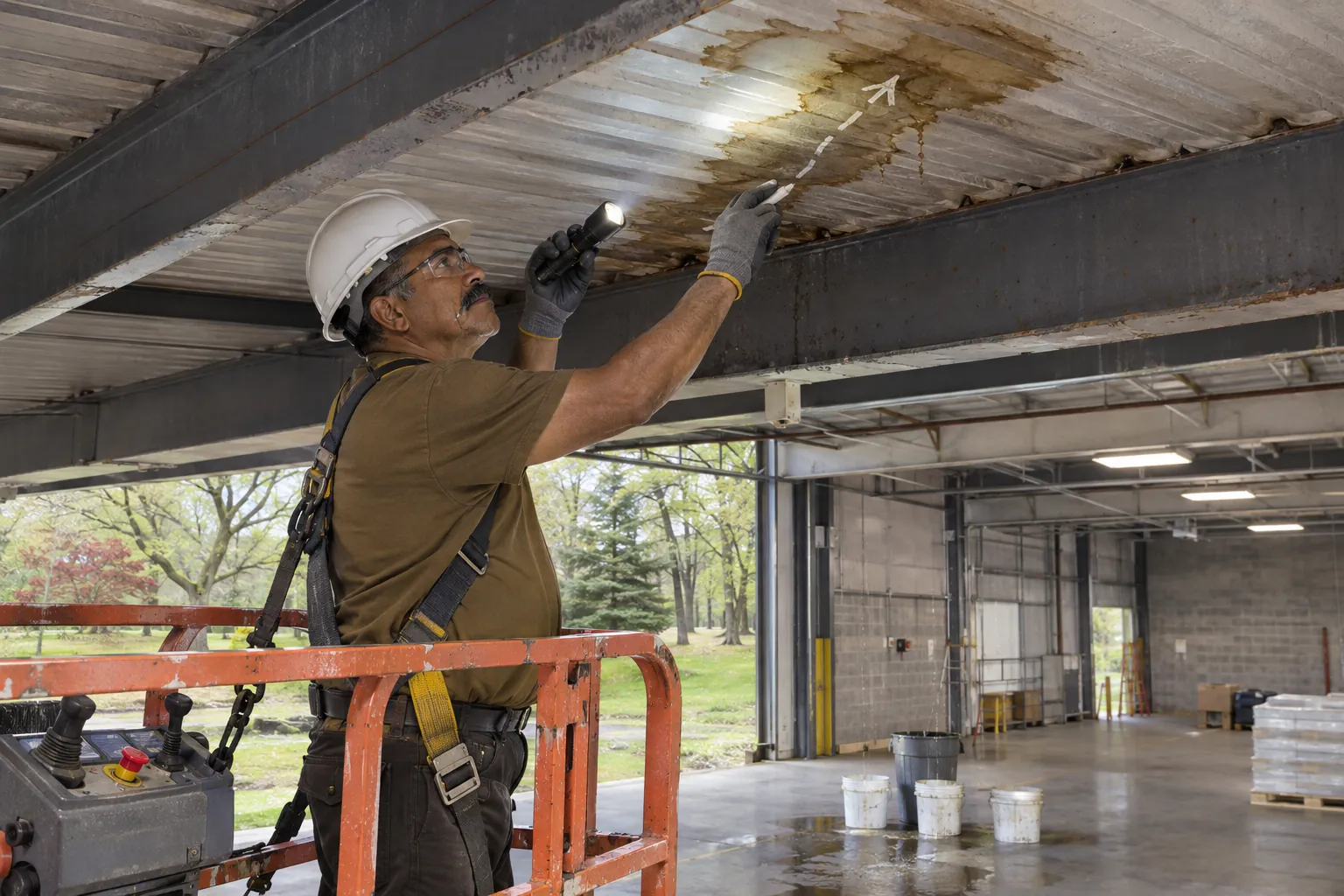
Drips onto a production floor get traced back along the deck to the opening, even when equipment hides the path.
Commercial Roof Leak Repair detailsCost
Heavy equipment curbs, heat or chemical exposure, and large wet areas add the most. Lift or crane access, work around running lines, and specialty membrane near exhaust also raise the price. Regular maintenance keeps each visit smaller.
Maintenance
Drain and gutter clearing, curb and flashing checks around equipment, sealing small openings, and removing debris and abandoned equipment. Spring and fall visits plus a check after major storms catch most problems while they are still small repairs.
Inspections
Twice a year suits most plants, in spring and fall, plus after nor’easters or heavy snow. Plants with exhaust, grease, or heavy rooftop traffic benefit from an extra check, since those areas wear faster than the rest of the roof.
Production
Yes. Repairs are staged zone by zone, with access and material set up away from loading areas and exhaust. Work near intakes is planned with your maintenance staff, and each zone is closed watertight before the crew moves on.
Skylights
Curb flashing and the joints around a skylight get repaired like any other penetration. Cracked or brittle panels are marked for replacement, and until then a temporary cover keeps rain off the floor below. We flag skylights near walkways so crews and technicians stay clear of them.
Safety
Roof access, the location of hatches and ladders, any lockout steps for fans or units near the repair, and notice of hot work or exhaust that runs on the roof. Those details shape where crews stage and how the work is sequenced.
Tell us about the plant, the equipment on the roof, and where it leaks, and we will plan the repair around your shifts.