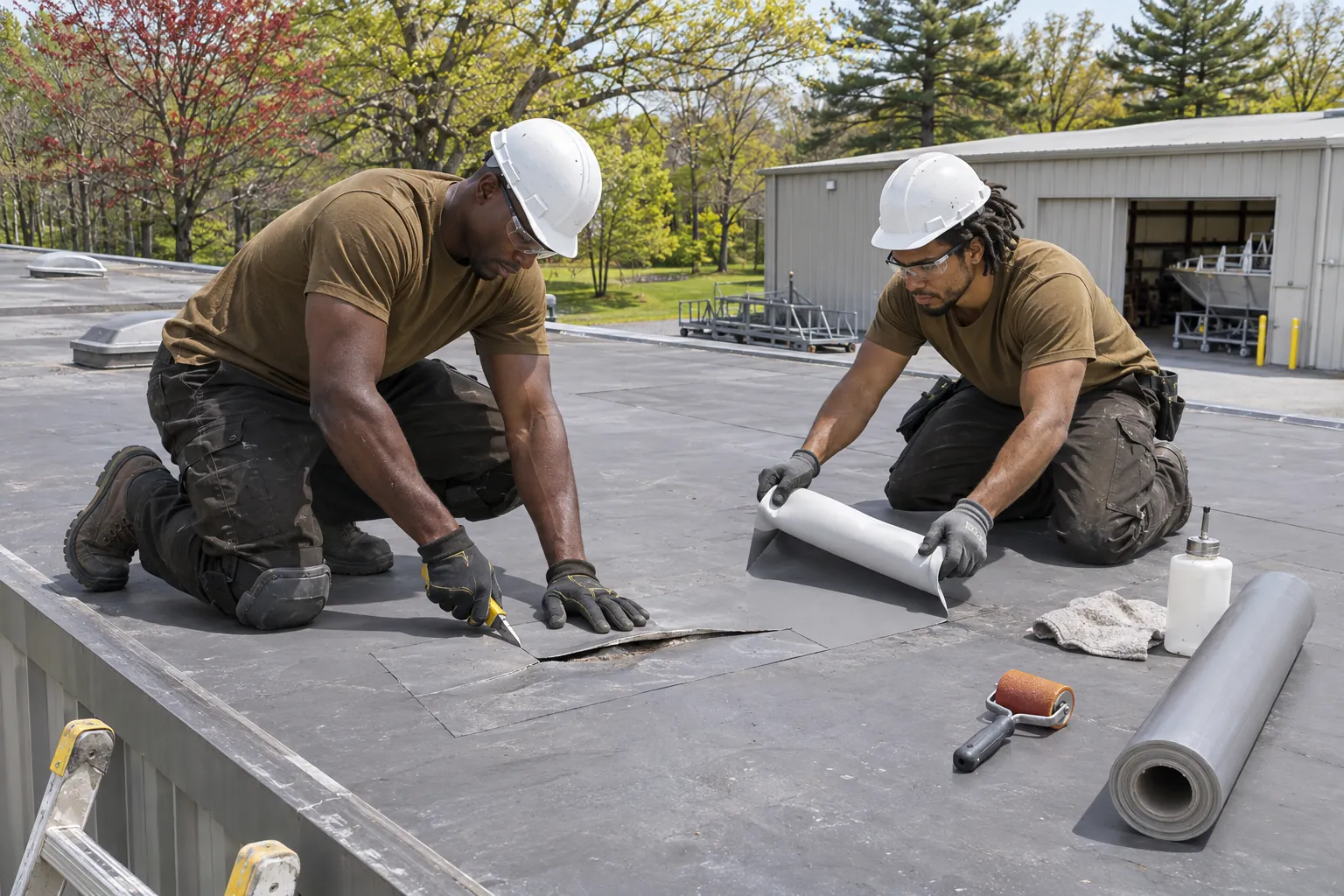
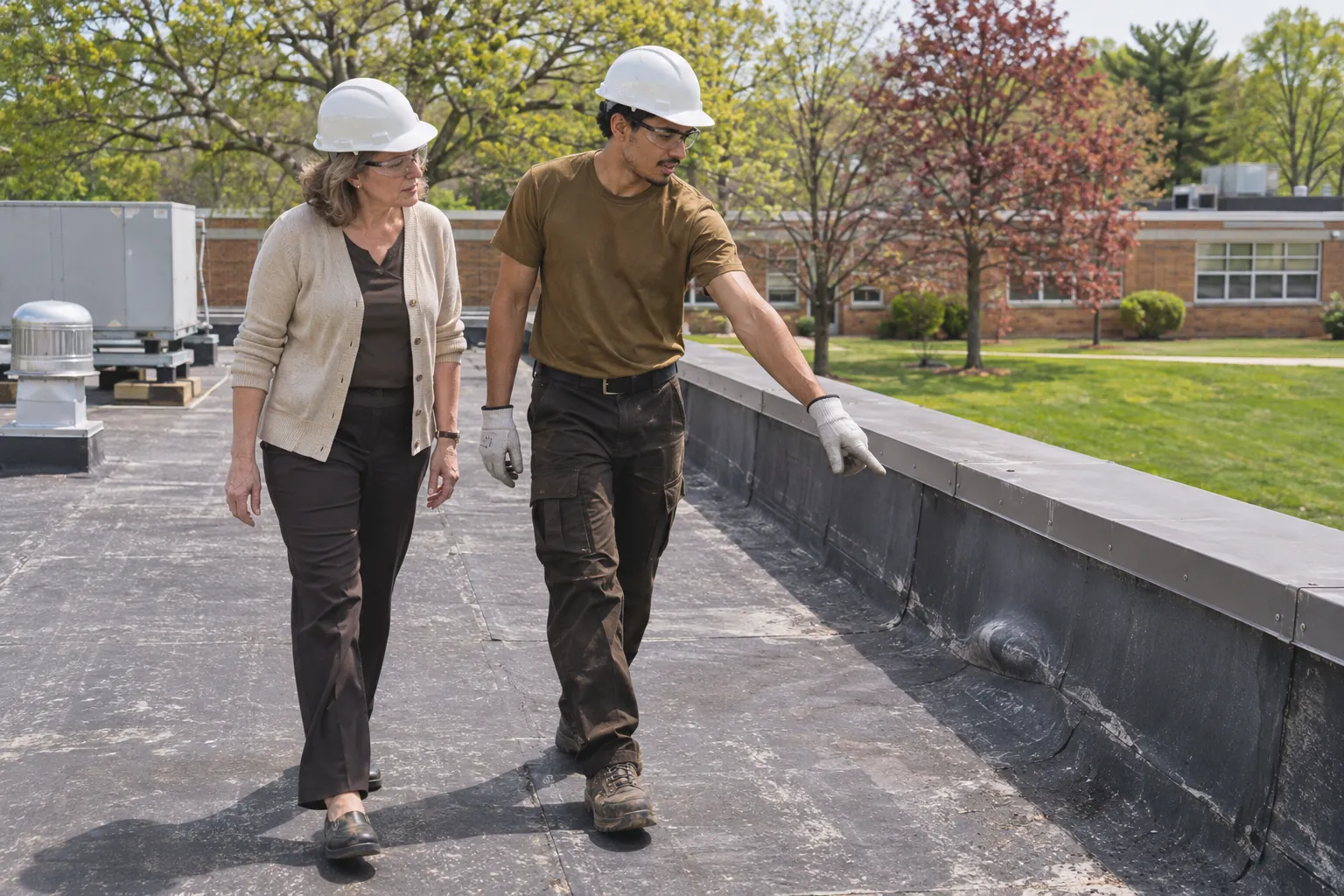
Base Flashing Pulled From Brick
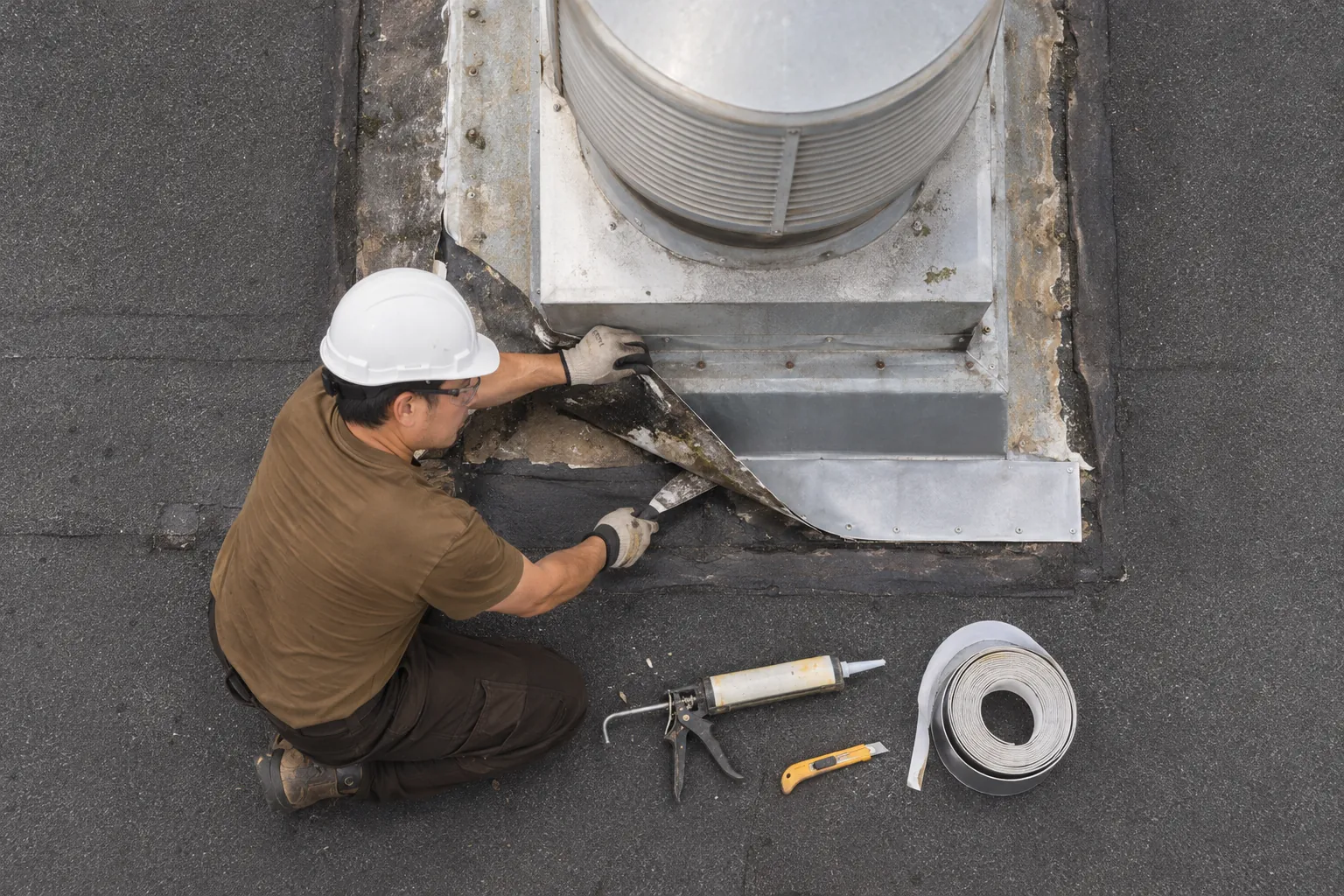
Membrane flashing shrinks and stiffens with age, then pulls away from the parapet face at corners and seams.
New flashing set to proper height and fastened under a sealed bar gives water nowhere to slip behind.
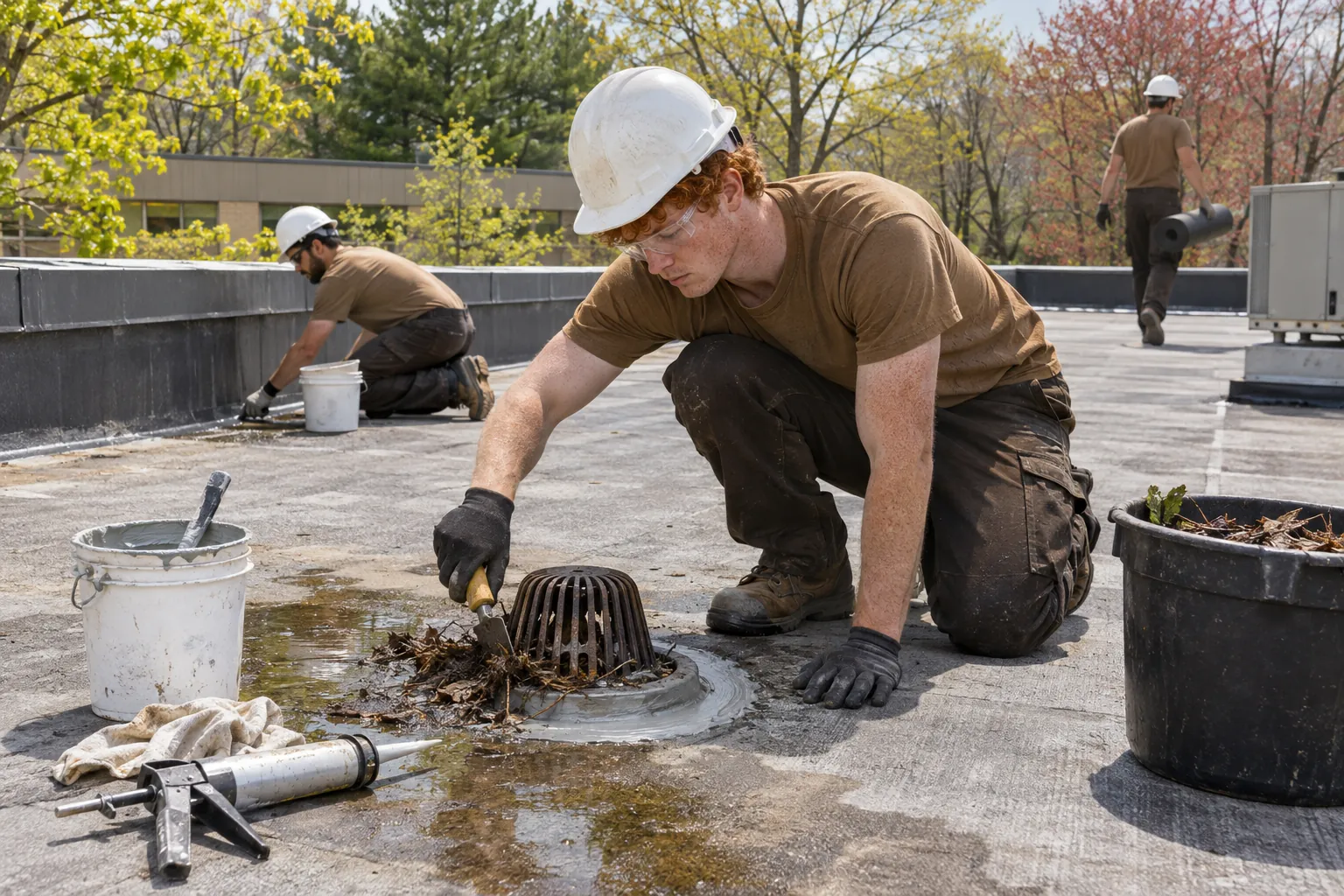
As a New London commercial roof repair contractor, we fix parapet walls, coping joints, and old internal drains on masonry buildings, then check the roof field around them.


Most New London commercial roof repair calls on older downtown buildings start at the parapet. Brick walls rise above a flat roof, and the joint where membrane turns up the wall carries every drop that hits the masonry. When that base flashing pulls loose or the coping above it opens, water runs down inside the wall.
Old internal drains add a second weak point. Cast iron bowls, worn clamping rings, and decades of patch layers around the drain let water slip under the membrane instead of into the pipe. We open those areas, find where water enters, and rebuild the detail with materials that bond to what is already there.
Older flat roofs behind brick walls fail in a few repeat places. These are the ones we check first on New London buildings.
Base flashing has shrunk away from the brick, or the termination bar has let go, so rain running down the wall slips behind the membrane.
We strip the loose flashing, prime the masonry, install new base flashing to the right height, and fasten a fresh termination bar sealed at the top.
Open joints between coping stones or split metal caps let water straight into the wall core, where it travels down and shows up indoors.
Joints get cleaned and resealed, cracked metal caps are replaced, and missing cleats are added so the coping stays tight in high wind.
An old internal drain sits high after years of added layers, or debris and a loose strainer keep water from reaching the pipe.
We clear the bowl, reset or replace the clamping ring, cut in a sump so water flows to the drain, and reflash the membrane around it.
Counterflashing tucked into old mortar joints has worked loose, so wind pushes water behind it while ordinary rain runs past.
Loose counterflashing is reset into a cut reglet or replaced with a surface-mounted strip, and the joint above is sealed against the brick.
Each repair matches a part of the roof that wears out first on masonry buildings. Fixing that part keeps the rest of the roof working longer.
Membrane flashing shrinks and stiffens with age, then pulls away from the parapet face at corners and seams.
New flashing set to proper height and fastened under a sealed bar gives water nowhere to slip behind.
Sealant between coping pieces dries, cracks, and opens a gap at every joint along the parapet top.
Resealed or replaced coping keeps rain on the outside of the wall, so the masonry below stays dry.
Layer after layer of patch material builds up around older drain bowls until water ponds beside them.
Cutting back the layers and resetting the bowl brings the drain back to the low point of the roof.
Seams in the roof field close to parapets take extra water and foot traffic, so they open first.
Opened seams are cleaned, primed, and covered with matching seam tape or a welded strip.
Pick the repair that matches what you see. Each one starts with finding where the water gets in.

Brick buildings with flat roofs behind parapets need the wall flashing, the drains, and the field seams treated as one system, so ponding near the walls stops wearing out the membrane.
Flat Roof Repair details
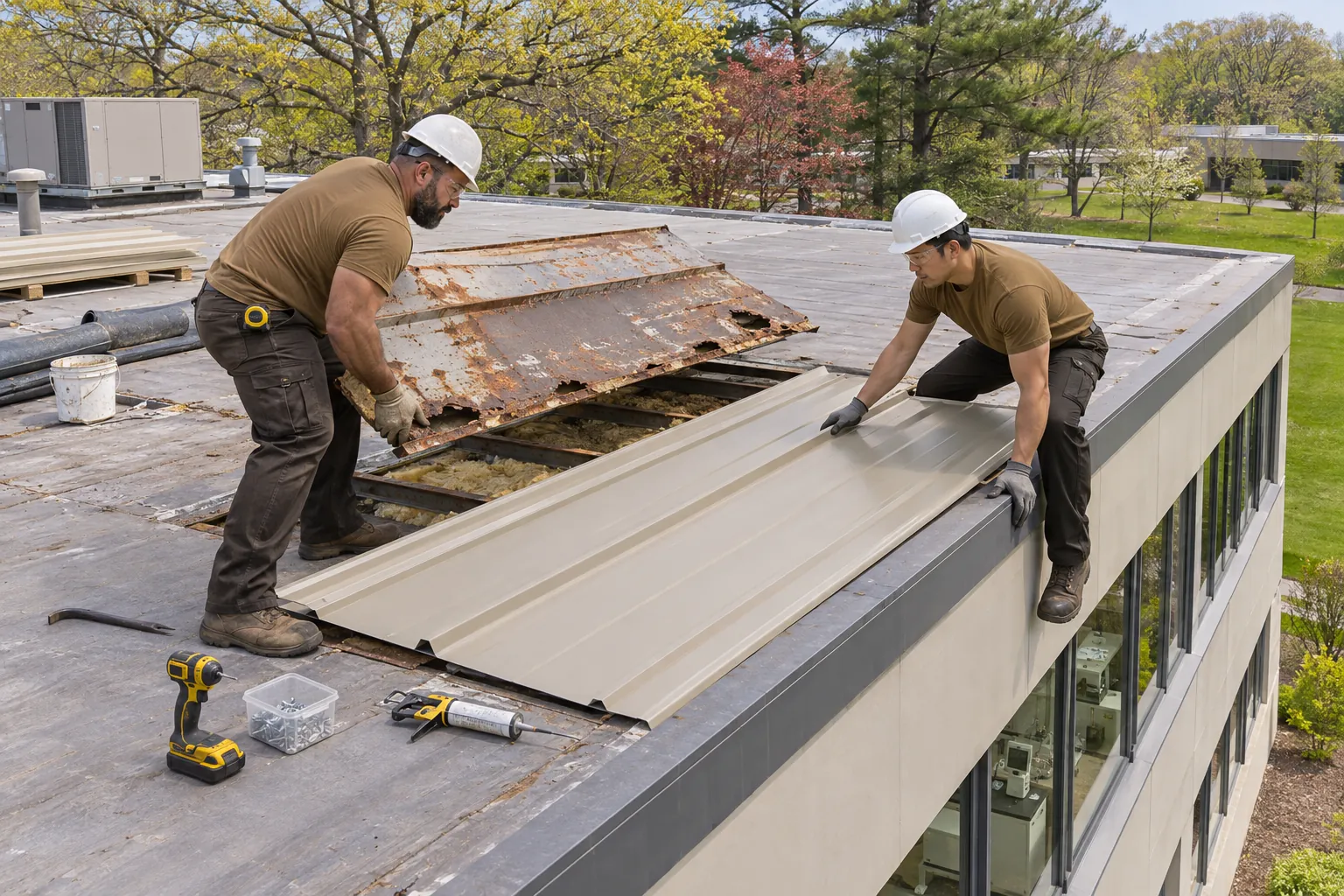
Metal additions and rear sheds behind older storefronts leak at fasteners and where the panels meet the brick wall. Matching panels and new flashing close those joints.
Commercial Metal Roof Repair details
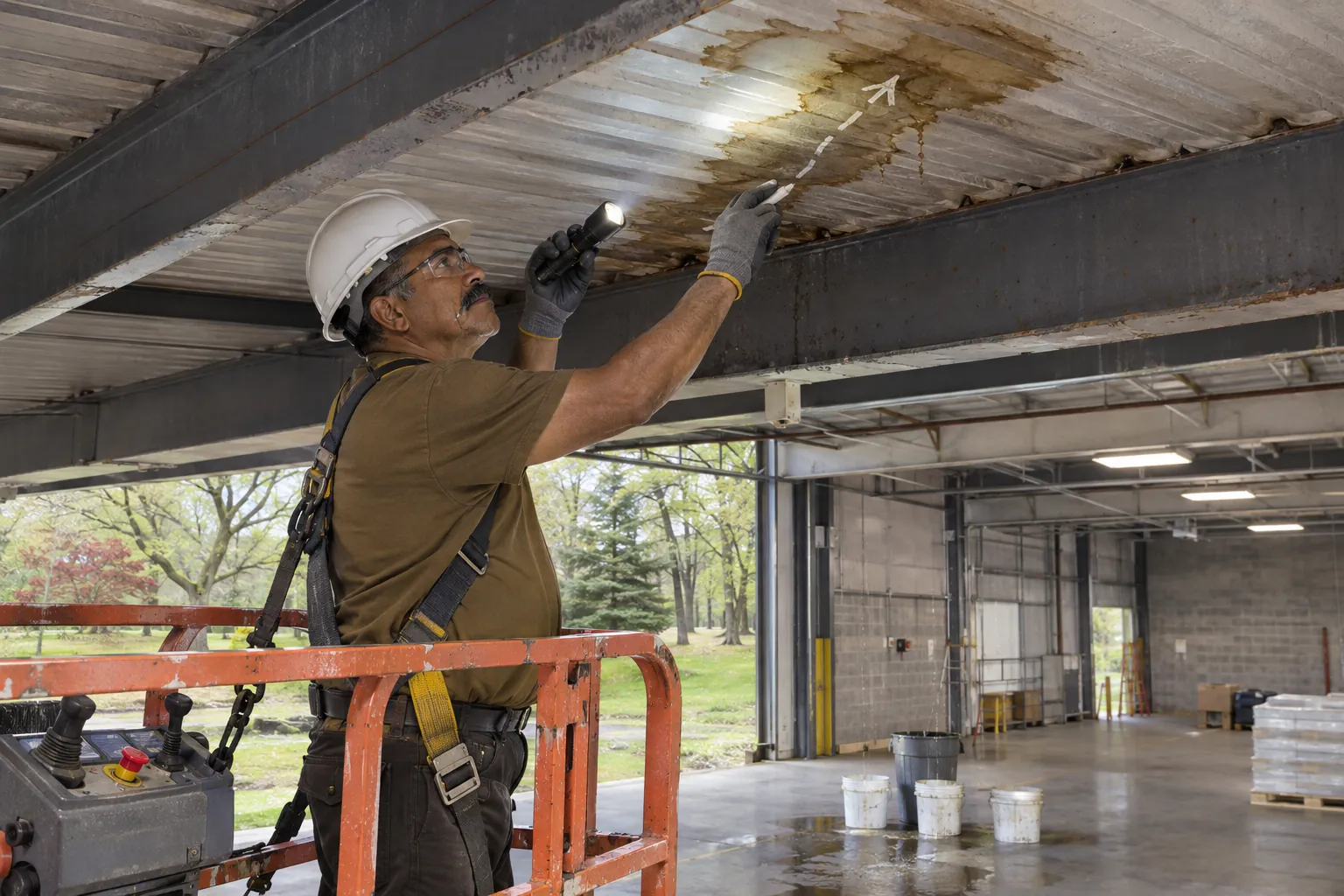
Leaks in masonry buildings travel inside the wall before they show. Tracing starts at the stain, then follows coping, counterflashing, and drains until the entry point turns up.
Commercial Roof Leak Repair details
Warehouses near the waterfront carry exhaust fans, curbs, and long drain runs. Curb flashing, corroded edge metal, and worn walkways get repaired in sections around the work inside.
Industrial Roof Repair details
Call and tell us which wall the water shows on and whether it follows rain or wind. That points us to the parapet, coping, or drain before we climb up.
Four steps take a masonry building from a wet wall to a closed repair.
Inspection starts at the walls. We check base flashing height, coping joints, and counterflashing on every side before looking at the roof field and drains.
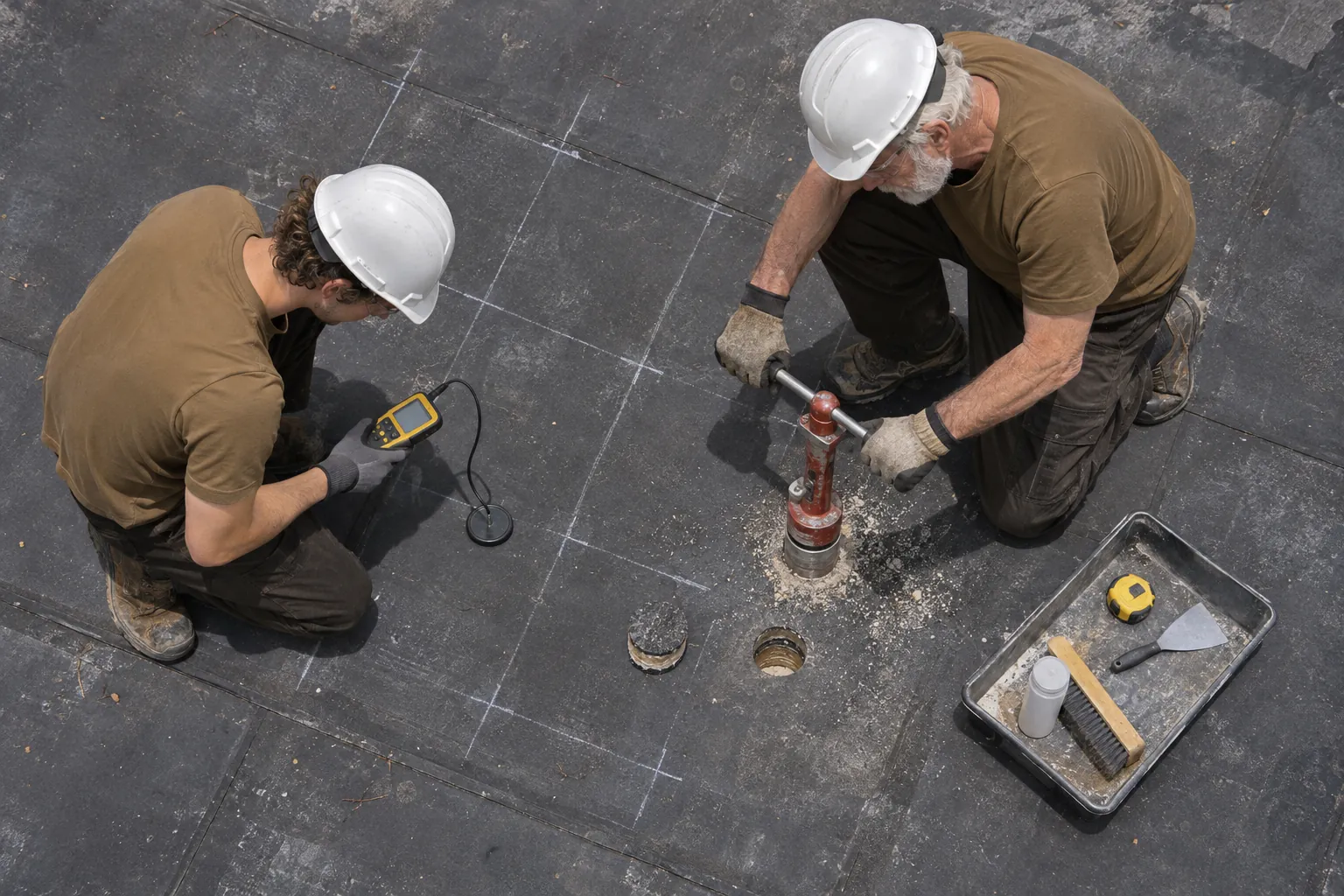
Moisture readings near the walls and drains show whether insulation under the membrane is wet. A small core cut confirms it before any material is removed.
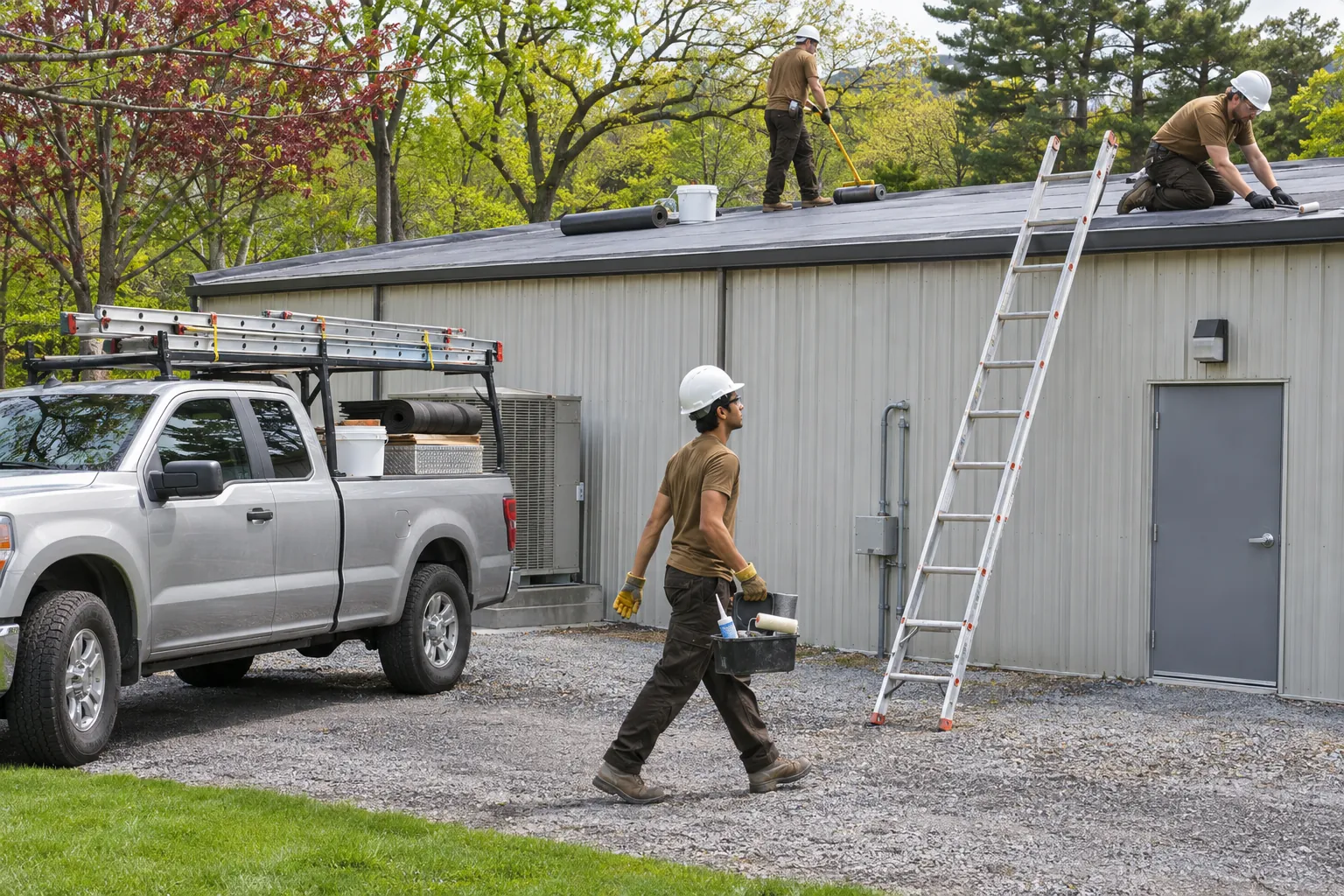
Repairs follow the water path. Flashing gets reset, coping joints sealed, drain bowls cleared and reflashed, and any wet insulation cut out and replaced.
Finished details are checked with a hose test where possible. You get photos of each repaired spot and a note on what else on the roof needs watching.
We take commercial roof repair work in New London and fourteen towns around it. If your building sits outside them, call us or send us a message and we will tell you if we can reach it.

Coverage
Yes. We repair flat roofs on older downtown buildings with parapet walls, plus warehouse and waterfront roofs across the city. Parapet flashing and aging drains cause most of the leaks we see on those buildings, so we check both, fix the source, and point out other spots on the roof that need attention.
Cost
Length of parapet that needs new flashing is the biggest factor, followed by how many coping joints or caps need work and whether drains must be reset. Wet insulation found by core cuts adds cost because it has to be cut out. Access, such as working from a narrow alley, also changes the price.
Businesses
Repairs are staged from the roof and the rear of the building where possible, so shop doors stay open. Material goes up by ladder or hoist away from customer entrances, and noisy cutting is scheduled with the owner. Inside, we ask that stock under the leak be moved before the roof is opened.
Finding Help
Groton Commercial Roof Repair works in New London and the towns around it. Call us or request a free estimate. Mention the building type, roof type if you know it, and where the water shows inside, and we can plan the first visit around that.
Coping
Stone coping in good shape only needs its joints cleaned and resealed. Cracked, loose, or missing stones are a different case, and a metal cap over the wall top is often the better fix. Either way, the cap or stone must slope away from the roof and lap over the flashing below it.
Tell us about the wall, drain, or seam that is leaking. We inspect, repair the source, and show you photos of the finished work.