Curb Flashing Around Each Unit
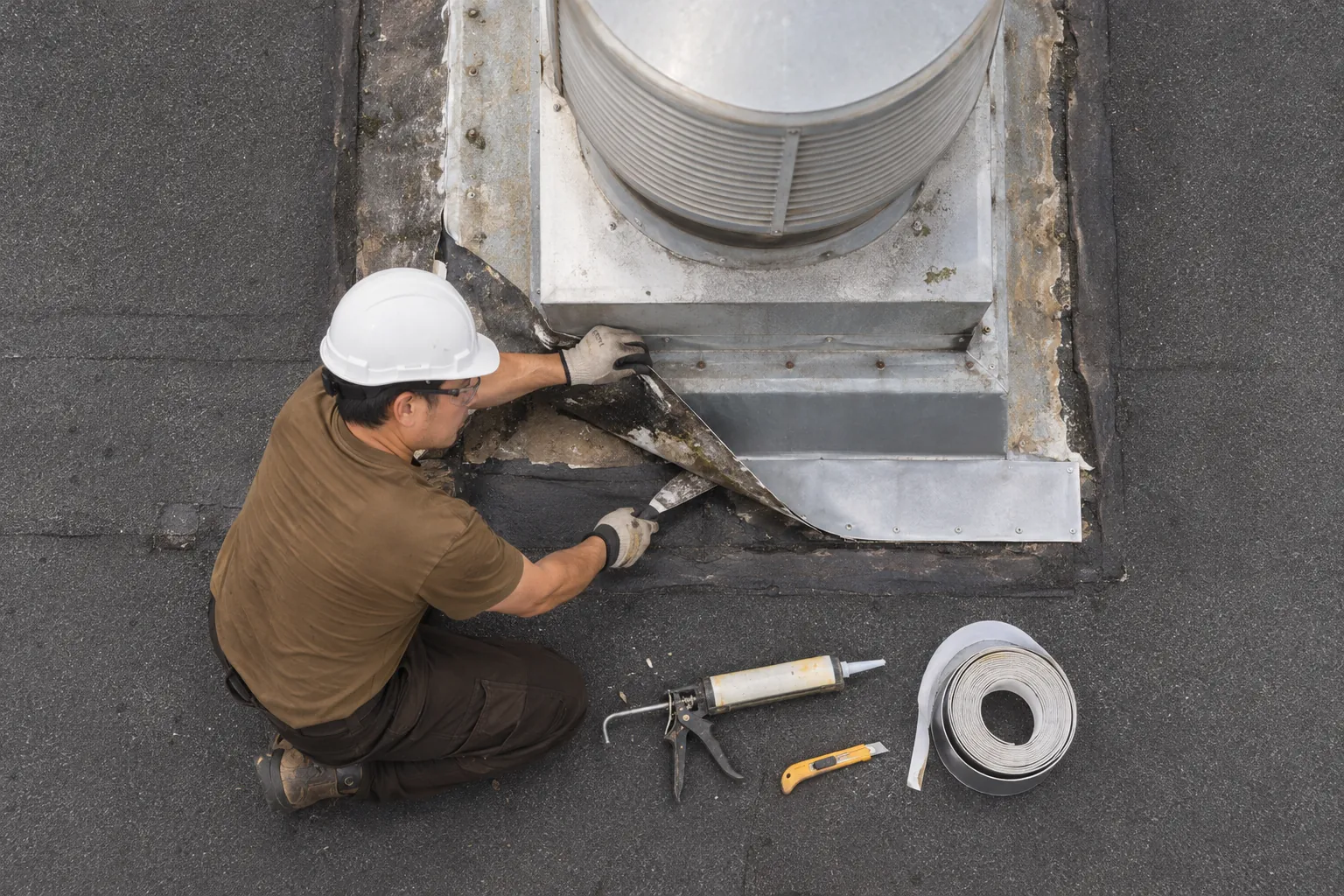
Vibration and heat at rooftop units crack the flashing corners and loosen curb cap fasteners over time.
Rewrapped curbs and resealed caps stop the most common tenant leak at its source.
As an Old Saybrook commercial roof repair contractor, we fix rooftop unit flashings, membrane seams, and drains on retail and service buildings, one tenant space at a time.


A single flat roof often covers five or six shops, and each tenant brings its own rooftop unit, vents, and sign brackets. Old Saybrook commercial roof repair on these strips usually means finding which penetration over which unit is letting water in, then fixing it without disturbing the stores next door.
Leaks rarely stay above the space that reports them. Water runs along the deck and drips two bays over, so a tenant complaint can trace back to a curb above the neighbor. We map the roof by tenant space, mark each repair, and give the owner a list tied to the unit numbers.
Tenants notice the inside first. Each row ties what they see to the roof detail we check and what we do about it.
Curb flashing around the heating and cooling unit has split at a corner, or the counterflashing on the curb cap has worked loose.
We cut out the failed flashing, wrap the curb with new membrane to the proper height, and reseal the curb cap screws and counterflashing.
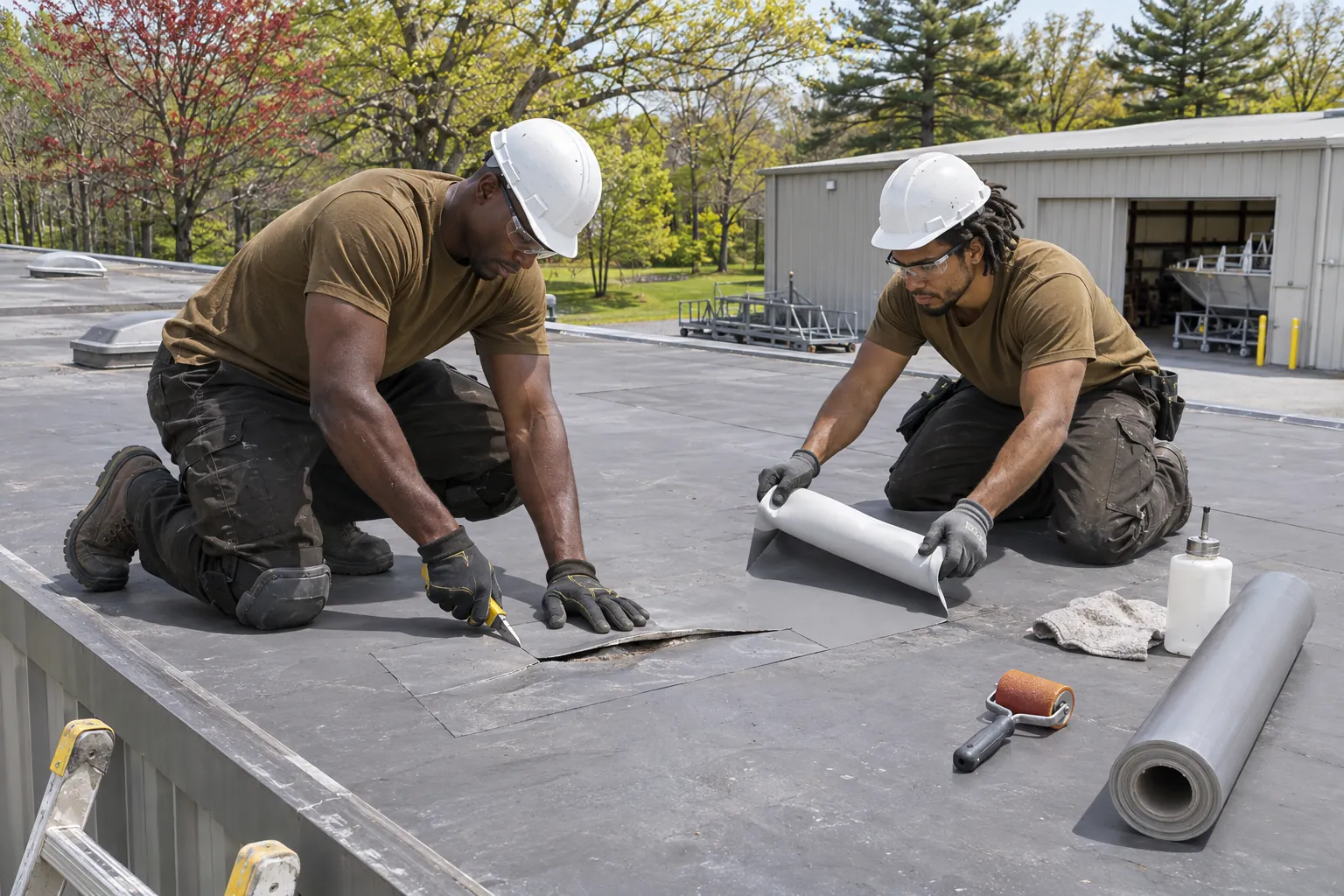
Field seams that run over the wall between two spaces open under foot traffic from service techs walking unit to unit.
Opened seams are cleaned, primed, and covered with seam tape or a welded strip, and walk pads go down on the service path.
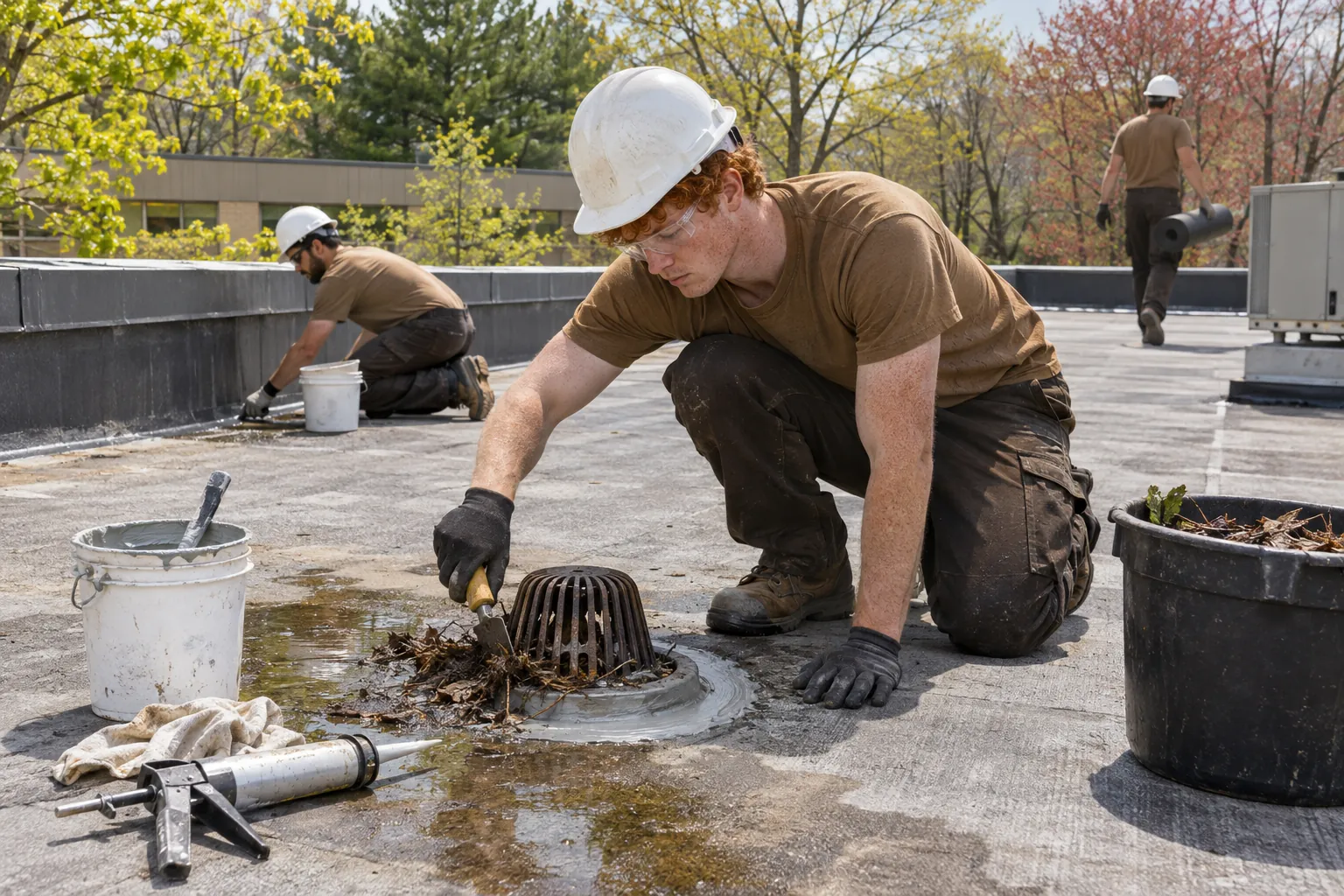
Drains or scuppers behind the stores hold leaves and packing debris, so water backs up against the rear wall flashing.
Each drain and scupper gets cleared, strainers are replaced, and the flashing at the low edge is sealed where backed-up water got in.
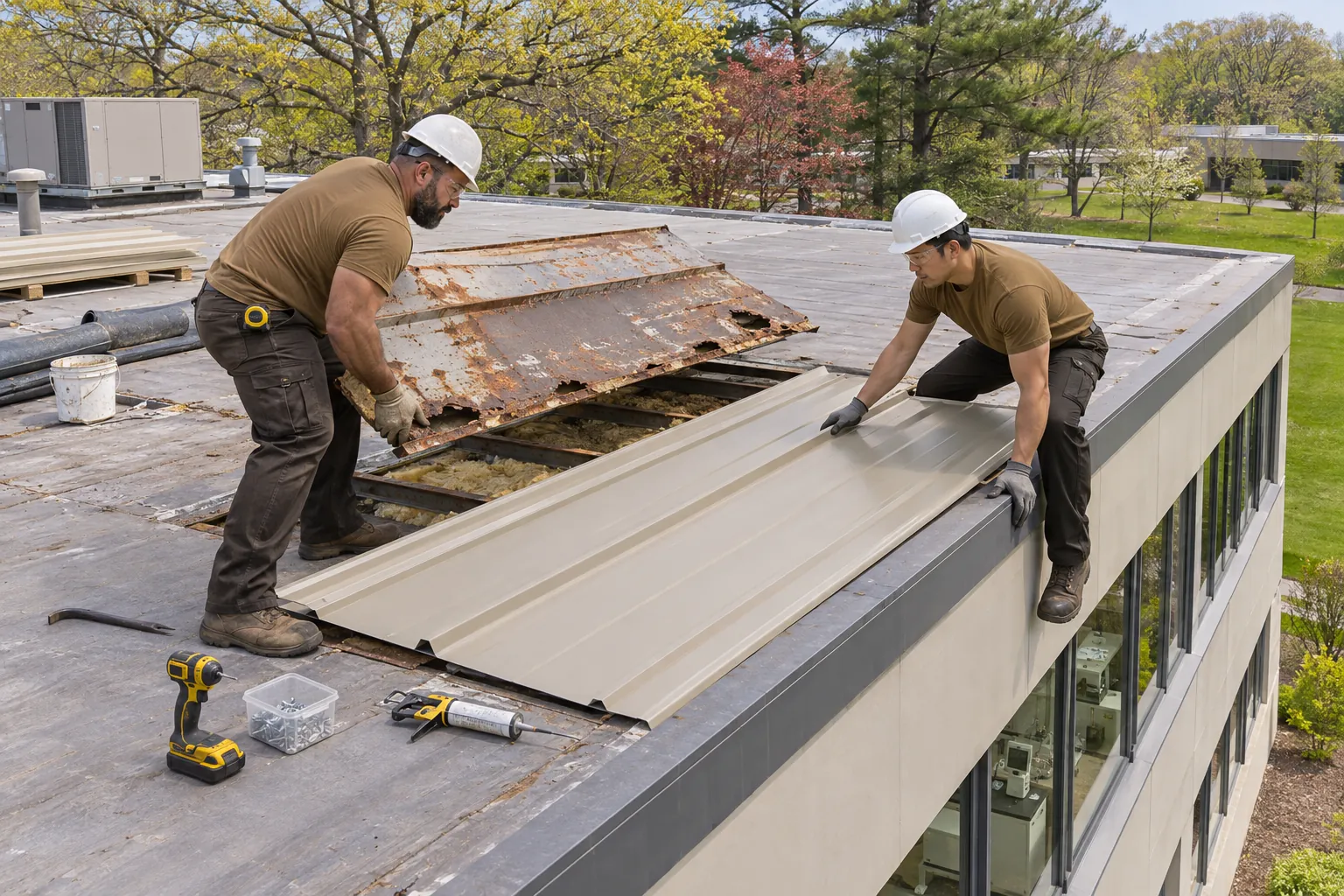
Front fascia and edge metal on long strip roofs loosen at the cleat, and wind starts lifting the membrane behind them.
Edge metal is refastened or replaced, the membrane edge is resealed under it, and loose sign brackets through the roof get new flashing.
Strip roofs wear unevenly because every space is used differently. Repairs aimed at each worn part keep the whole roof in service.
Vibration and heat at rooftop units crack the flashing corners and loosen curb cap fasteners over time.
Rewrapped curbs and resealed caps stop the most common tenant leak at its source.
Technicians crossing the roof to reach units scuff and stress the membrane seams they step on.
Repaired seams plus walk pads along the path spread that traffic and protect the laps.
Rear drains collect debris from deliveries and trees, then hold water against the back wall.
Cleared drains with new strainers let the roof empty after each storm.
Long runs of fascia expand, contract, and pull their fasteners loose along the front of the strip.
Refastened or replaced trim keeps wind from peeling the roof edge above the shop windows.
Most strip and office roofs here need one of these four repairs. Each card explains where it fits.

Single-ply and built-up roofs over shops get seam repairs, drain work, and new flashing at curbs, all scheduled so neighboring tenants keep their doors open while one space is worked on.
Flat Roof Repair details
Service garages and storage buildings behind the retail row often carry metal panels. Loose screws, rusted laps, and failed ridge closures get repaired with matching parts.
Commercial Metal Roof Repair details
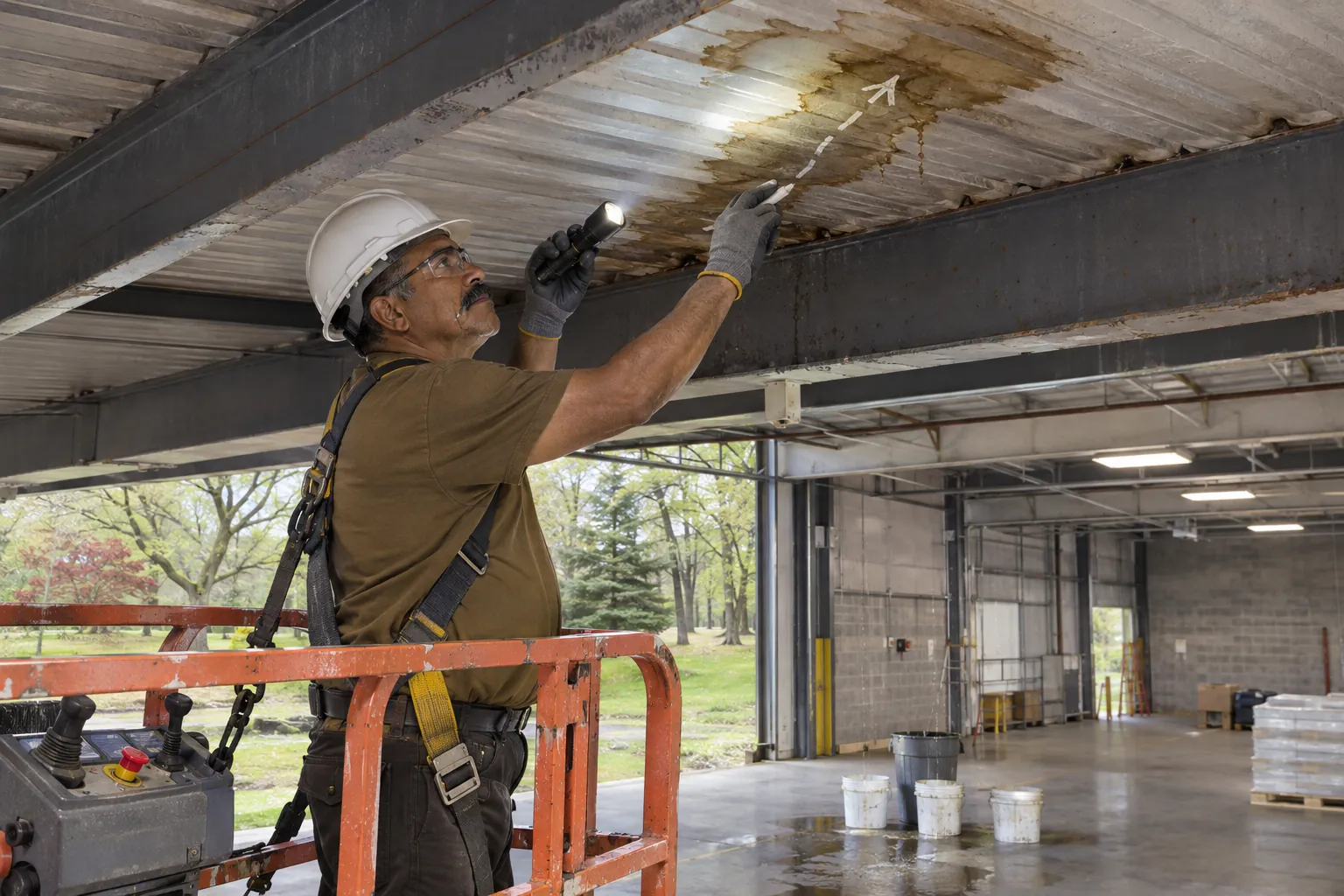
Tracing a leak on a shared roof means checking curbs and seams uphill of the complaint, sometimes over the neighbor's space. We find the entry point first, then repair it.
Commercial Roof Leak Repair details
Larger service buildings carry exhaust fans, make-up air units, and heavier equipment. Curb flashing, fan bases, and worn walkways around that equipment get repaired in sections.
Industrial Roof Repair details
Request an estimate and note the unit number and where the drip falls inside. We start the roof search right above that space and work uphill from there.
Strip roof repairs follow the same four steps, with the tenant map guiding each one.
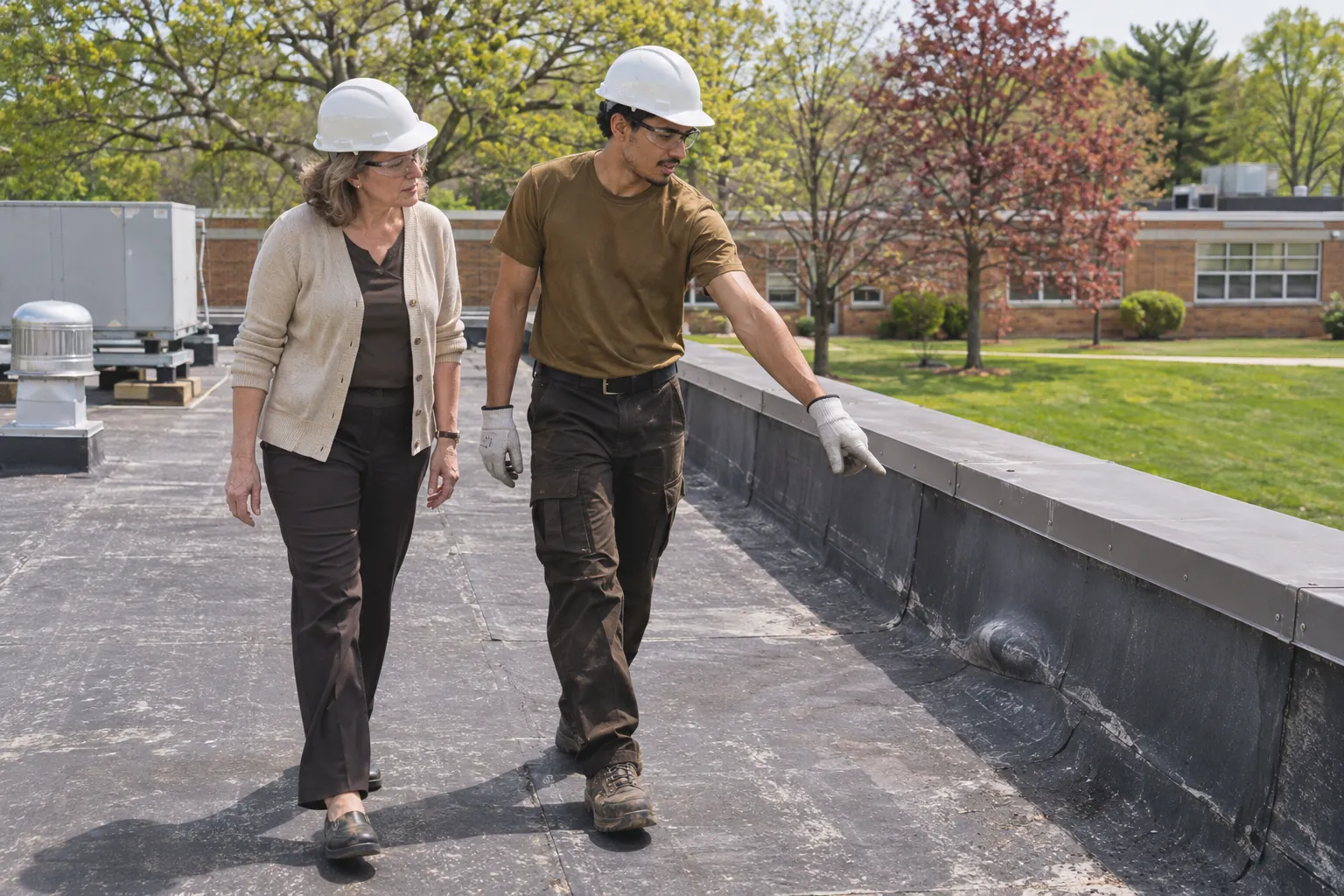
Inspection starts with a sketch of the roof divided by unit. We mark every rooftop unit, drain, and seam line so each finding ties to a space.
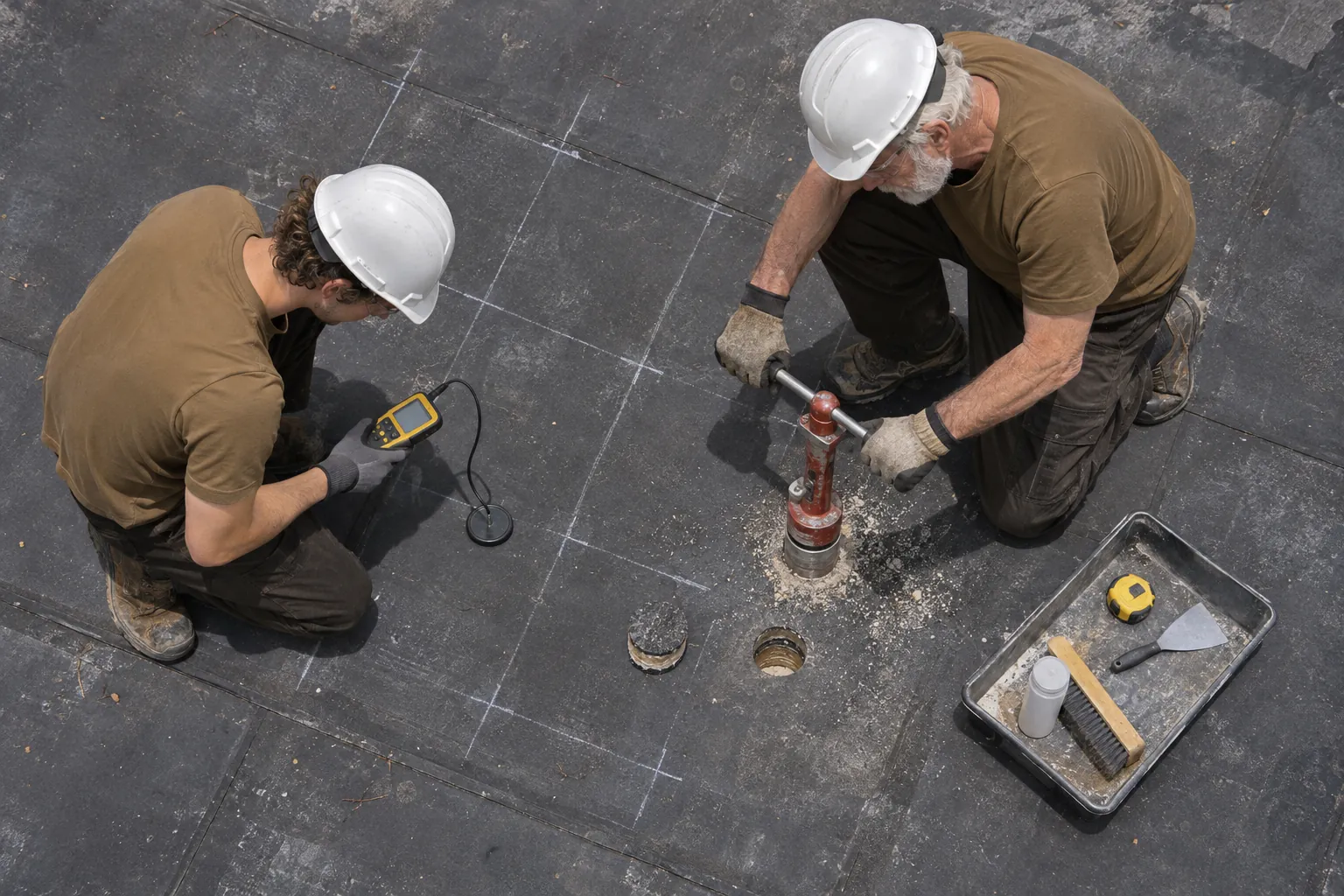
From the complaint location, we check curbs, penetrations, and seams uphill of it, and take moisture readings to see how far water spread under the membrane.
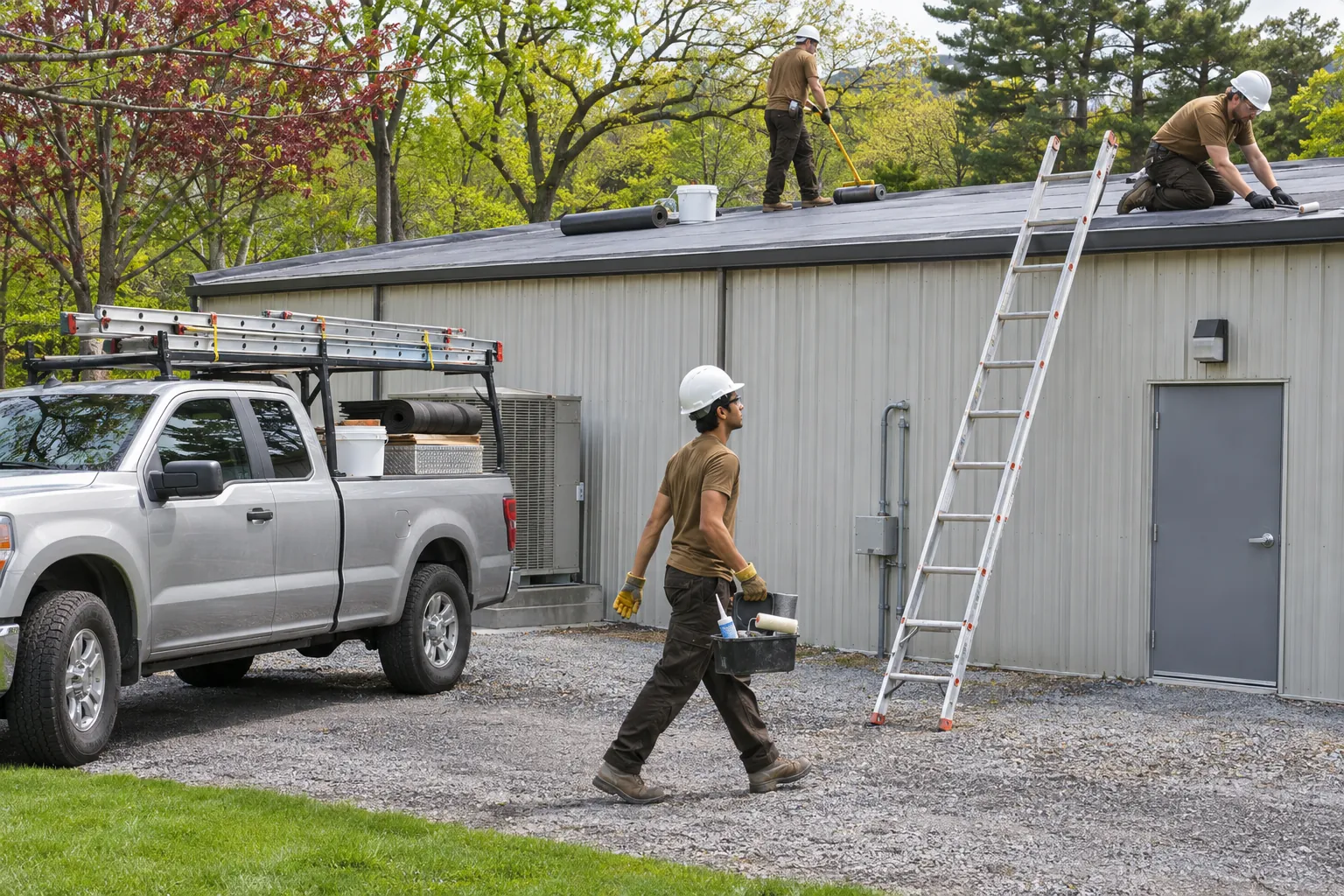
Hoisting and cutting happen behind the stores and at quiet hours set with the owner. Curbs get rewrapped, seams sealed, and drains cleared in the order found.
Photos of each curb, seam, and drain repair go to the owner listed by tenant space, so property managers can answer each tenant and plan the next maintenance visit.
We handle commercial roof repair in Old Saybrook plus fourteen other shoreline and inland towns. Building somewhere else? Call us or send us a message and we will check whether we can get there.

Coverage
Yes. Retail, office, and service buildings in Old Saybrook are a large part of the roofs we repair. Membrane seams, flashing at rooftop units, drains, and metal edge trim come up most. After an inspection we find what caused the leak or damage and repair it with material that matches the roof already in place.
Cost
Number of curbs and penetrations needing new flashing sets most of it. Seam footage, drain work, and any wet insulation found under the membrane add to that. Working around open stores, carrying material up from the rear, and how many tenant spaces are involved also change the total.
Businesses
In most cases, yes. Crews stage behind the building, keep the front sidewalk clear, and hold noisy cutting for times agreed with the owner. Inside a space below the repair, tenants are asked to move stock and cover equipment. Shoppers in the other stores rarely notice the seam or curb work overhead.
Shared Roofs
Payment follows the leases and the owner's agreements with each tenant, so the answer differs from one property to the next. Our part is documenting where the water entered and which space the repair sits over. Those photos and notes help the owner and tenants settle the split.
Rooftop Units
Leaks at the curb flashing, membrane, or counterflashing are roof repairs. Leaks from the unit cabinet, condensate line, or duct seals belong to the HVAC side. We inspect the whole curb, tell you which side failed, and coordinate when a unit has to be lifted or disconnected.
Send us the unit numbers with leaks or call with what tenants see. We find the source and repair it around the open stores.