Fastener Lines
What Wears Out
Hundreds of screws hold a metal roof down, and their washers age out years before the steel does.
What The Repair Does
Fresh fasteners and sealed heads stop the drips along each purlin line.

As a Groton commercial metal roof repair contractor, we fix leaking screws, open laps, rusted panels, and worn trim on shops, marine buildings, and warehouses.
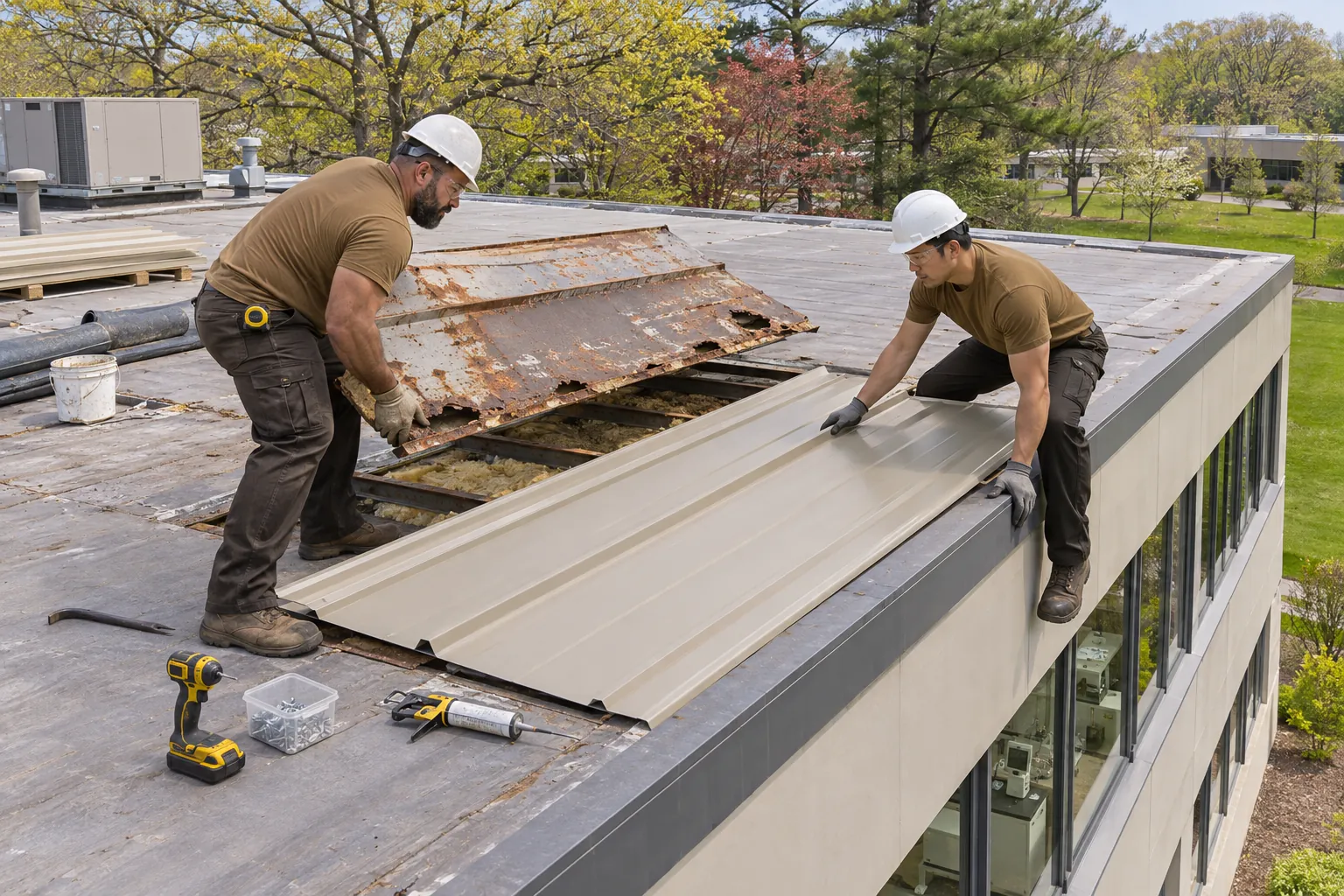
Groton commercial metal roof repair works best while the framing is solid and corrosion stays at the surface, edges, and screws.
Drips along screw lines after rain
Surface rust only around heads
Pull failed screws, set oversized fasteners, seal heads
Roofs where panels are still solid
Rust holes, open end laps, loose trim
A few panels rusted through
Swap panels, reseal laps, replace edge trim and closures
Damage limited to sections of the roof
Rust holes across many panels
Steel thinned across most of the field
New panels or a new roof over the old one
Corrosion spread across the roof
Metal roofs leak at their joints and fasteners long before the panels wear out.
Rubber washers dry and crack, holes strip out as panels expand and contract, and screws driven at an angle never sealed.
Failed fasteners come out, oversized screws with new washers go in where holes are stripped, and every head in the line gets sealed.
Salt air near the water and standing moisture at the low end of long runs eat through cut edges and scratches first.
We lift out panels rusted beyond patching, set new ones in the same rib profile, and lap them correctly at the sides and ends.
Old sealant at the overlap dries and shrinks, and loose stitch screws let the laps separate during cold snaps.
Metal roof seam repair means cleaning the lap, laying fresh butyl tape, and tightening or replacing the stitch screws that hold it closed.
Wind works on trim that has lost fasteners, and corroded closures let rain blow under the ridge cap.
Trim goes back down with new fasteners, closures are replaced, and corroded pieces are swapped for metal suited to the coast.
Panels last a long time when the parts that hold them together get attention.
Hundreds of screws hold a metal roof down, and their washers age out years before the steel does.
Fresh fasteners and sealed heads stop the drips along each purlin line.
Panel overlaps open as metal moves with temperature, and wind drives rain into the gap.
Butyl tape and tight stitch screws close the overlap so water runs past it.
Corrosion starts at cut edges and scratches, then spreads until the steel thins through.
Replacing only the damaged panels keeps the rest of the roof working without a full tear-off.
Salt settles on ridge caps, rakes, and gutters, so their fasteners and sealant let go first.
Trim and closures made for coastal exposure keep the roof edge tight in wind.
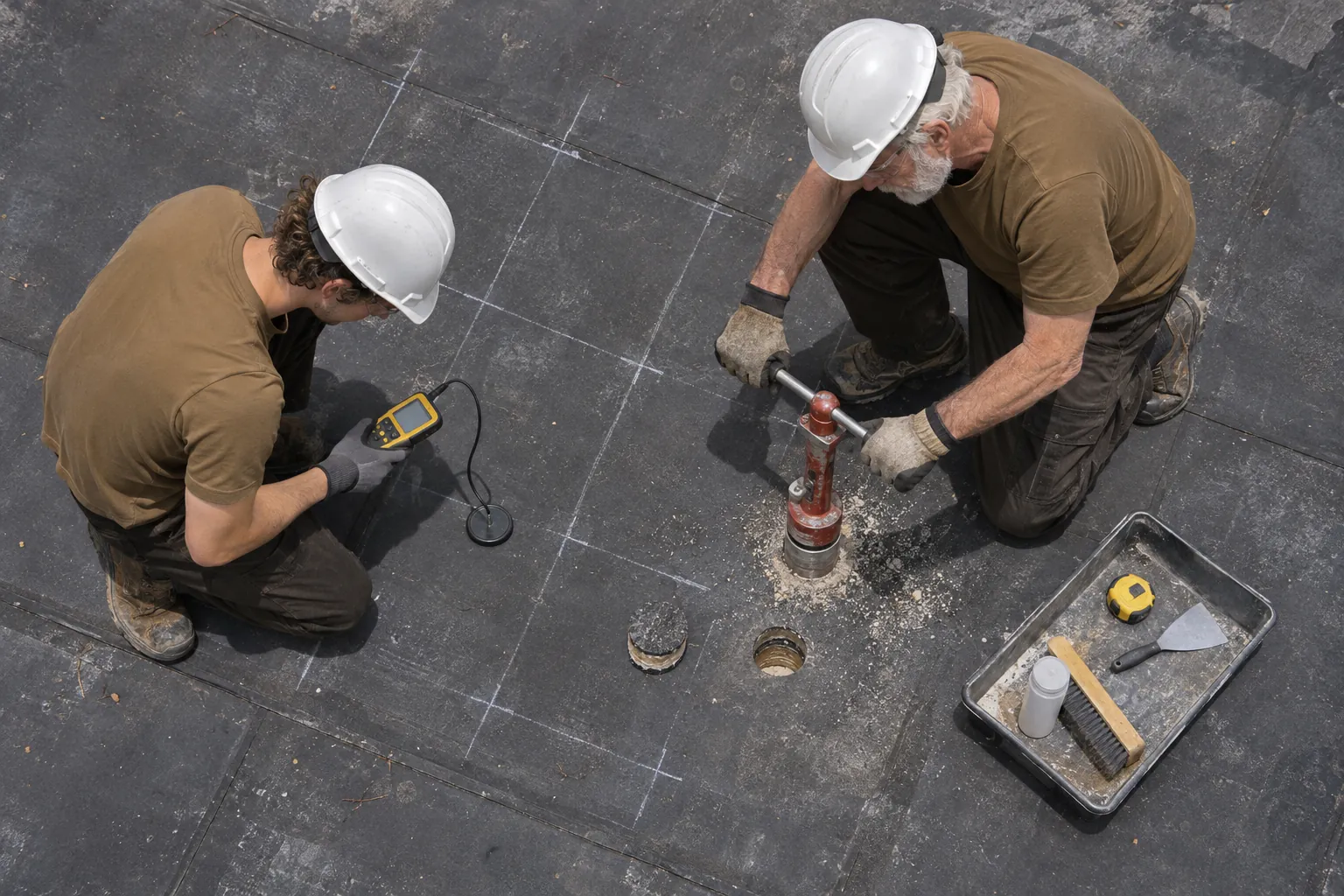
Send us a few photos or call with the building size, the panel type if you know it, and where the rust or drips show up.
Metal repairs start at the fasteners and laps, then move to panels that need replacing.
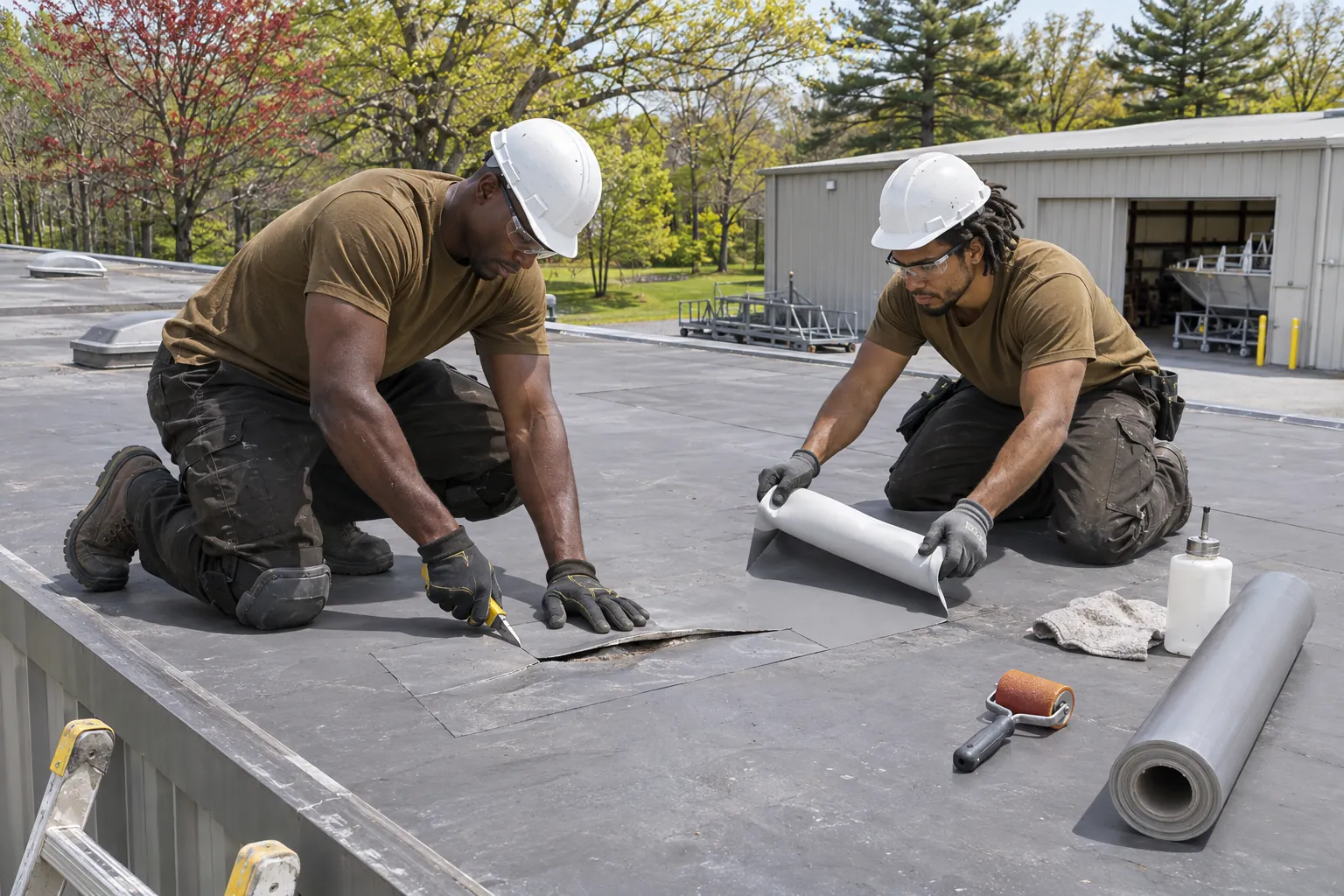
Screws, washers, and lap joints get checked purlin by purlin, and drips inside are matched to the line above them before any work starts.
Surface rust is cleaned and treated, scaled rust gets a closer look, and panels rusted through are marked for replacement.
New panels go in with the right rib profile and overlap, laps get butyl tape, and trim and closures are fastened down again.
Fastener heads and repaired laps are sealed, and photos show each section before and after so you can track it.
Metal buildings often carry a membrane addition or plant equipment, so these repairs sit close to panel and fastener work.
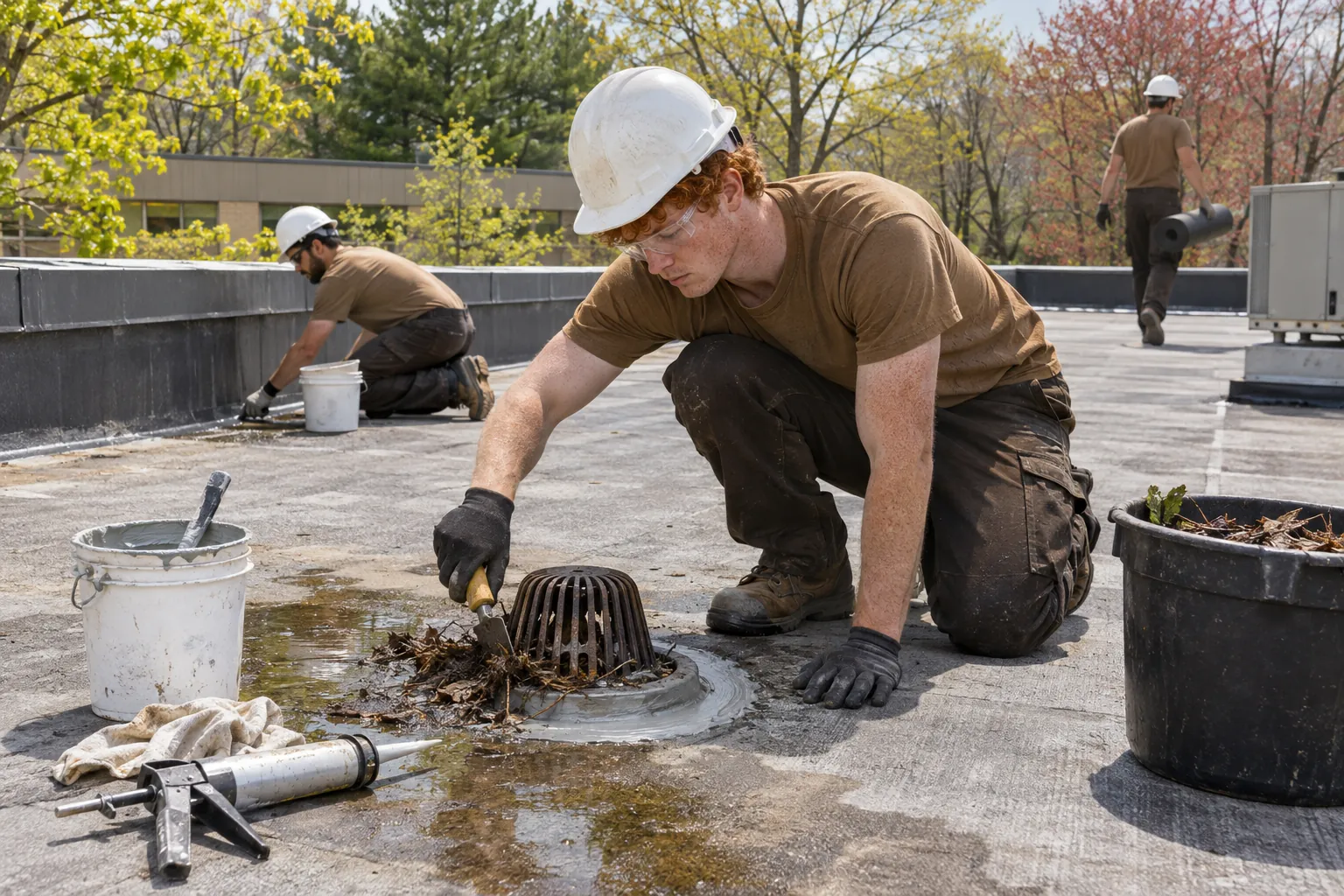
Low-slope sections and membrane additions beside metal buildings get seam, drain, and ponding repairs on their own schedule.
Flat Roof Repair details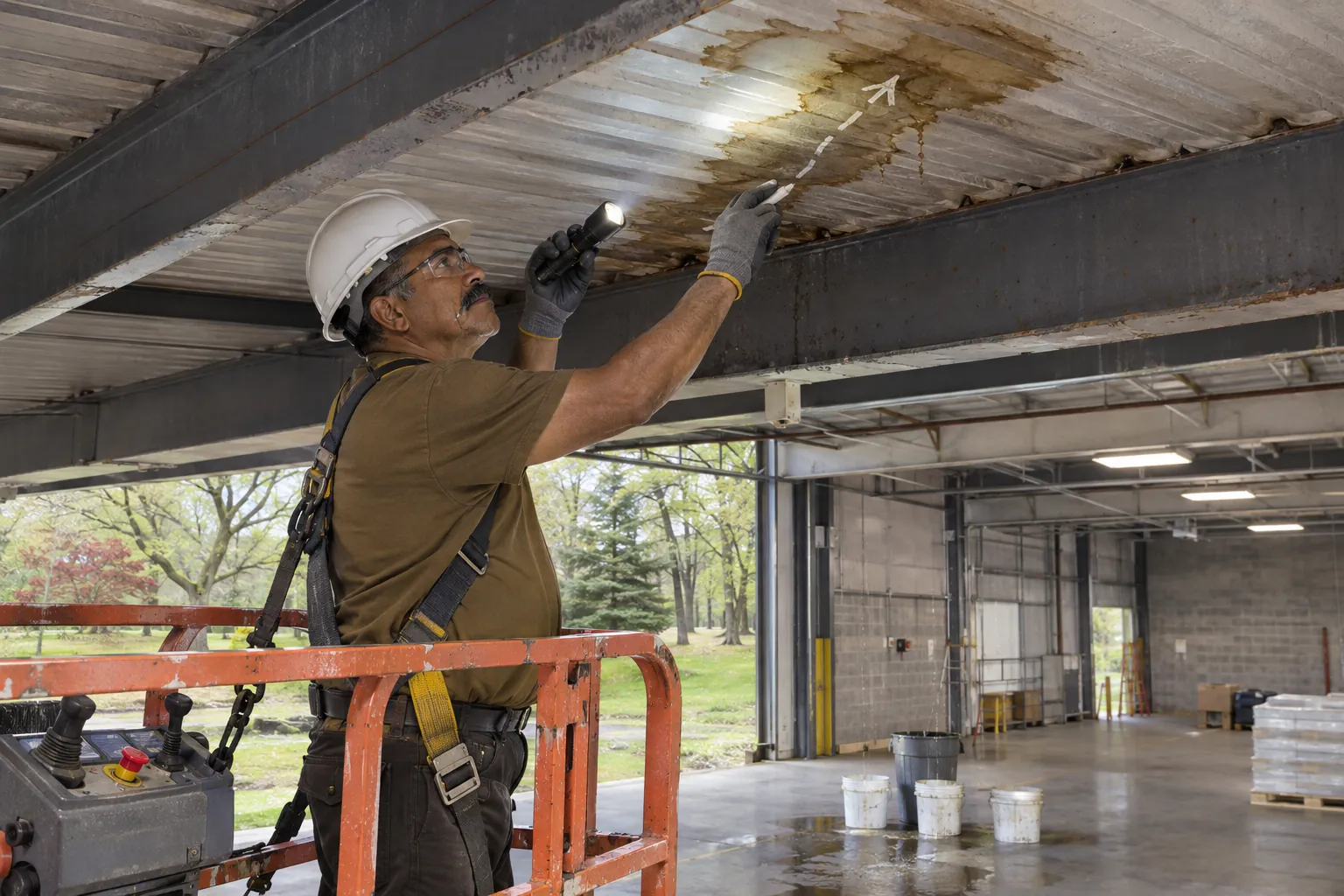
Drips that do not follow a fastener line get traced from inside, since water can travel along purlins before it falls.
Commercial Roof Leak Repair details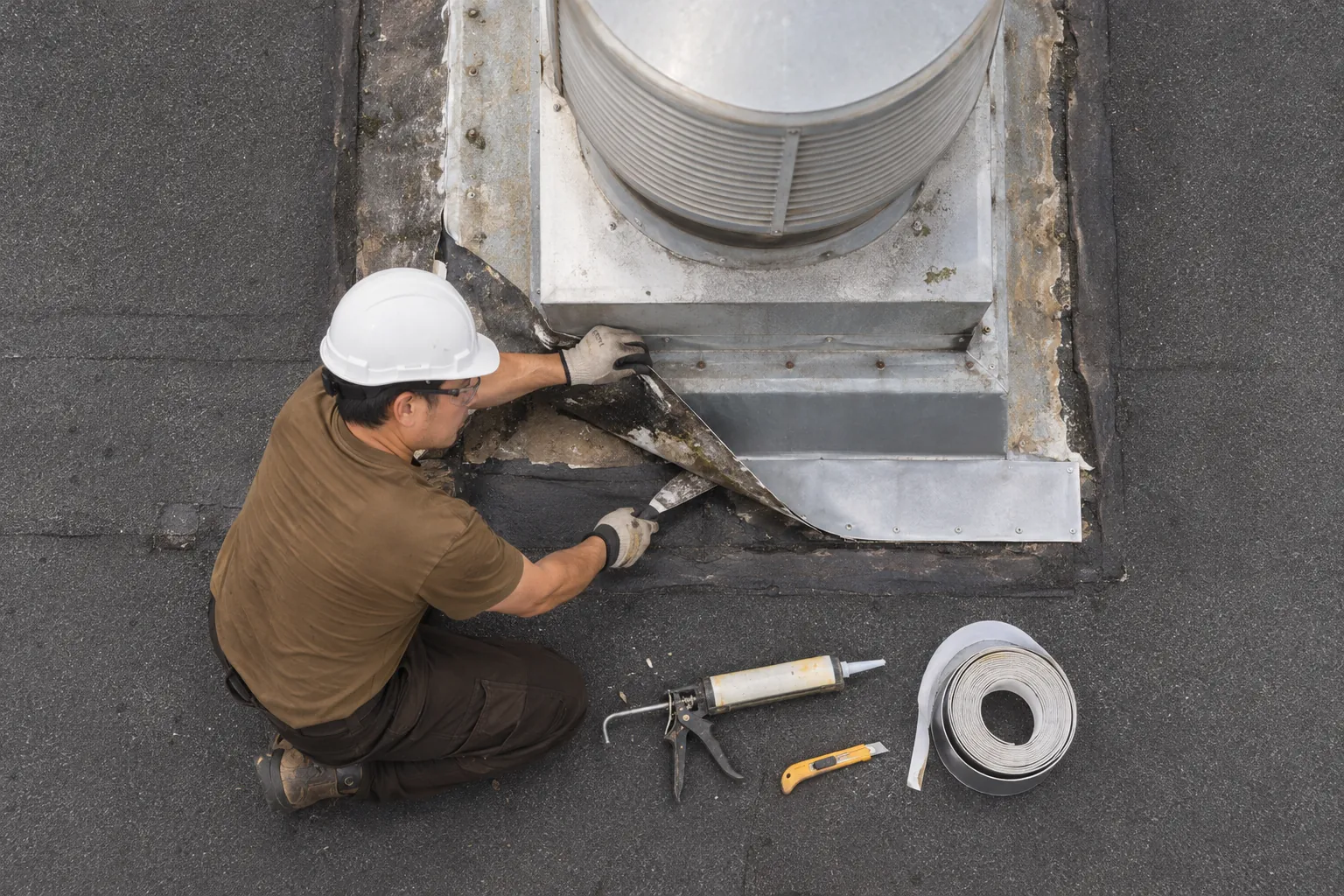
Metal fabrication and plant buildings with fans and heavy curbs need repairs planned around running equipment.
Industrial Roof Repair detailsScrew Leaks
Pull the old screw, check the hole, and install an oversized fastener with a new washer where the hole has stripped. Sealant alone over a loose screw fails quickly. On roofs with many tired fasteners, we treat whole lines so leaks stop moving down the purlin.
Repair Or Replace
Yes, when rust sits at the surface, edges, and screws and the framing is solid. Panels rusted through get replaced one at a time. Once corrosion has thinned most panels across the roof, repairs stop paying off, and we will tell you that plainly.
Seams
Clips, seam closures, and the seam itself all get checked. Loose clips let panels shift and pull the seam open, so we refasten or replace them, then reseal the seam with compatible tape or sealant and reinforce wide gaps with fabric.
Condensation
Drips on cold mornings with no rain often come from condensation on the underside of the panels. True leaks follow rain or snowmelt. Matching drips to the weather, then checking the fastener line above, sorts out which one you have.
Trim
Salt air corrodes trim fasteners near the water, and wind finishes the job. Replacing corroded screws with ones rated for coastal exposure, adding fasteners where spacing was thin, and resealing closures keeps rakes and ridge caps in place.
Tell us where the screws, laps, or panels are leaking, and we will check the whole fastener line during the visit.