Field Seams Over Occupied Space
Seams loosen across large roofs from heat cycles and foot traffic, and each one drips onto someone working below.
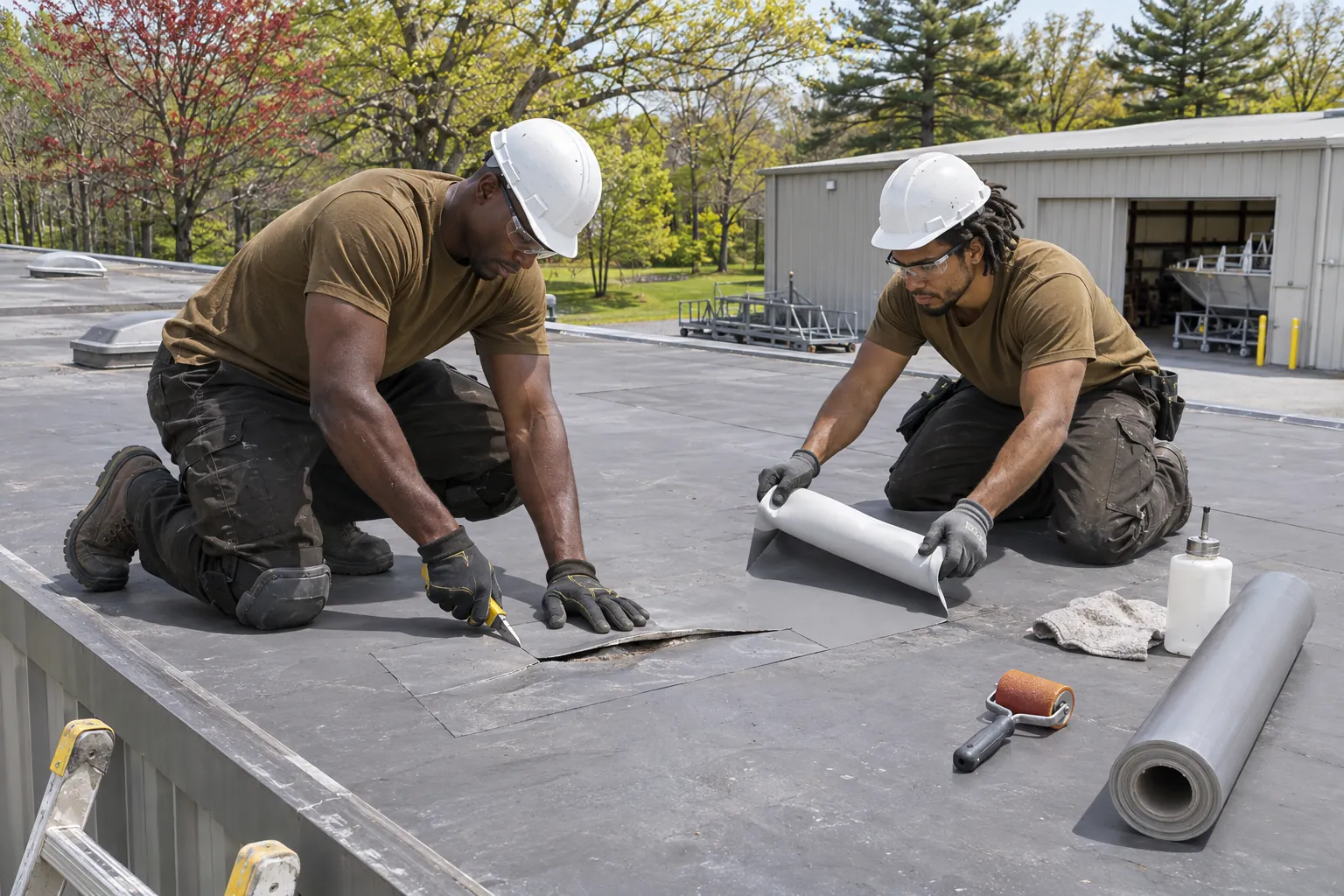
Section-by-section seam repair closes leaks without opening more roof than one shift can handle.
As an Uncasville commercial roof repair contractor, we repair seams, curbs, and drains in small sections, so buildings that run nonstop keep people and equipment dry below.


Some buildings have no quiet hours. Warehouses with night shifts, hospitality buildings, and plants that run every day still need roof work, and the room under the repair is rarely empty. Uncasville commercial roof repair on these roofs is planned around what sits below each section before any membrane is opened.
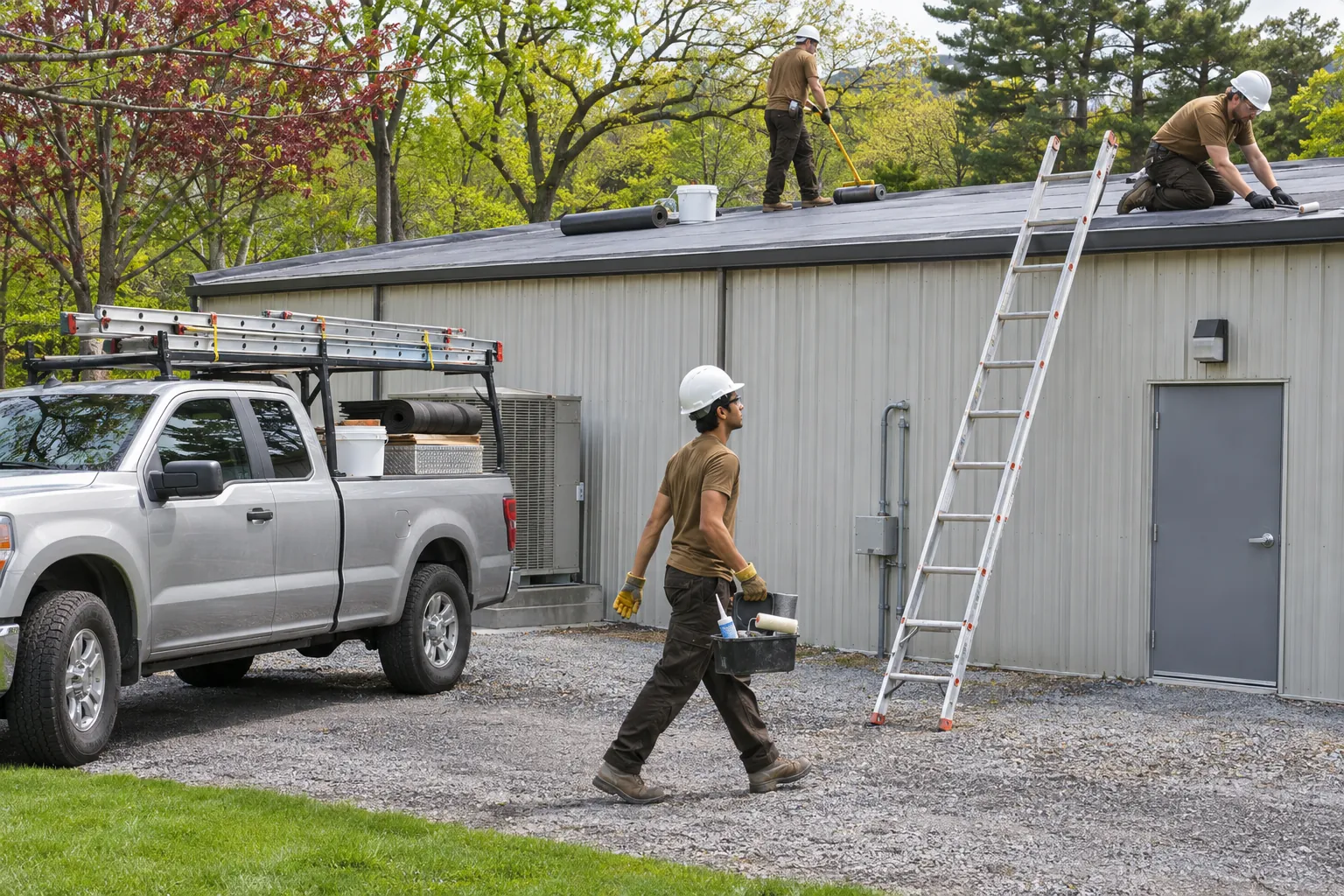
Each work area is sized so it can be opened, repaired, and sealed again before the crew leaves. Tarps and catch basins go up inside where needed, debris is bagged on the roof, and nothing is cut over a walkway, loading lane, or running machine without a plan for it.
On buildings in constant use, small roof failures show up fast because someone is always underneath. These four come up most.
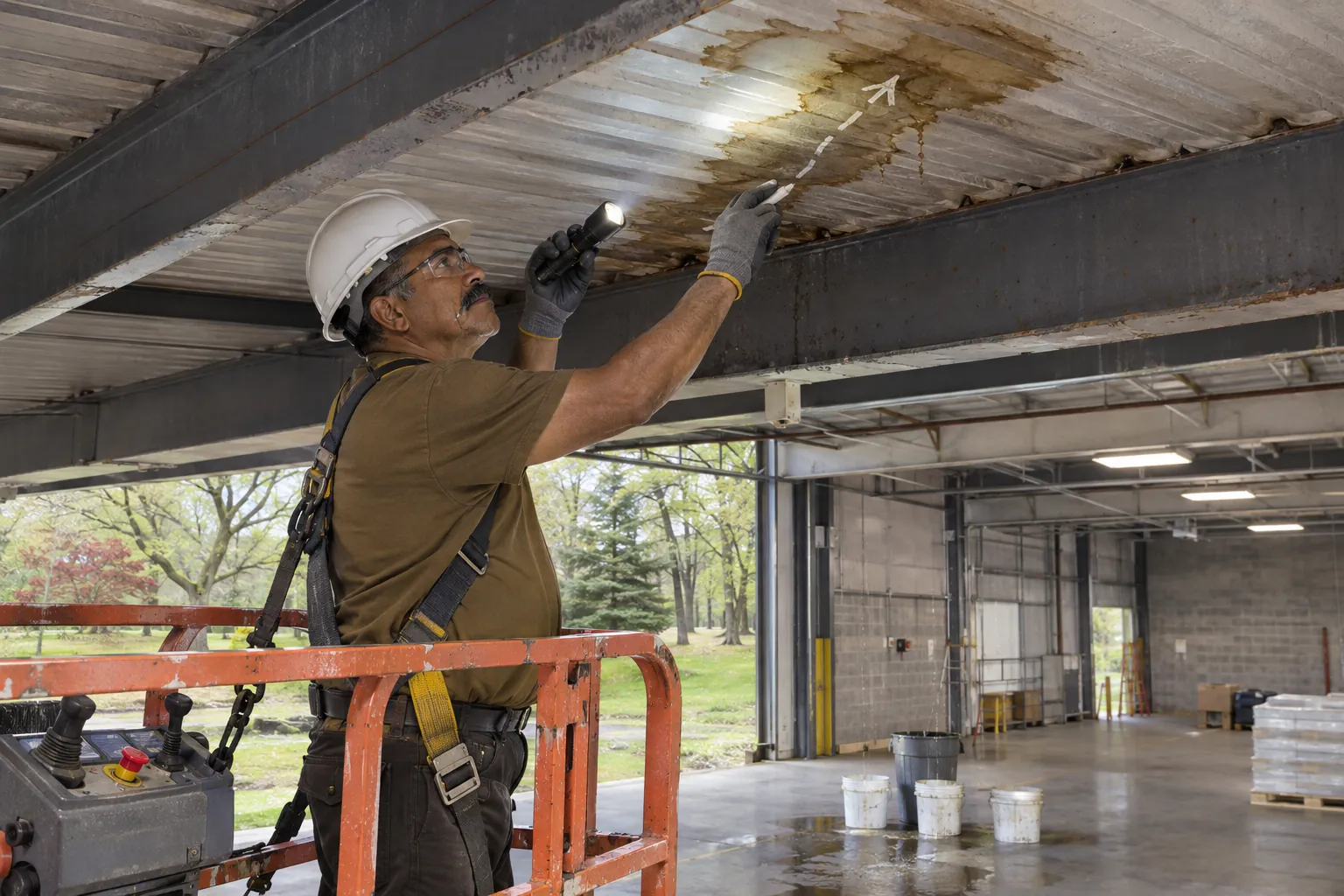
Open laps in the roof field or a split boot around a pipe let water run along the deck until it finds a seam in the ceiling below.
After tracing the path uphill, we seal the lap or replace the boot in a small opened area that gets closed before the shift ends.
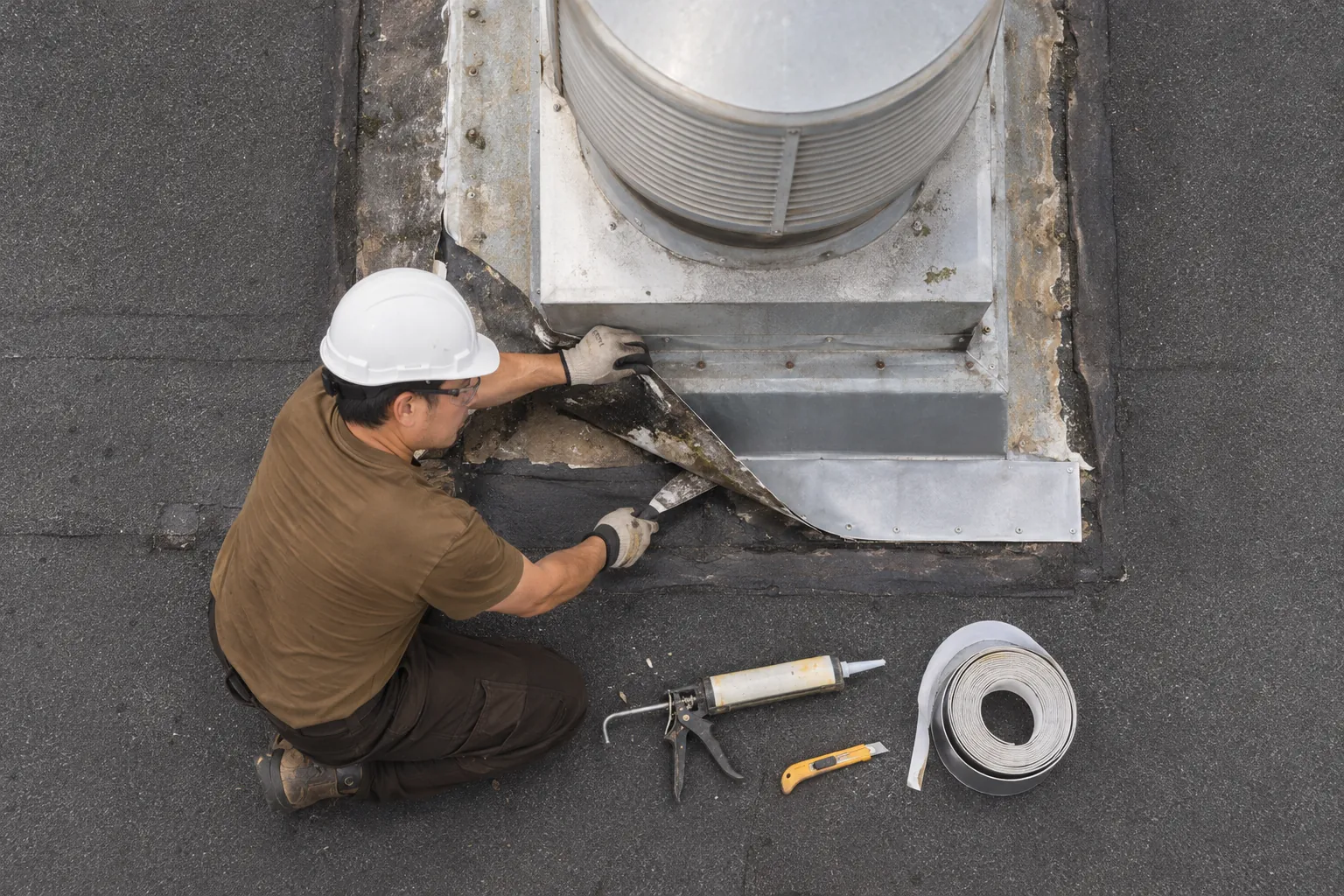
Curb flashing on air handlers that never shut off cracks from steady vibration, so rain runs into the curb and down the ductwork.
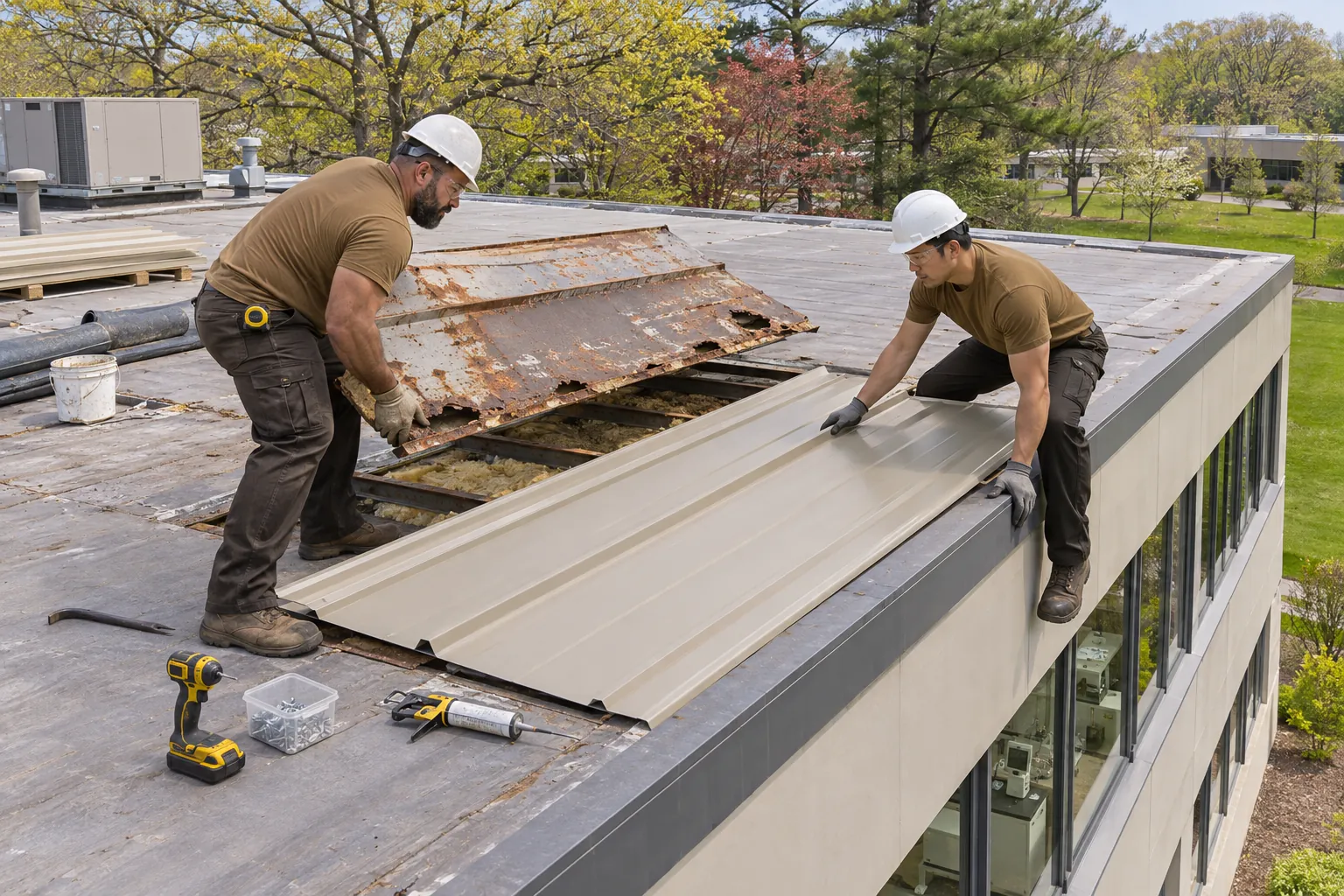
Curbs are rewrapped with new flashing and counterflashing, timed with the operators so any short shutdown happens when the space can spare it.
Debris from constant deliveries and nearby trees clogs drains, and standing water starts pushing under worn seams beside the bowl.
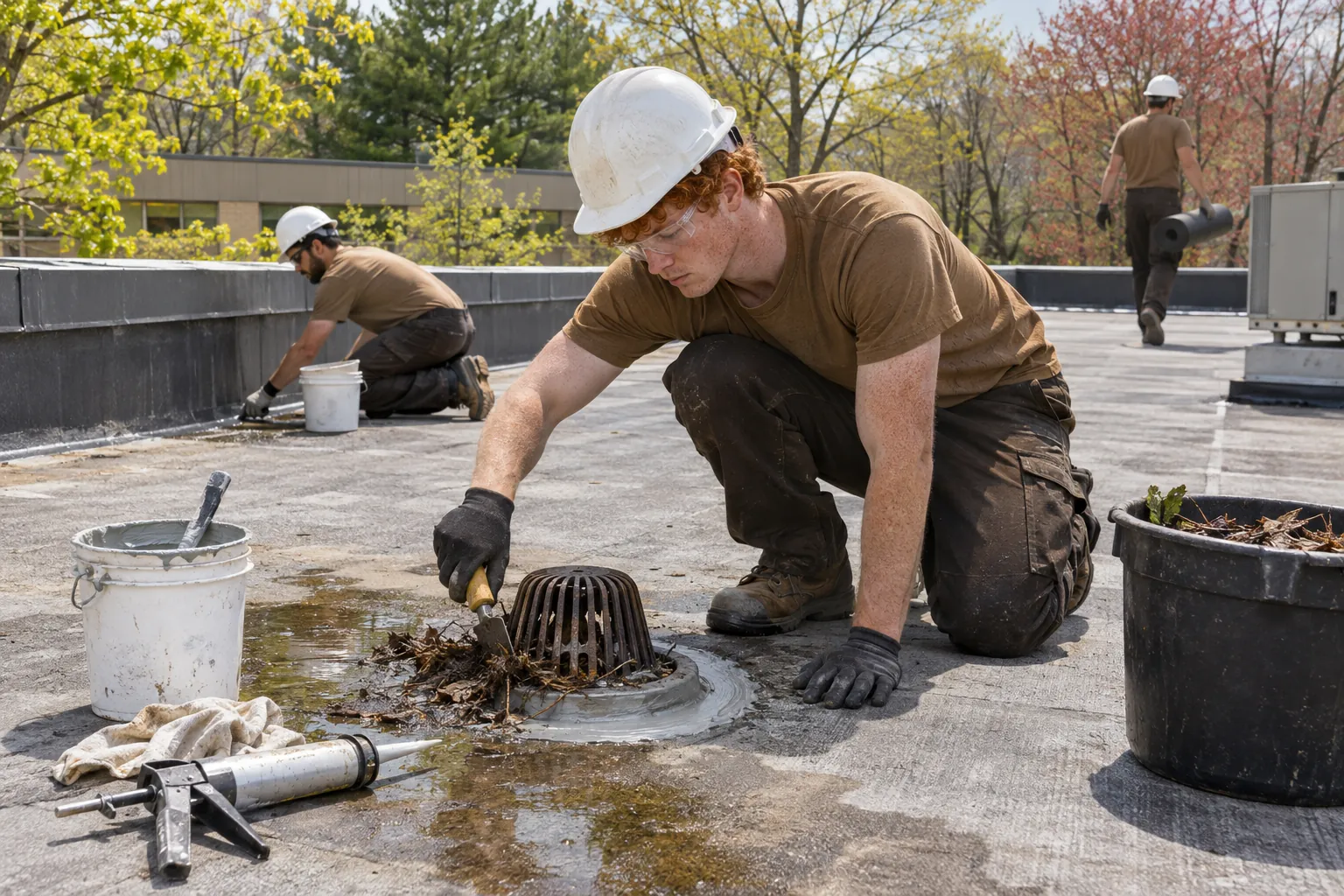
Drains are cleared and reset, strainers replaced, and the membrane around each bowl reflashed so water leaves the roof again.
Fascia and coping above doors work loose at the cleats, and wind lifts the membrane edge where people walk in and out.
Edge metal is refastened or replaced from the roof side, with the entrance below closed off or covered while the trim is worked on.
Repairs sized to each section let the building keep running while the roof gets fixed piece by piece.
Seams loosen across large roofs from heat cycles and foot traffic, and each one drips onto someone working below.
Section-by-section seam repair closes leaks without opening more roof than one shift can handle.
Equipment that never cycles off shakes its curb flashing loose faster than units on a schedule.
New curb flashing set during a planned window holds against that steady vibration.
Constant activity around the building sends grit and debris onto the roof and into the drains.
Cleared drains with reflashed bowls keep water from standing over busy rooms.
Trim over doors and docks takes wind and gets bumped by deliveries until fasteners pull out.
Secured edge metal keeps the roof edge closed where people pass underneath all day.
These four services cover the roofs on Uncasville buildings that stay in use, each staged around the people below.

Large flat roofs over busy floors get seam, drain, and curb repairs in small sections, each one opened and closed within a shift so nobody below works under an open roof.
Flat Roof Repair details
Metal warehouses and service buildings get loose screws replaced and laps resealed from the roof side, with nothing dropped through the panels into the space below.
Commercial Metal Roof Repair details
Leaks over aisles, desks, or machines get traced quickly from the drip to the open seam, boot, or curb, and the entry point is closed before more water comes in.
Commercial Roof Leak Repair details
Plants that run every day get curb, exhaust fan, and walkway repairs scheduled with the operators, so shutdowns are short and planned rather than forced by a leak.
Industrial Roof Repair details
Call and tell us what sits under the leak and when the area is quietest. We plan the opening around it and close the roof the same shift.
Four steps keep the roof work and the building's work from getting in each other's way.
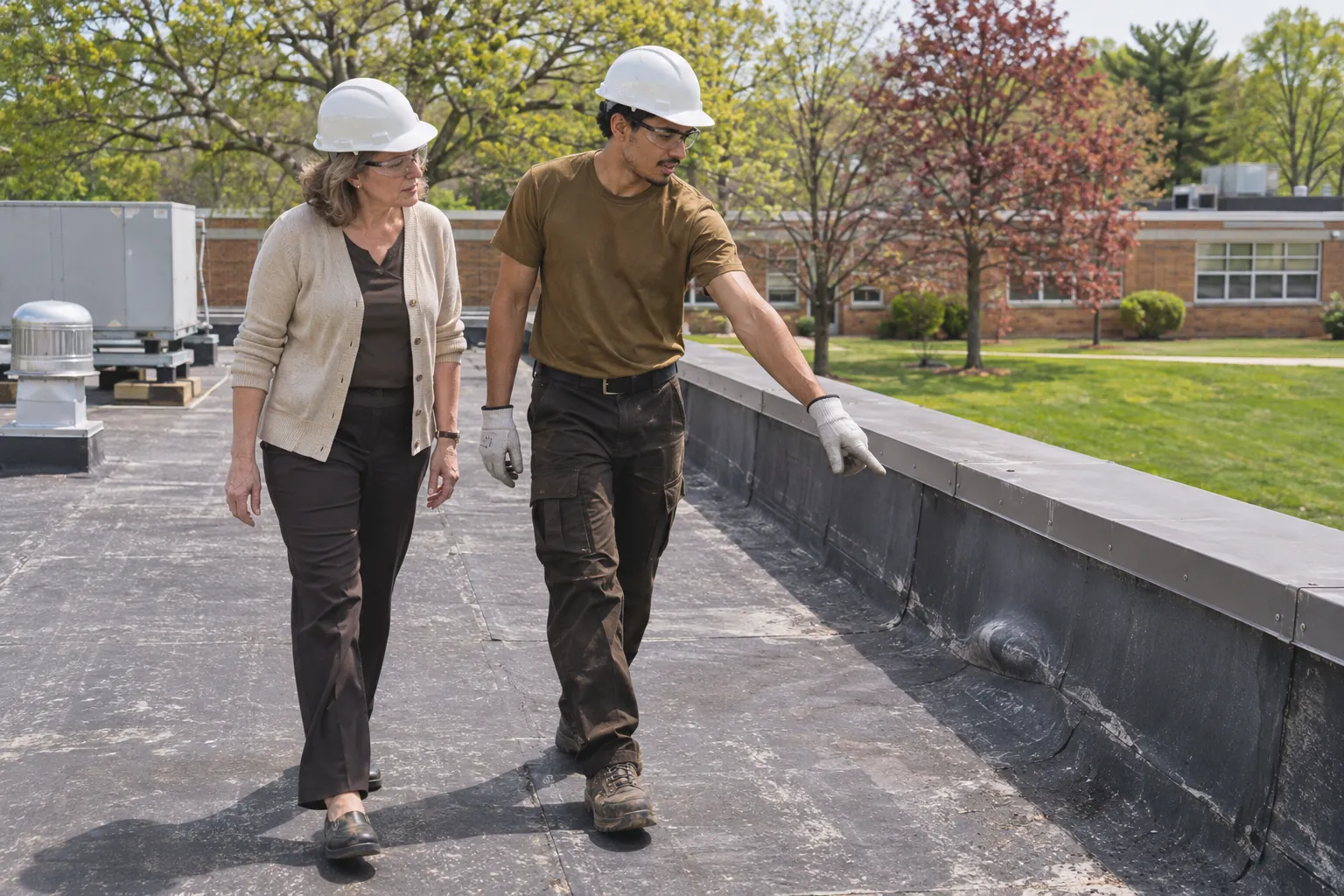
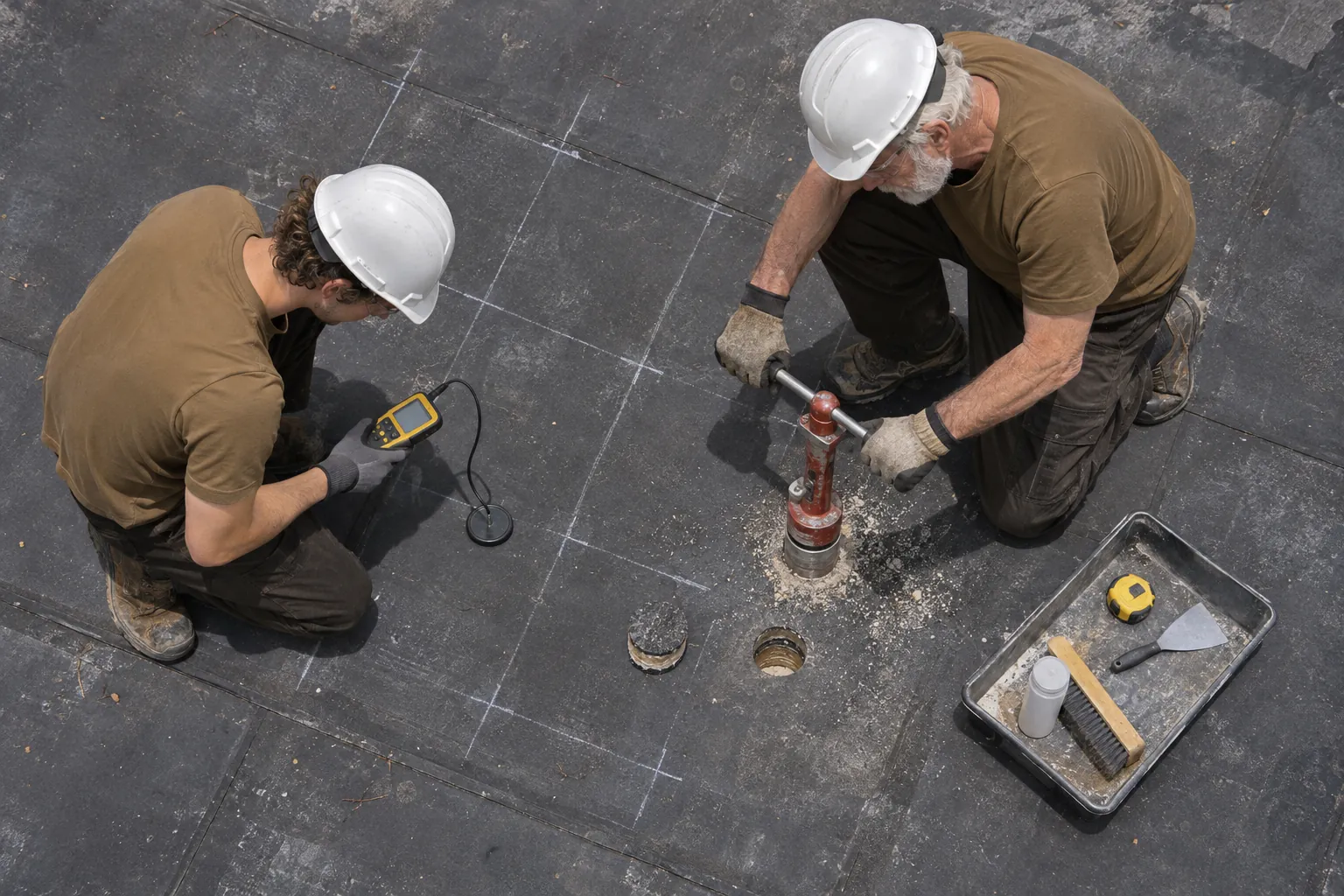
Inspection covers seams, curbs, drains, and edges, and each finding is matched to the room, aisle, or machine beneath it so repairs get planned around them.
Repair areas are split into pieces small enough to open, fix, and seal before the crew leaves, so the membrane never sits open overnight.
Catch basins or tarps go up under the work area first. Then wet insulation is cut out, curbs are reflashed, and seams are sealed from the roof.
Every finished section gets checked, photographed, and logged, so operators know which part of the roof is done and where the next opening will be.
We take commercial roof repair work in Uncasville and fourteen nearby towns. Is your building somewhere else? Call us or send us a message and we will see if we can reach it.

Cost
Size of the damaged area and the roof system set the base price. Splitting work into shift-sized sections, setting interior protection, and planning equipment shutdowns add labor. Wet insulation found under the membrane and how far material has to be carried across the roof also change the total.
Businesses
Each repair is planned against what sits below it. Openings stay small, interior protection goes up before cutting, and noisy or messy steps happen in the quietest window the manager can offer. Debris leaves the roof away from doors and docks, so traffic in and out keeps moving.
Finding Help
Call or request a free estimate. Tell us the building type, the roof type if known, where water shows, and the hours when each area is least busy. That information lets us plan the first inspection and the repair sections around the people and equipment under the roof.
Overnight
Leaving membrane open overnight invites a leak into a space that is in use, so we avoid it. Each section is closed before the crew leaves, even if that means a temporary seal over cut insulation until the permanent repair continues on the next visit.
Equipment
Seam and field repairs near a unit happen with it running. Rebuilding the flashing right at the curb sometimes needs the unit off for a short time so the crew can work safely around the cap and duct seals. We set that window with the operators ahead of time.
Tell us what runs under the leaking roof and when it is quietest. We repair in sections and close the roof each shift.