Membrane Near the Exhaust
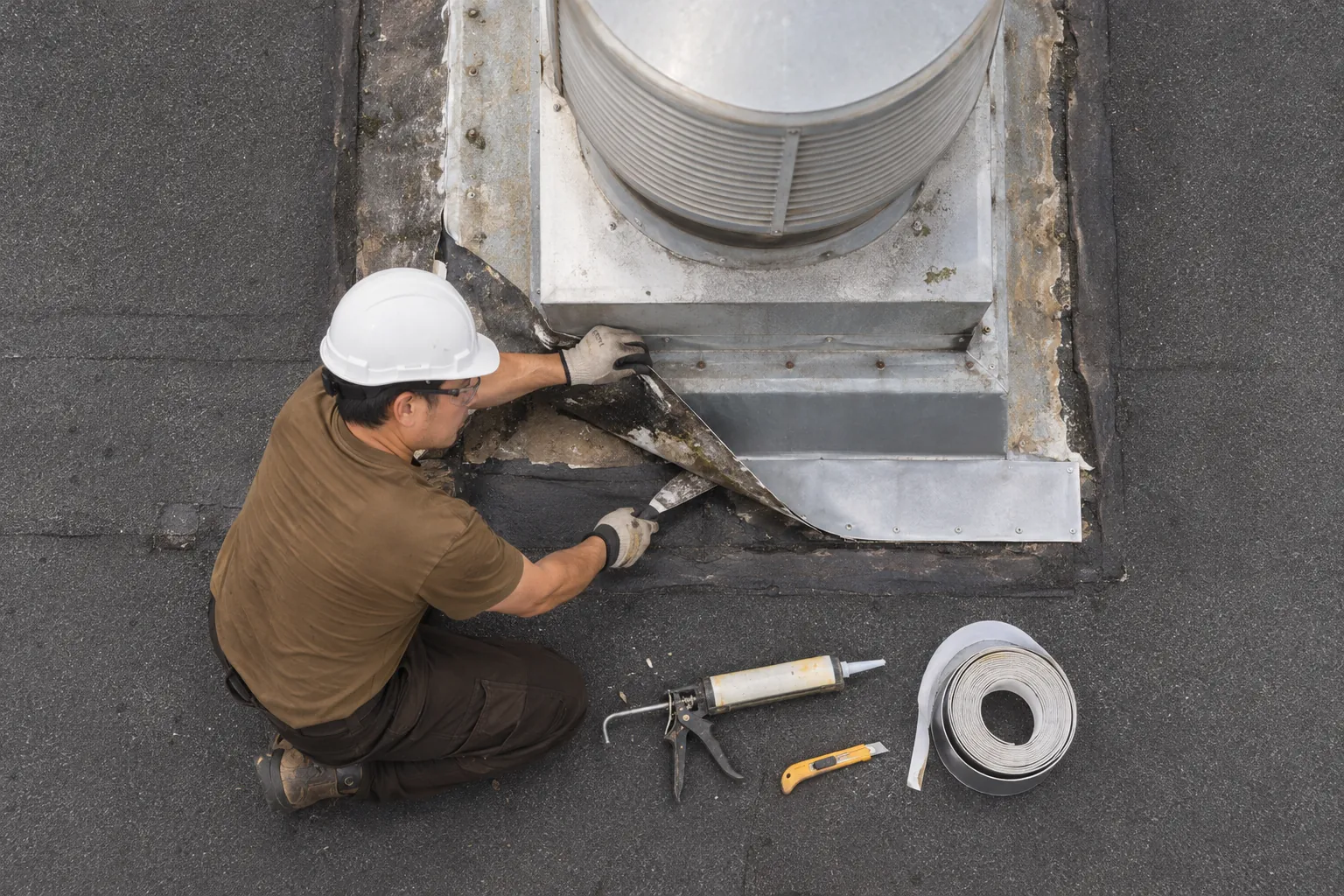
Grease buildup slowly softens the sheet around kitchen fans until it splits at seams and flashing.
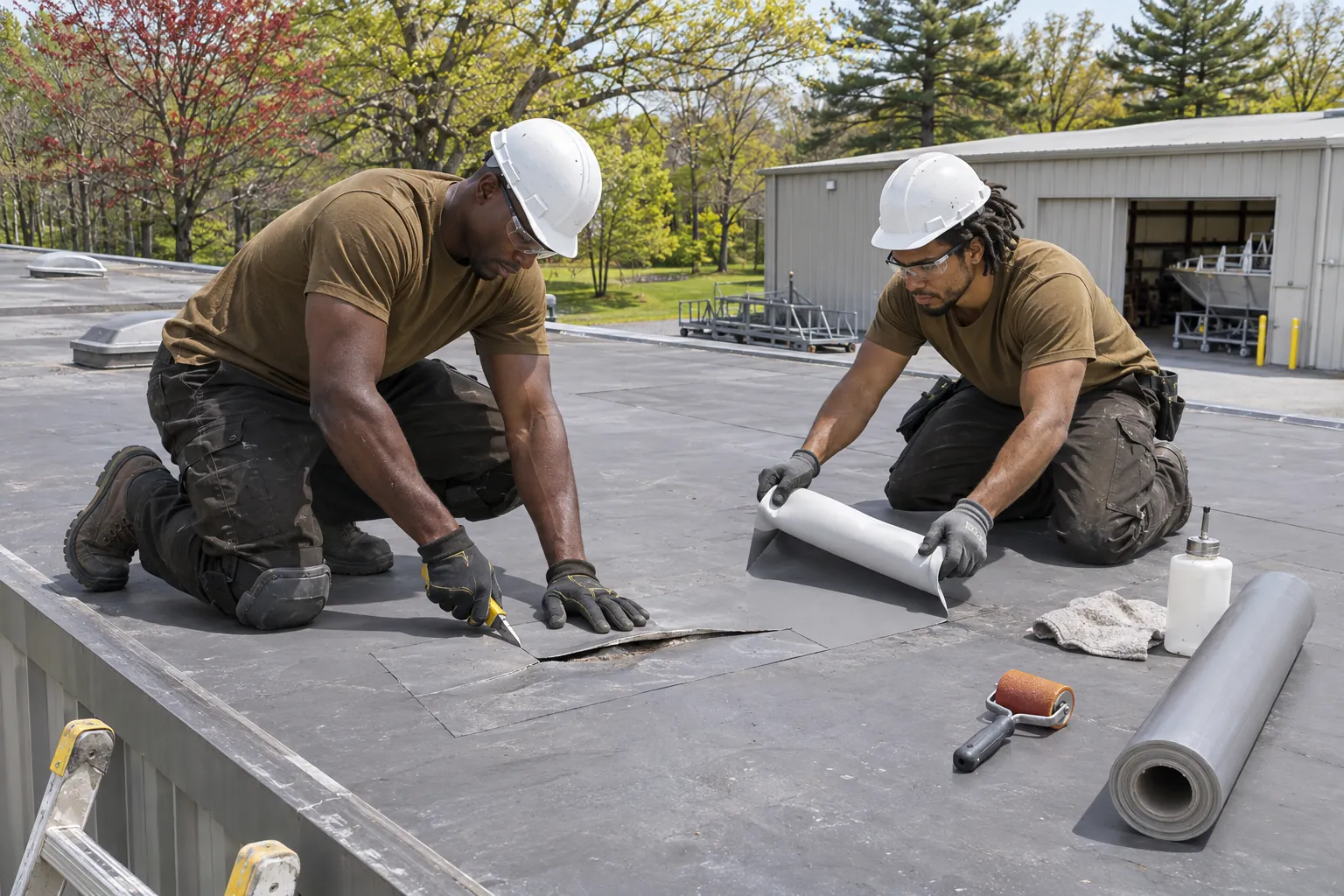
Replacing that section with grease-resistant membrane and adding containment stops the cycle.
As a Mystic commercial roof repair contractor, we repair grease-damaged membrane, exhaust fan curbs, and open seams on restaurant and shop roofs before the busy months.


Restaurant roofs take a beating that other roofs never see. Mystic commercial roof repair on these buildings often starts at the kitchen exhaust fan, where grease blows out, settles on the membrane, and softens it until seams and flashing give way around the curb.
Shops and restaurants here plan around their busiest months, so the best time to repair is before crowds arrive. A spring inspection finds winter damage, grease wear, and blocked drains while there is still time to close the roof without working over a full dining room.
Busy kitchens and retail roofs share a short list of failures. Here is what we look for and how each one gets fixed.
Grease from the kitchen exhaust collects on the roof and breaks down rubber and many single-ply membranes, leaving them soft and blistered.
We clean the area, cut out the damaged membrane, patch with a grease-resistant sheet, and set a containment pad under the fan outlet.
Curb flashing around the exhaust fan or make-up air unit has split from heat and vibration, so water runs into the curb.
Curbs are rewrapped with new flashing to full height, counterflashing is resealed, and loose curb cap fasteners are replaced.
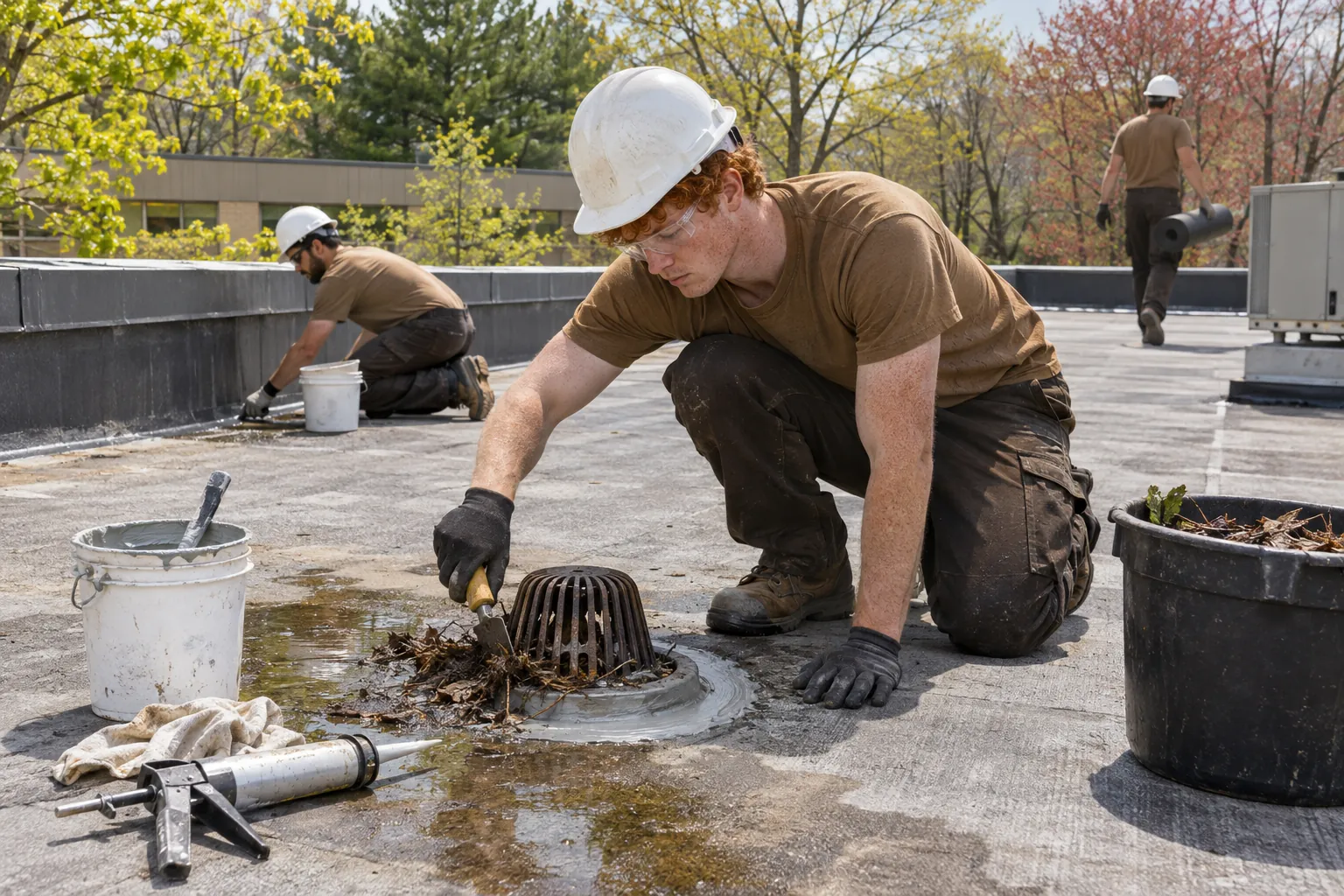
Rear drains collect leaves and debris over winter, then hold water against the back wall where the kitchen equipment sits.
Drains get cleared and their strainers reset, the bowl flashing is checked, and any low spot that keeps holding water is built up so it flows to the outlet.
Open laps on the roof field or a loose vent boot let water travel along the deck before it shows up over the sales floor.
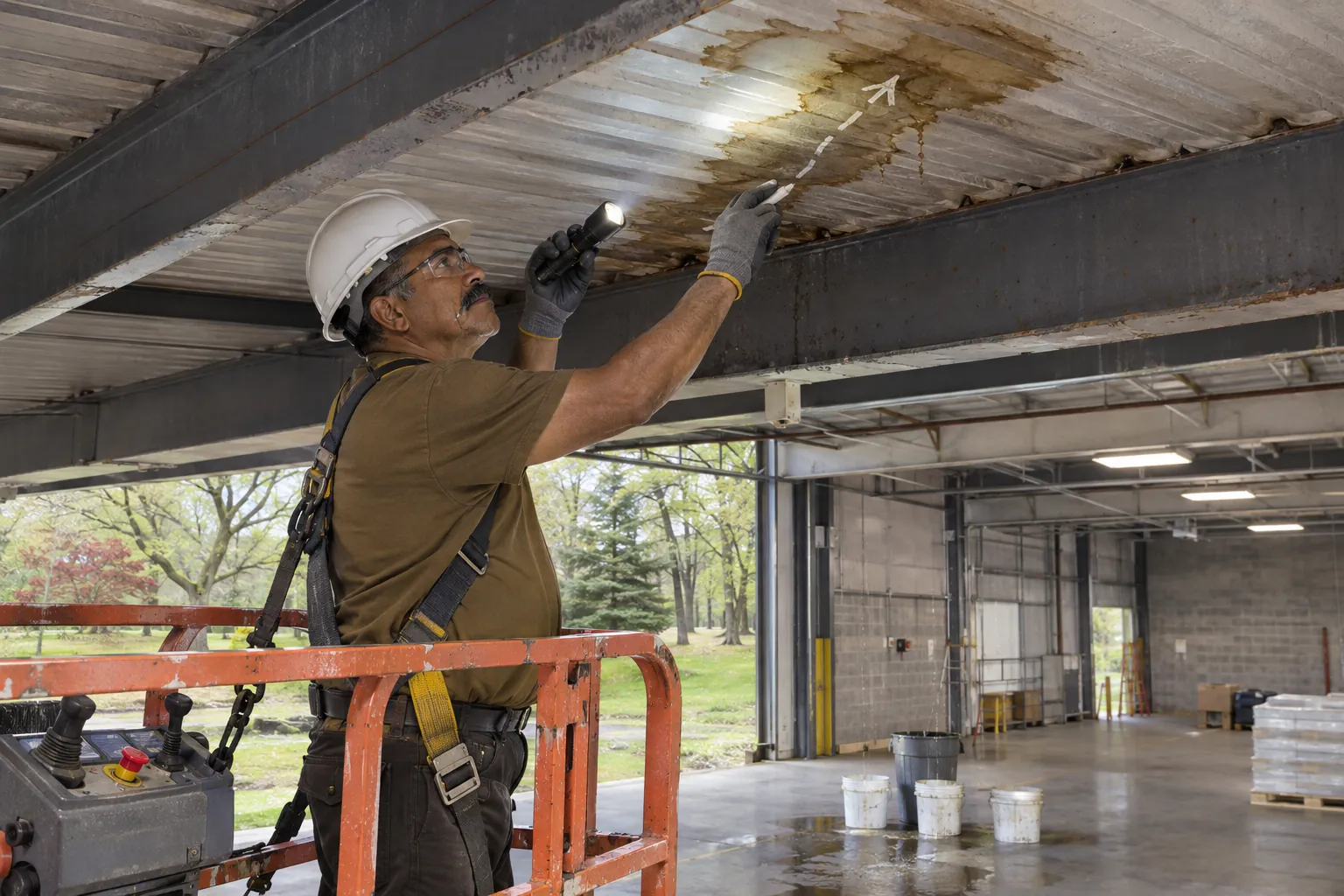
Tracing from the stain uphill finds the open seam or boot, which then gets cleaned, primed, and sealed with matching material.
Repairs made before the season keep a roof dry through the months when closing for work would hurt most.
Grease buildup slowly softens the sheet around kitchen fans until it splits at seams and flashing.
Replacing that section with grease-resistant membrane and adding containment stops the cycle.
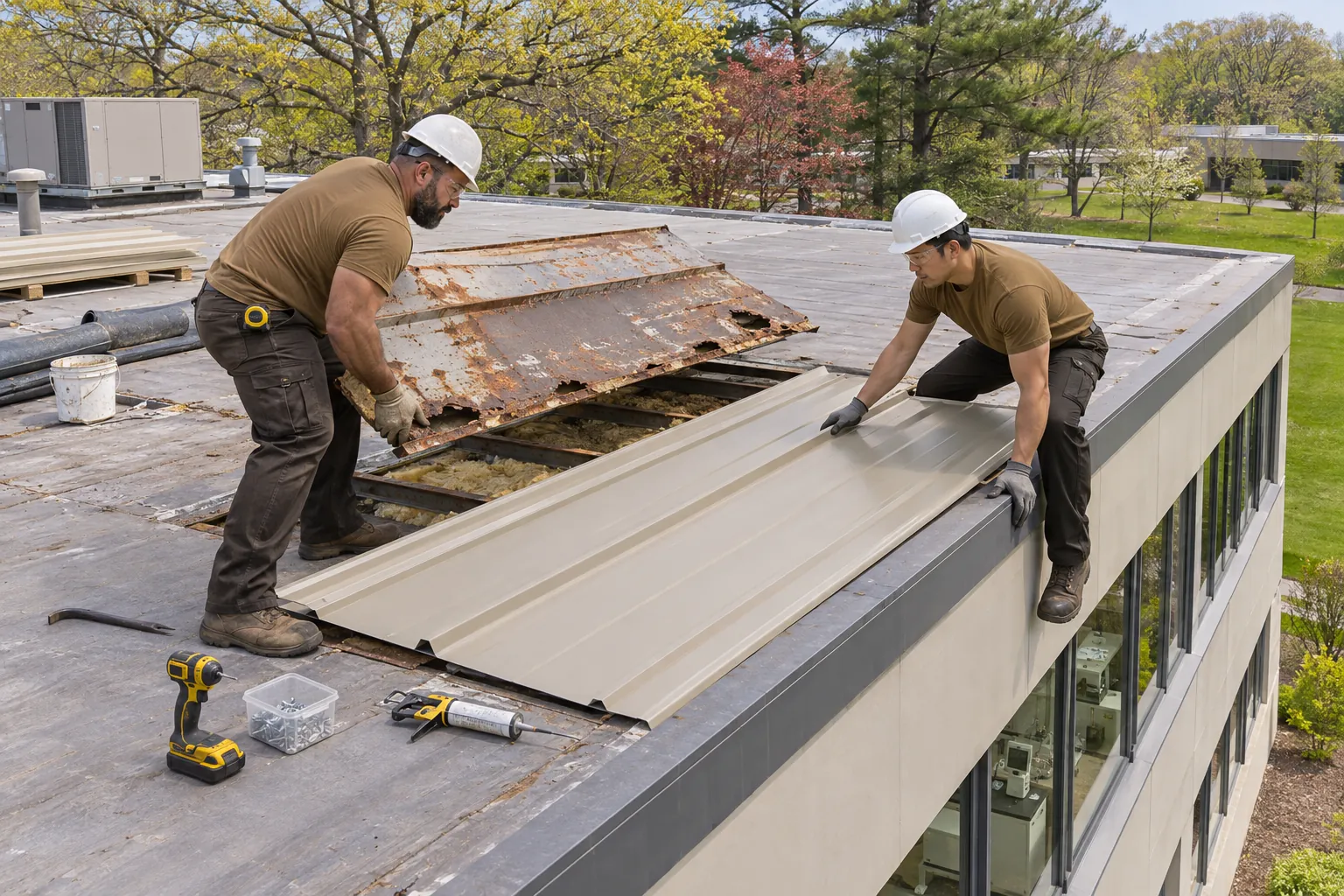
Constant heat and vibration from hoods and make-up air units crack flashing corners on their curbs.
Rebuilt curb flashing with fresh counterflashing holds up to the equipment running all day.
Leaves and grit packed into drains over the cold months leave water standing when spring rain arrives.
Clearing and resetting drains early keeps ponding from wearing out the membrane all summer.
Laps in the roof field loosen over years of temperature swings and service traffic.
Sealed seams keep stock, displays, and register areas below dry when summer storms roll through.
Four repair services cover the roofs on Mystic shops, restaurants, and the buildings behind them.

Flat roofs over dining rooms and shops get grease-damaged sections replaced, drains reset, and curb flashing rebuilt, so the roof stays closed during the months the building is busiest.
Flat Roof Repair details
Storage sheds and service buildings behind the storefronts often carry metal panels. Leaking screw holes, rusted laps, and loose ridge caps are fixed with matching parts.
Commercial Metal Roof Repair details
Kitchen leaks get traced from the drip back to the fan curb, vent boot, or seam that let water in, so the repair lands on the real entry point instead of on the ceiling stain.
Commercial Roof Leak Repair details
Bigger buildings with heavy exhaust, rooftop equipment, and long drain runs get curb, fan base, and walkway repairs done in sections around the work inside.
Industrial Roof Repair details
Call and tell us where the fan sits and whether the roof feels soft near it. Grease damage spreads, so earlier repairs stay smaller.
Spring visits follow four steps so the roof is closed before the summer rush.
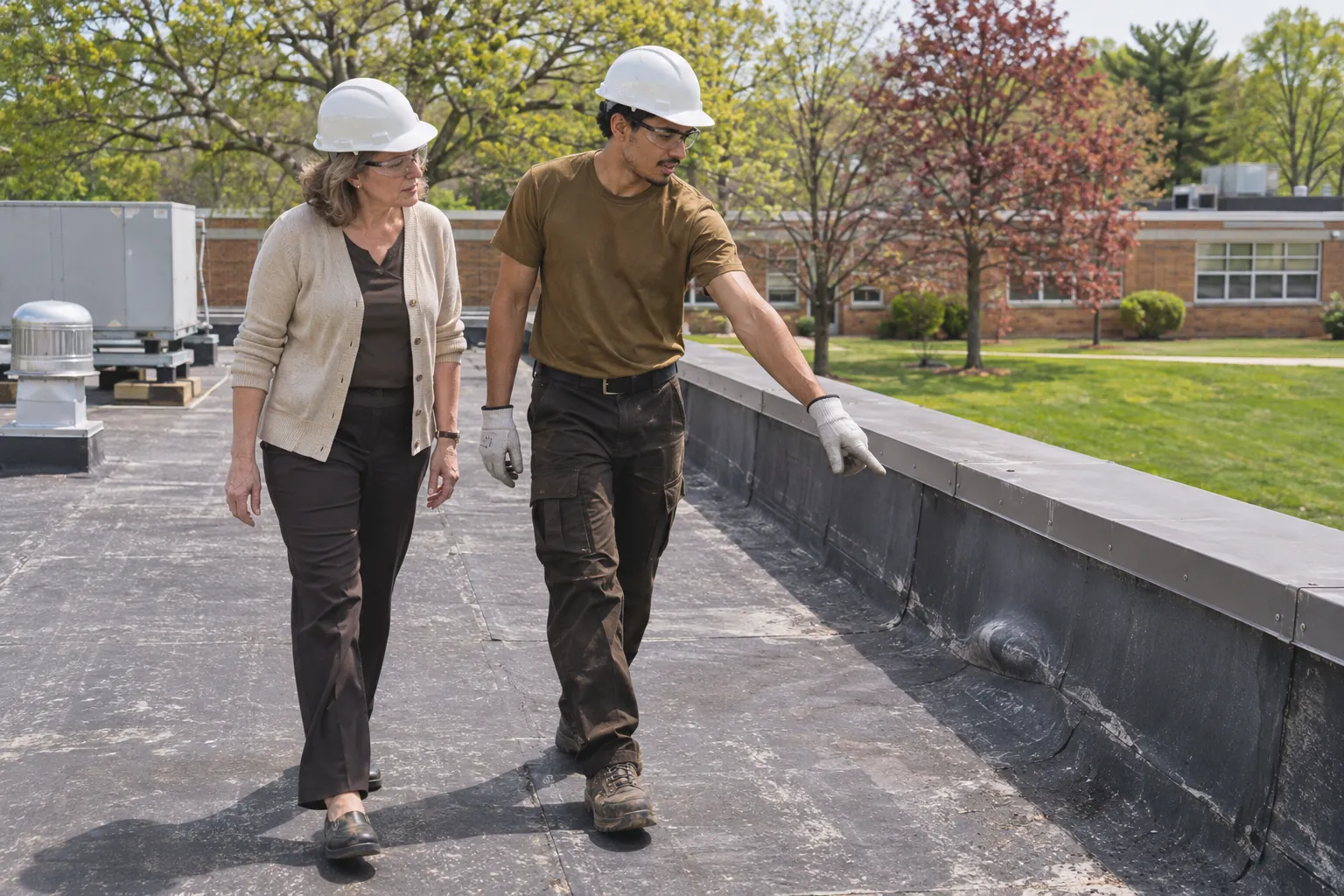
Inspection covers every exhaust fan, equipment curb, drain, and seam line. Grease spread is mapped so you see how far the damage reaches from each fan.
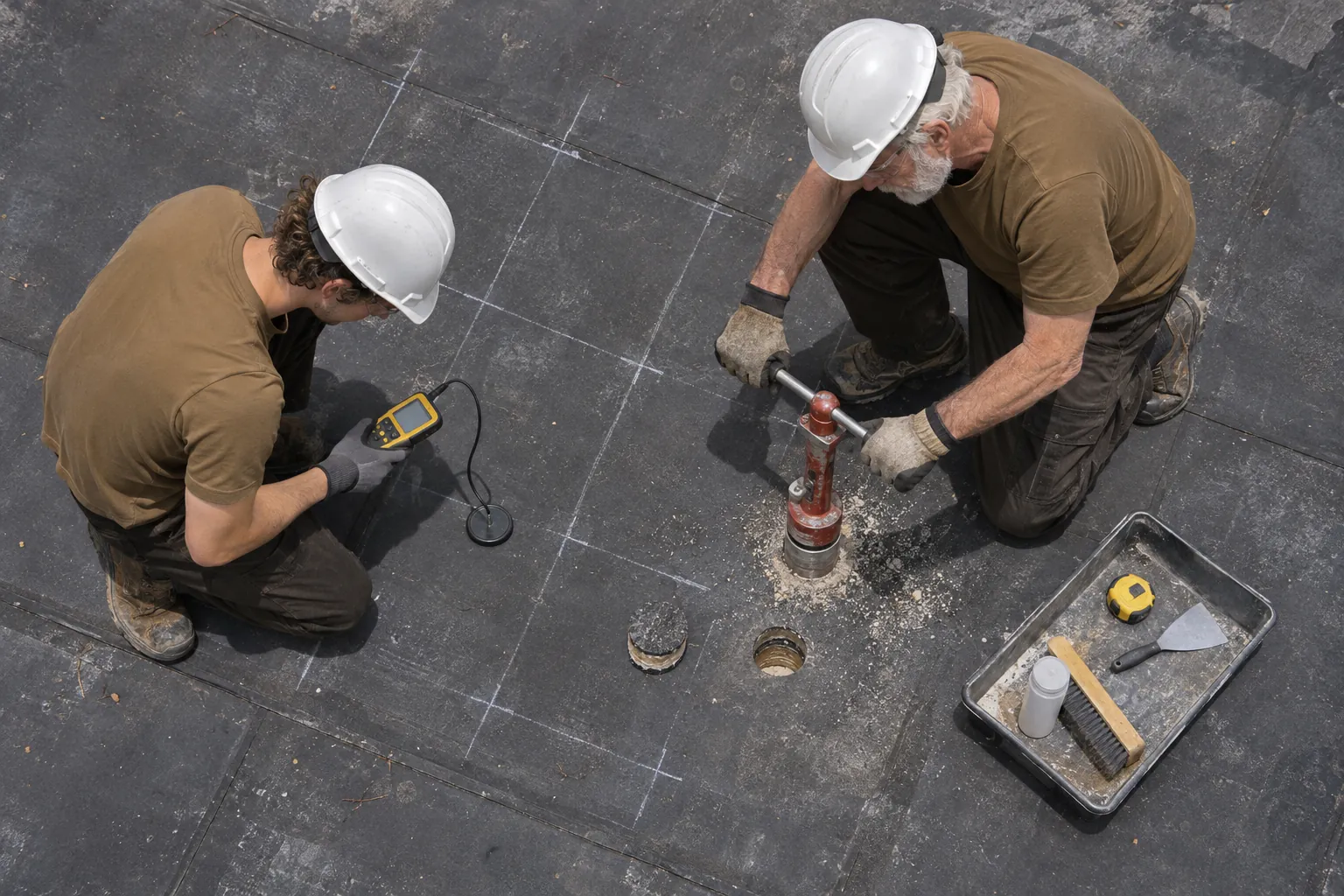
Moisture readings and a small core cut near the worst areas show whether insulation under the membrane is wet and needs replacing along with the sheet.
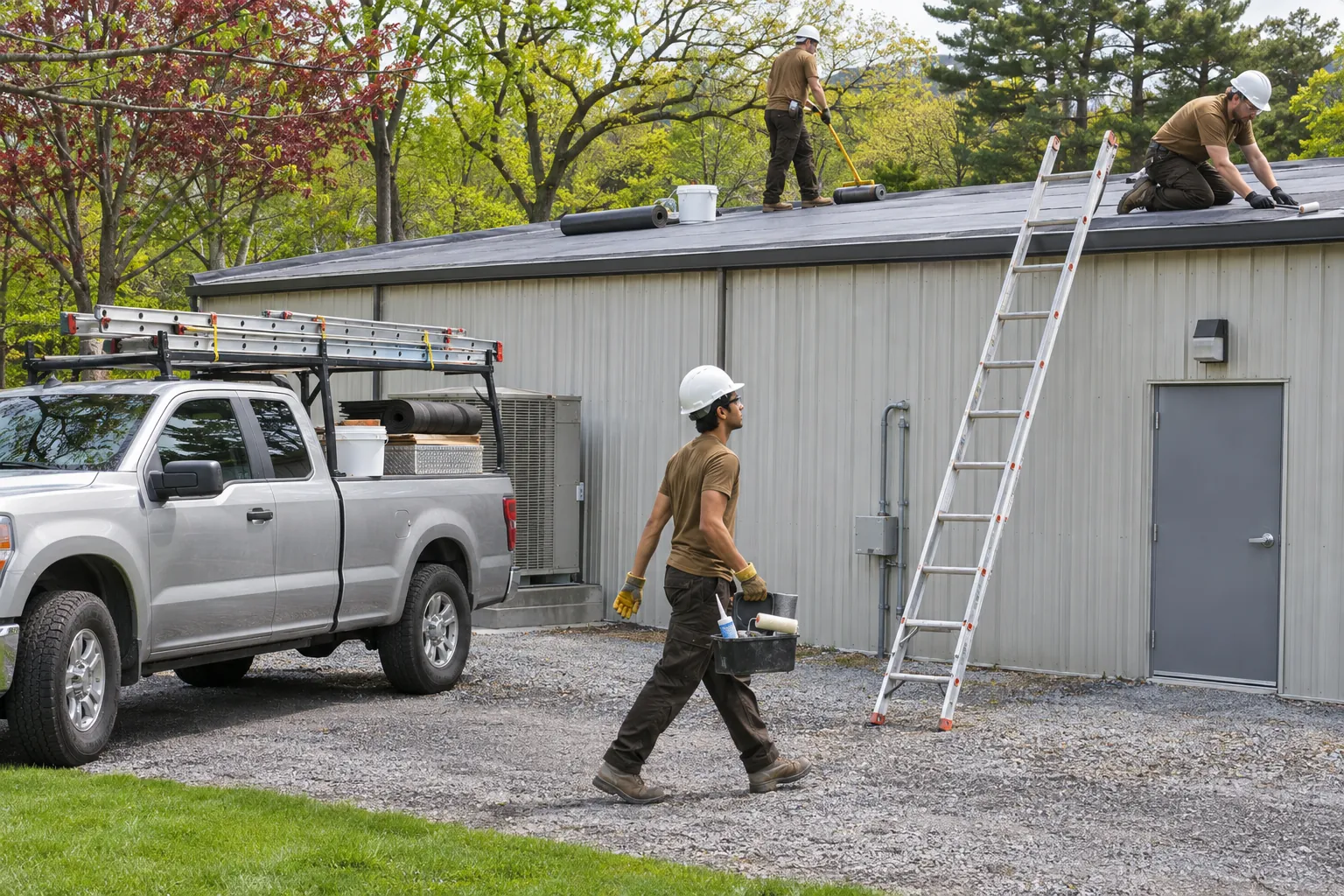
Damaged membrane comes out, curbs get new flashing, containment pads go under fans, and drains are cleared, all scheduled outside dining and shopping hours.
Photos show each repair, and a short note lists which fan areas to look at after the season so grease buildup on the roof never gets ahead again.
Commercial roof repair work takes us to Mystic and fourteen other towns in our area. Not on the list? Call us or send us a message and we will confirm whether your building is in reach.

Grease
Kitchen grease blown out of the fan lands on the roof and breaks down many membranes, especially rubber. Once softened, the sheet splits at seams and pulls from curb flashing. Patching over grease rarely lasts. Removing the damaged section, using a grease-resistant sheet, and catching grease in a containment pad solves the problem.
Cost
Size of the grease-damaged area around each fan is the main factor. Number of curbs needing new flashing, wet insulation found under soft spots, and whether containment pads are added also count. Scheduling around open hours and reaching the roof from a tight back lot can change the price too.
Finding Help
Call or request a free estimate in early spring, describing the building, the roof type, and where leaks or soft spots show. Booking ahead of the busy months leaves room to repair drains, curbs, and grease areas before crowds arrive, instead of patching in the middle of the season.
Timing
Many can. Curb flashing and seam repairs are done with the fan running nearby, as long as the crew is clear of the exhaust stream. Work right at a fan base needs the fan shut off for a short window, so we plan that with the kitchen manager before prep starts.
Prevention
Check the membrane around exhaust fans at least twice a year, and after the busiest season. Emptying containment pads and wiping up grease buildup on the roof keeps the sheet from softening. Any blister or soft patch near a fan curb is worth a call before it opens.
Tell us about the fan, curb, or ceiling stain you are watching. We repair the source before your busy months start.