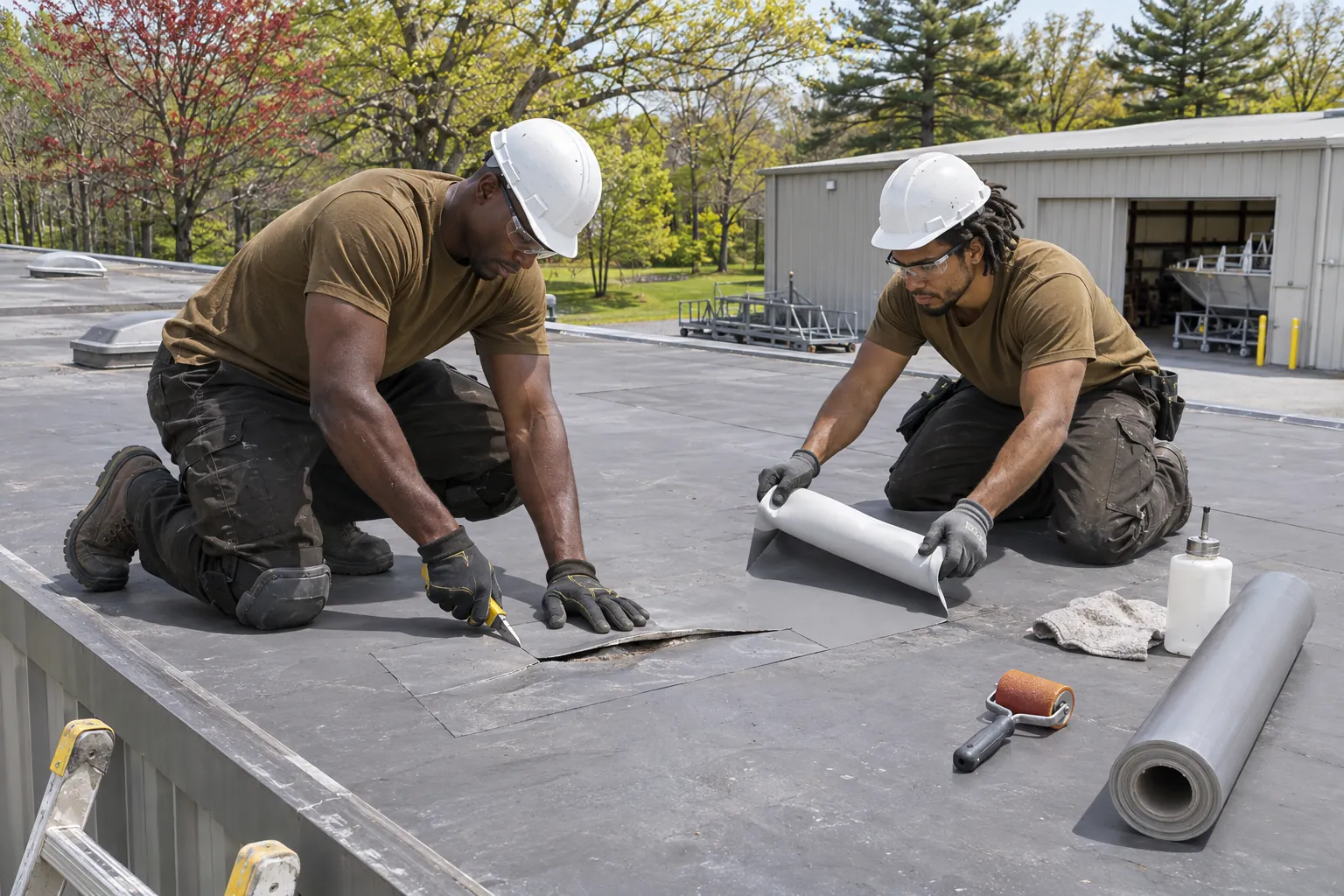

Front Wall Flashing
Flashing at a raised front wall takes sun on one side and wind-driven rain on the other, so it cracks early.
New base flashing and counterflashing close the joint, keeping water out of the wall and off the shop ceiling.
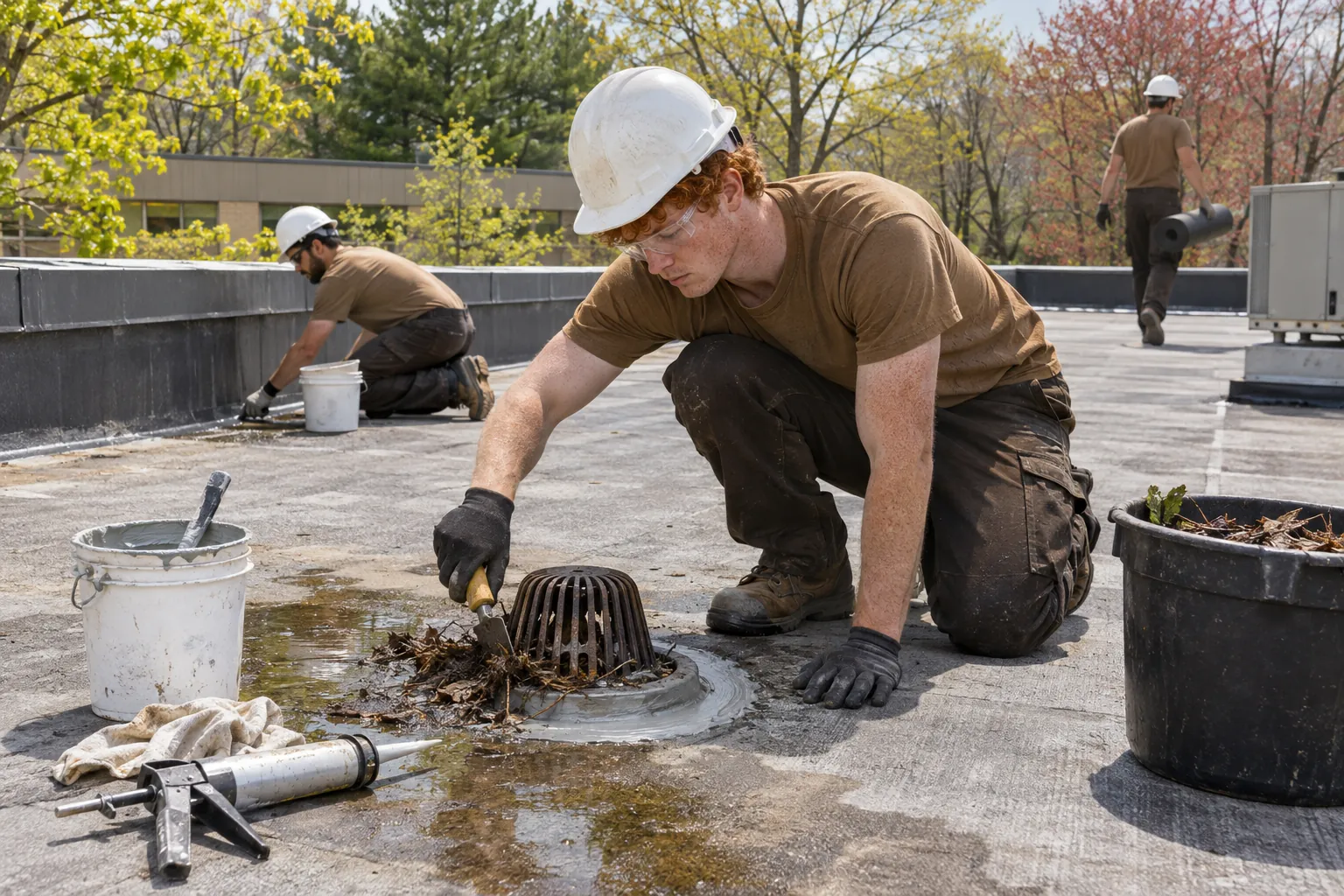
As an Essex commercial roof repair contractor, we fix small flat roofs on village shops and offices where access is tight and staging takes care.


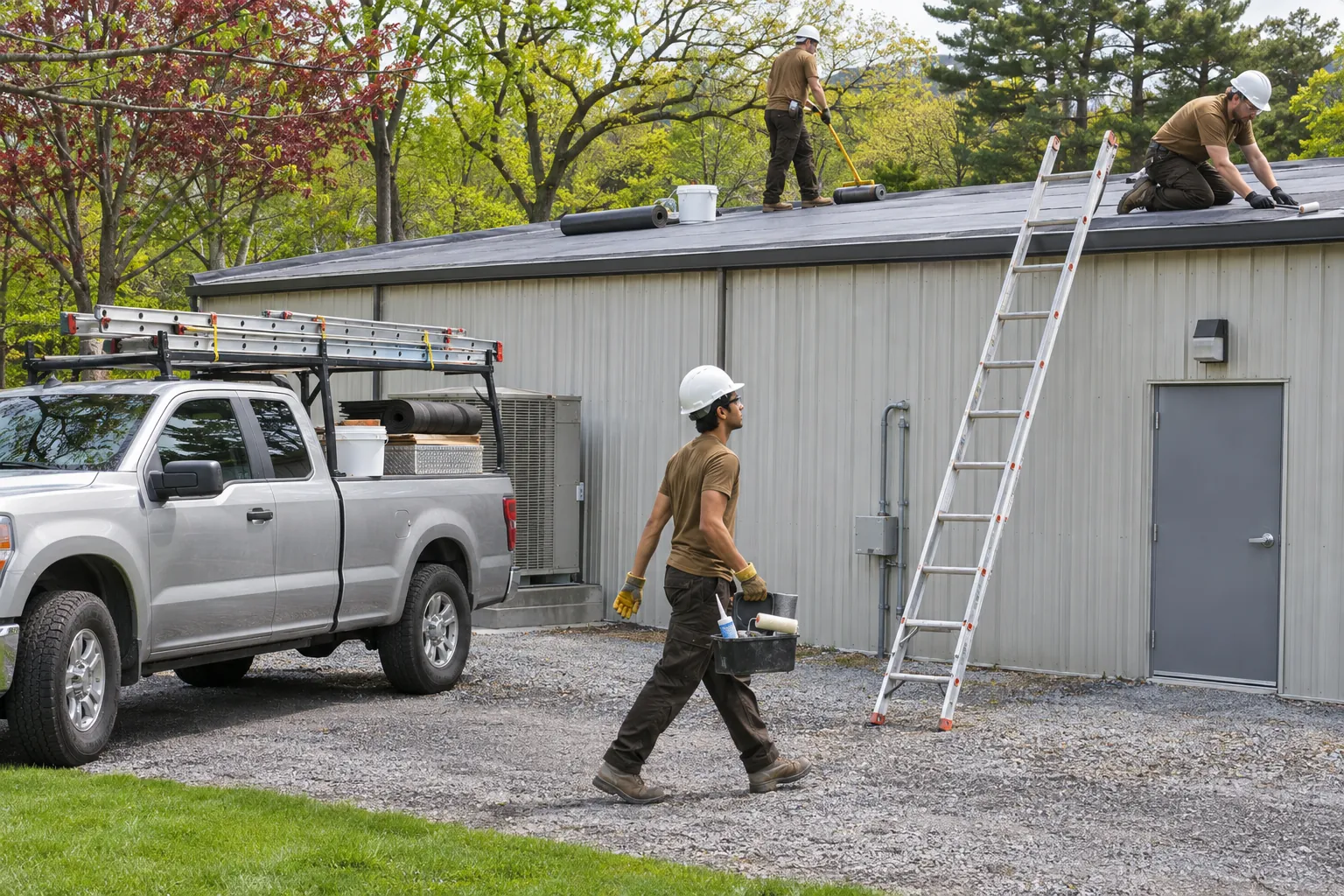
Essex commercial roof repair often means a small roof hidden behind a raised front wall, with a narrow lane or shared lot as the only approach. Ladders, materials, and debris all have to move without blocking a shop door or damaging plantings and walkways.
We plan access before the first visit: where the ladder stands, where scrap goes, and which hours keep customers clear. On the roof, these older buildings show the same weak spots over and over, at the front wall, the back edge, and the drain.
These four conditions are where leaks on small older roofs start most often, and each one has its own repair.
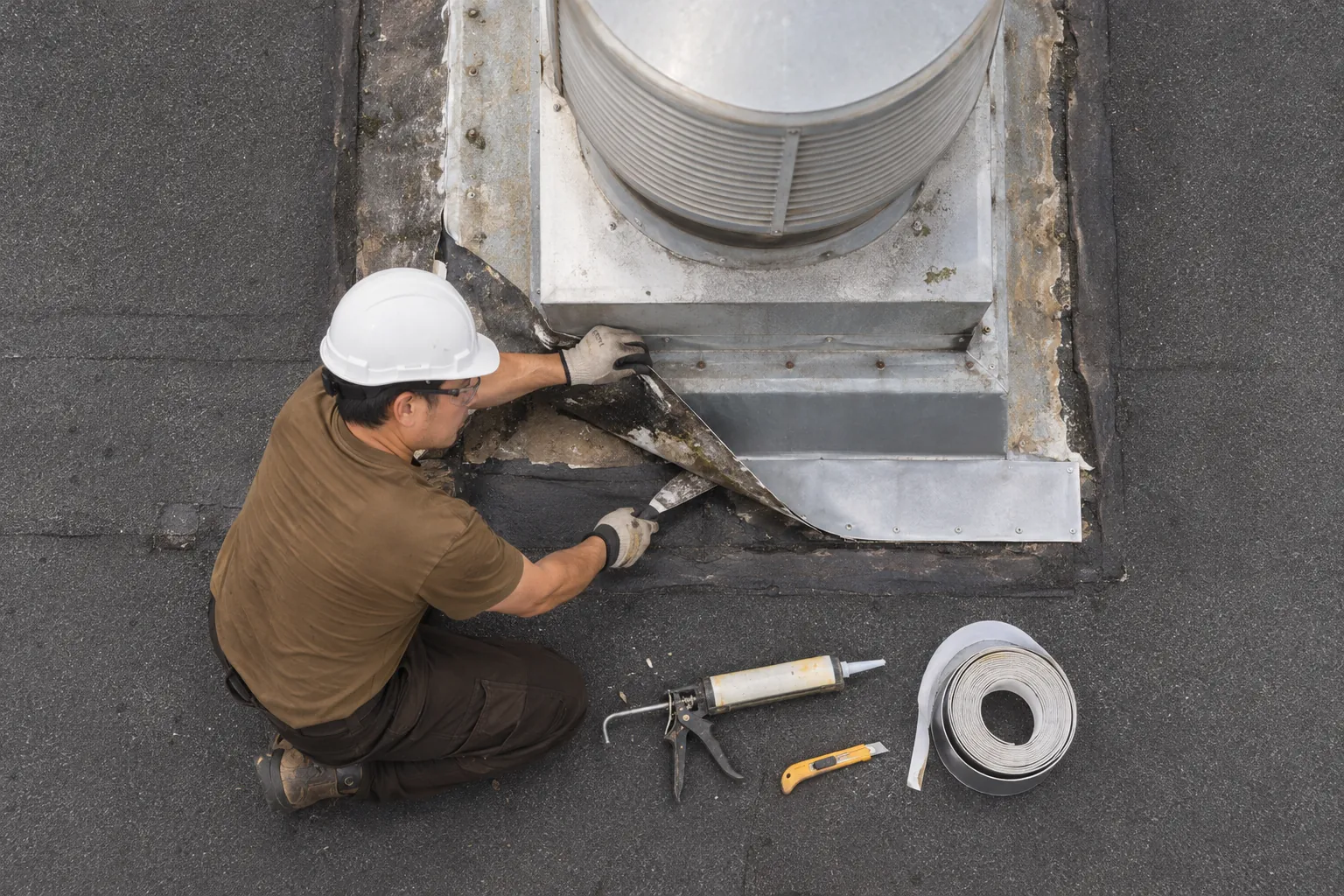
Base flashing where the roof meets a raised front wall cracks with age, and water runs behind it and down inside the wall.
We strip out the old base flashing, install new flashing and counterflashing, and seal the top of the wall where it joins the cap.
Through-wall scuppers on small roofs are narrow, so leaves and grit block them and water rises over the flashing.
Crews clear and reline the scupper box, seal it to the membrane, and check that the outlet drains freely.
Decades of patches layered over the original membrane trap moisture and stop bonding to each other.
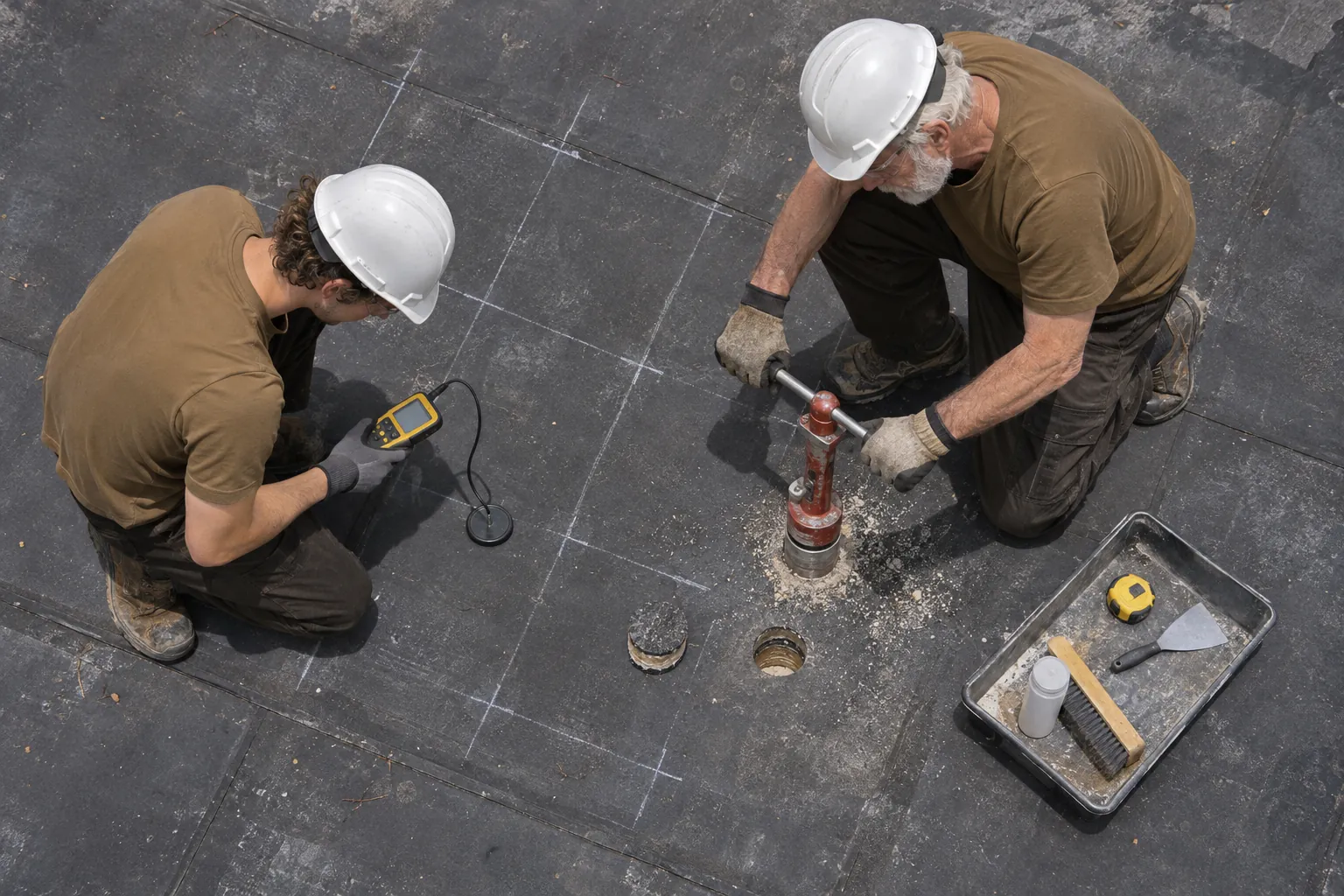
Loose patch layers are cut back to a firm surface, wet areas are opened up, and one clean patch goes over the repaired spot.
Older gutters and drip edges at the rear wall rust at seams and hangers, and overflow soaks the fascia and wall below.
Rusted gutter sections, hangers, and drip edge get replaced, with the membrane tied back into the new edge metal.
Careful repairs matter on a small roof, because one failed detail covers a large share of the whole surface.
Flashing at a raised front wall takes sun on one side and wind-driven rain on the other, so it cracks early.
New base flashing and counterflashing close the joint, keeping water out of the wall and off the shop ceiling.
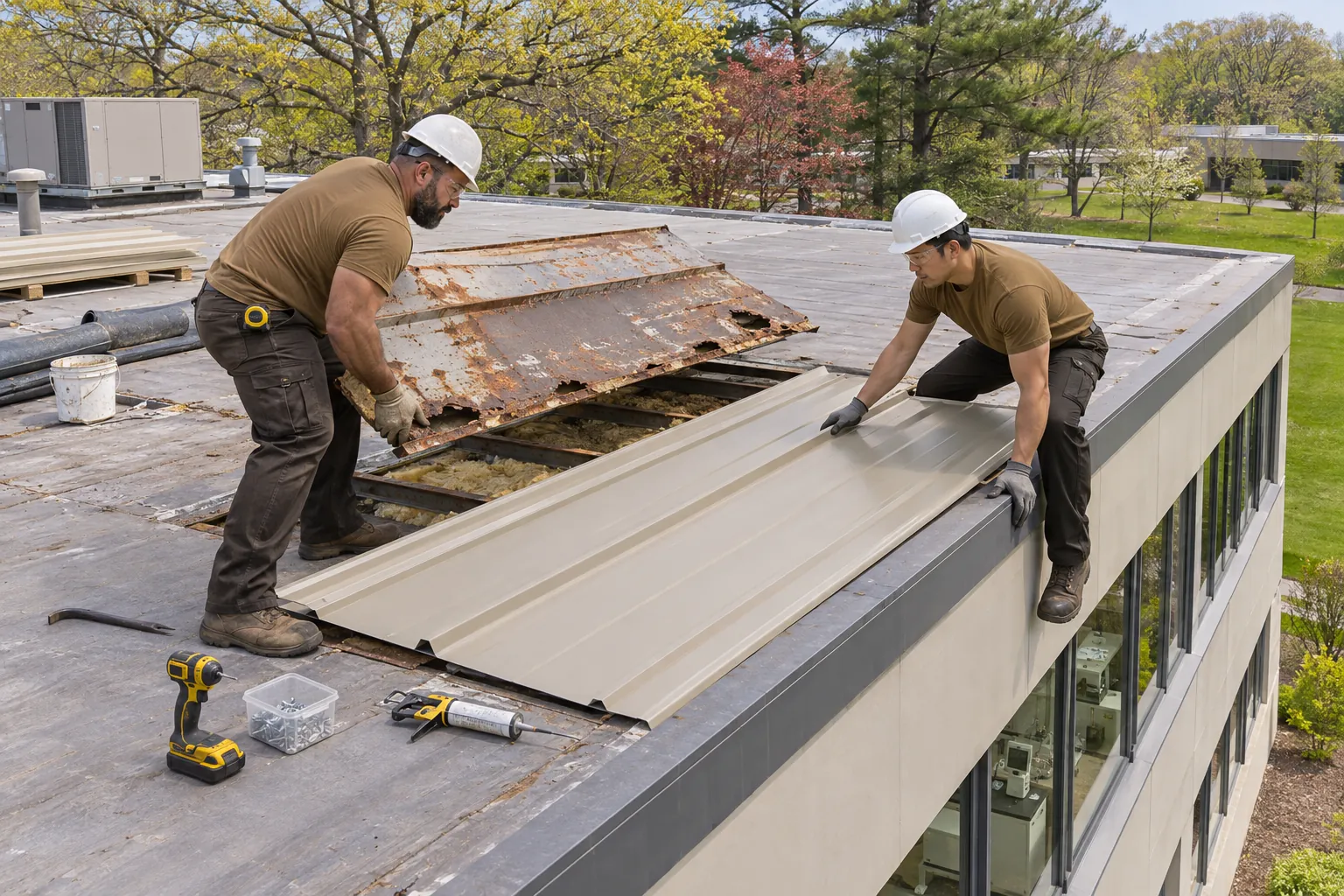
Small drains and scuppers clog fast, and on a short roof the water has nowhere else to go.
Clearing, relining, and resealing the outlet lets rain leave the roof before it climbs over the flashing.
Each patch added over the last one bonds less well and hides the condition of the membrane underneath.
Cutting back to a firm surface and making one clean repair shows the real condition and ends the cycle of patching.
Back edges and gutters on older buildings rust through first, since they get the least attention.
Replacing the edge metal and tying the membrane into it keeps the back wall dry and stops overflow onto the walkway.
Four repair services cover village shops, offices, and small commercial buildings around Essex.

Small, nearly flat roofs behind raised walls get flat roof repair: front wall flashing, narrow drains and scuppers, and open seams on the membrane.
Flat Roof Repair details
Sheds, workshops, and back additions with metal panels get fastener, end lap, and trim repairs, plus panel replacement where rust has gone through.
Commercial Metal Roof Repair details
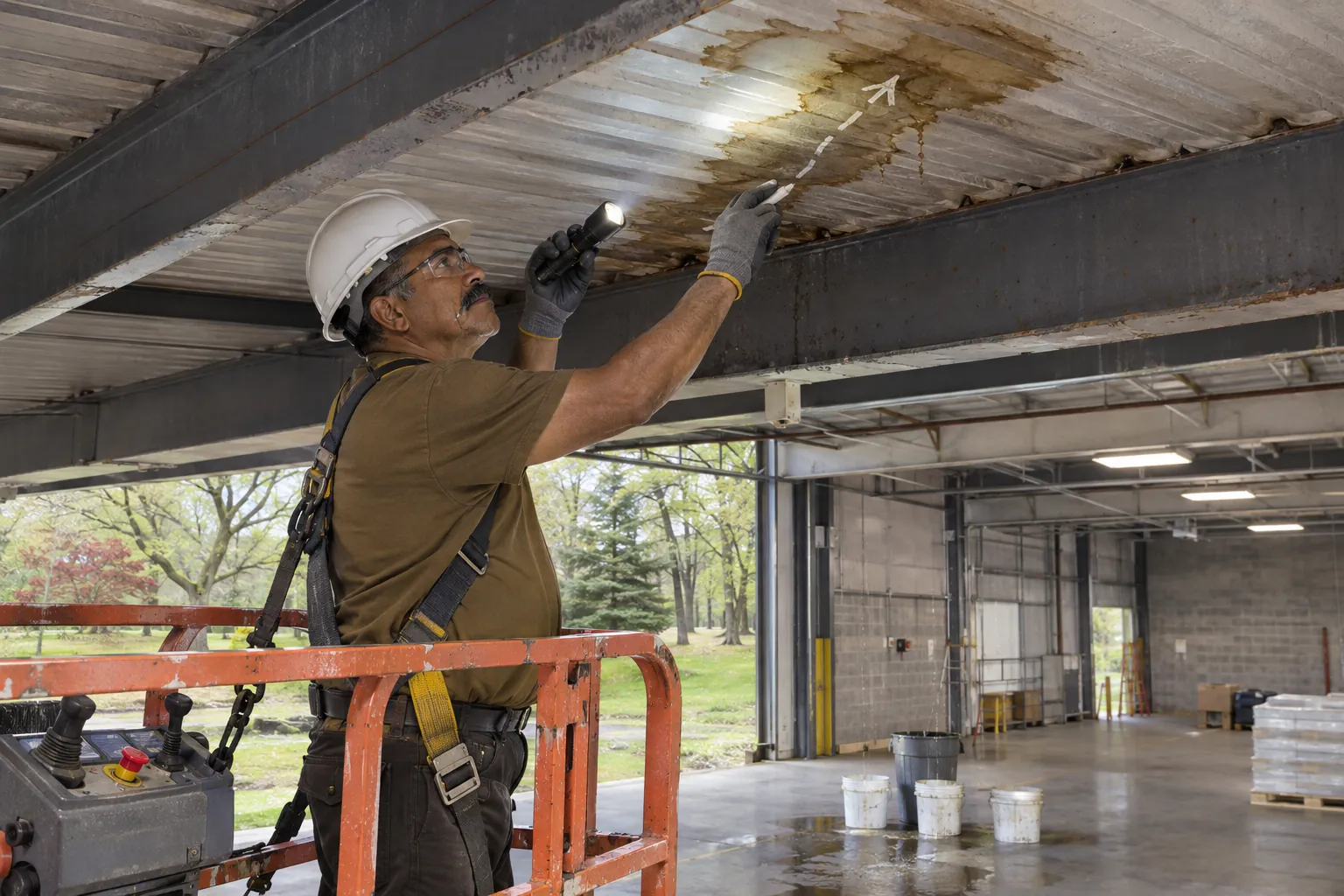
A stain on a shop ceiling gets traced to the front wall, a scupper, or a patched seam before we repair it, so the fix lands where water enters.
Commercial Roof Leak Repair details
Workshop and light production buildings with fans and vents need industrial roof repair around those curbs, planned for small roofs with tight access.
Industrial Roof Repair details
Call and tell us where the stain shows inside, whether the building has a raised front wall, and how a ladder can reach the roof.
Small roofs with tight access follow a four-step plan that keeps the street, doors, and walkways clear.
Before work starts we agree on the ladder spot at the roof edge, material staging, and the hours that keep shop doors and walkways clear for customers.
Next comes a walk of the full roof, front wall to back edge, with photos of flashing, drains, scuppers, old patches, and seams.
Materials go up in small loads, and crews finish each flashing, drain, or patch repair during the visit so nothing on the roof is left open overnight.
Scrap membrane comes down as it is made, the lane is swept, and the repaired flashing and drains get a final look before the ladder comes down.
Fourteen towns near Essex, plus Groton, are on our commercial roof repair list. Outside that area? Call us or send us a message to check.

Local Shops
Most jobs cover front wall flashing, drains and scuppers, edge metal, and patched membrane on shop and office roofs. We plan access first, carry materials up in small loads, and finish each detail before leaving. The goal is a dry roof with the street and entrances kept clear.
Finding Help
Ask how they plan ladder placement, staging, and debris removal on a building with no open lot. Ask what they check on the front wall and drains, and request photos before and after. A contractor who answers those questions clearly has thought about small village roofs.
Old Patches
Loose and wet patch layers should come off, because a new repair bonds only as well as the surface under it. Firm, dry patches can stay in place. We cut back to a solid surface, check the insulation below, and install one clean repair in place of another layer.
Front Walls
Raised front walls create a joint where the roof meets masonry, and the base flashing there cracks with age and sun. Water then runs behind the flashing and down inside the wall. New base flashing, counterflashing, and a sealed cap joint close that path for good.
Permits
The local building official decides, so check with that office before larger repairs. Connecticut building work follows the 2022 Connecticut State Building Code. We confirm the requirement for jobs that go past routine patching, such as replacing membrane, insulation, or sections of roof deck.
Get a free estimate or call us to plan access and repairs for your village building.