Insulation Under The Leak
What Wears Out
Every storm adds water to the insulation around an open seam, and wet boards stop insulating.
What The Repair Does
Replacing the wet boards along with the seam keeps the area from sagging into a new pond.

As a Groton commercial roof leak repair contractor, we trace each leak from the stain inside to the seam, curb, or flashing on the roof, then repair it.
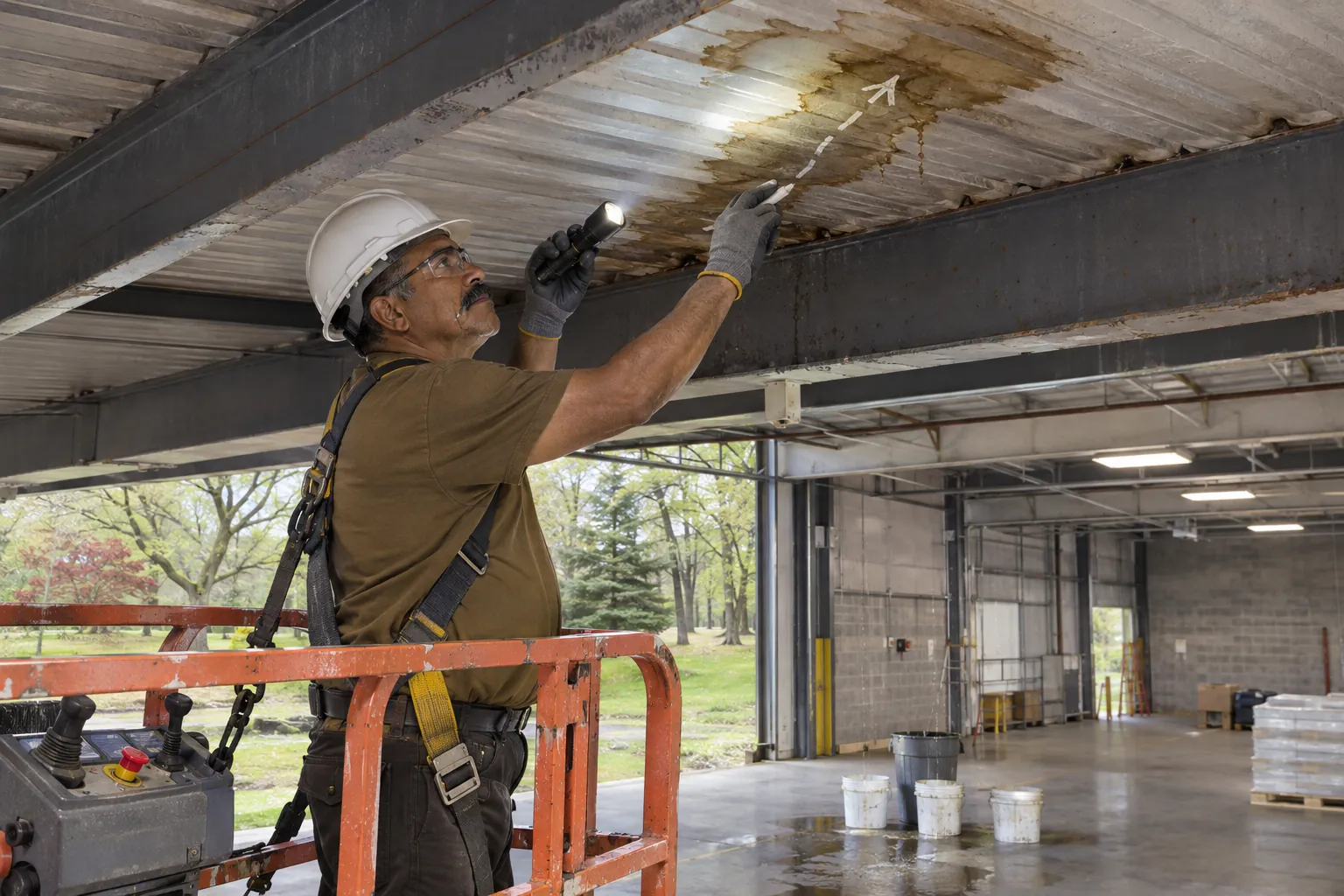
Groton commercial roof leak repair depends on how long the water has been getting in and how far it has spread under the membrane.
One drip that started recently
One open seam, boot, or flashing joint
Seal or reflash the one opening
Leaks caught early
A stain that grows or returns
Wet insulation around the source
Repair the source, replace wet insulation, close the membrane
Leaks that ran for weeks or months
Leaks in many rooms every storm
Wet insulation across much of the roof
Plan for replacement
Roofs at the end of their life
Where the water shows up inside rarely matches where it gets in, so we start with the clues below.
Water lands on the deck, runs along flutes or purlins, and drips through a seam in the deck many feet from the opening above.
We mark the drip inside, follow the deck uphill on the roof, and test seams and penetrations in that path until the entry point shows.
Curb flashing cracks from vibration and heat, curb cap screws back out, and condensate lines spill onto the membrane.
Curb flashing and counterflashing are rebuilt, cap screws are reset and sealed, and condensate gets routed to a drain.
Open coping joints, parapet caps, and wall flashing above the roof stay dry in still rain and take water when wind drives it in.
The windward walls and copings are checked first, then joints are resealed and counterflashing is reset where it pulled away.
Ice at scuppers and drains holds meltwater on the roof until it rises above low flashing or seeps into seams.
Drains get cleared, low flashings are raised, and the joints where backed-up water entered are sealed.
A traced and repaired leak protects more than the ceiling tile under it.
Every storm adds water to the insulation around an open seam, and wet boards stop insulating.
Replacing the wet boards along with the seam keeps the area from sagging into a new pond.
Long-running leaks rust steel decks and rot wood decks under the membrane.
Catching the source early keeps deck repairs small or avoids them entirely.
Pipes, vents, and unit curbs each break the membrane, and their flashing ages faster than the field.
Rebuilt boots and curb flashing close the openings most leaks come through.
Stained tiles, wet stock, and slippery floors follow every rain until the opening is closed.
A traced repair stops the drip at its source, so inside cleanup ends with the leak.

Call with the room, the closest wall or column, and what the weather was doing when it dripped. Those details point us to the right part of the roof.
Leak repair works from inside out, then from the roof back down.
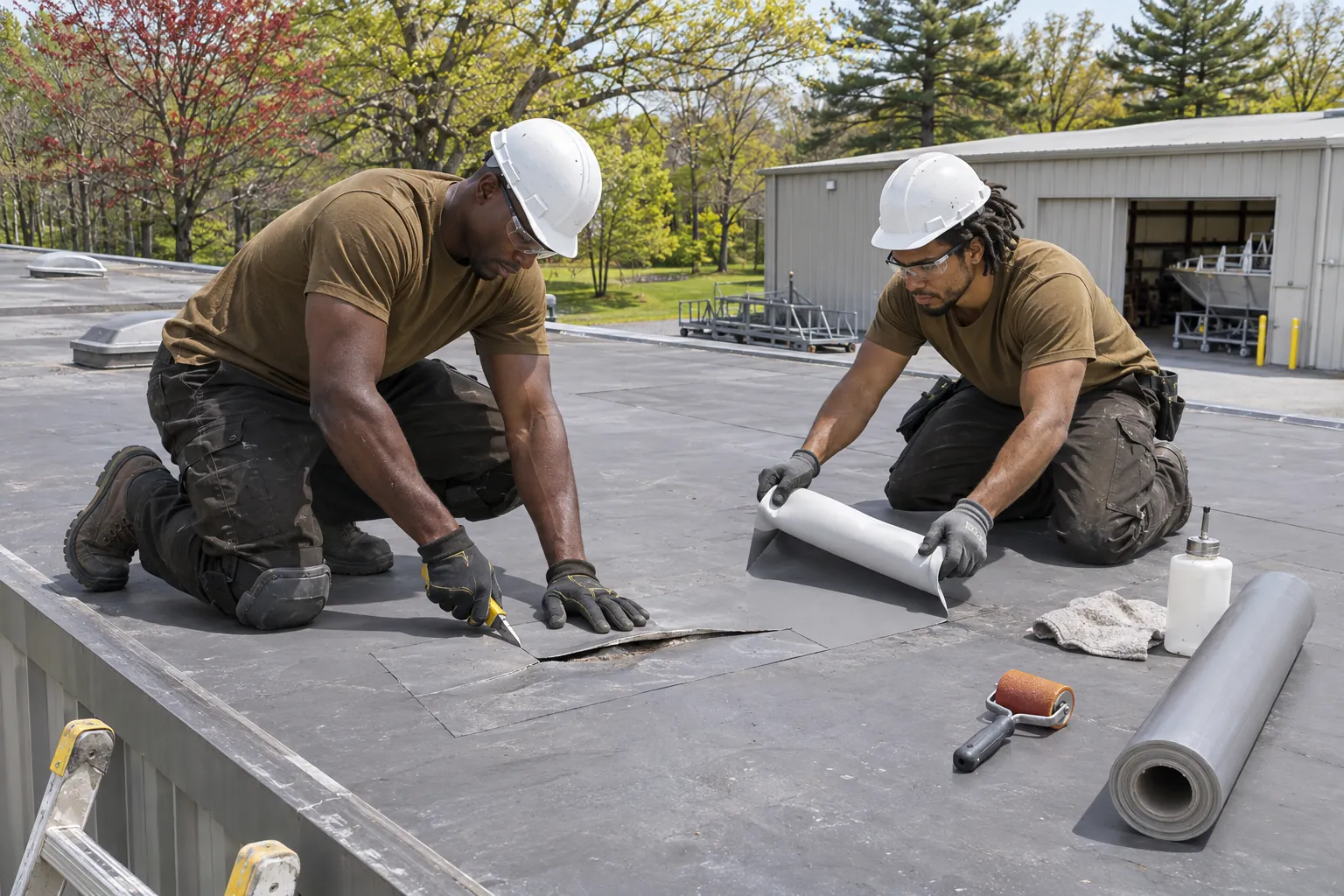
Stains, drips, and wet stock get marked on a simple floor sketch with notes on wind direction and rain, so the search area on the roof is clear.
Seams, curbs, pipe boots, drains, and wall flashing above and uphill of each mark are checked and, where needed, water-tested one at a time.
Moisture meter readings and a core cut show the wet area around the opening, which sets how much insulation comes out.
The roof opening is sealed or reflashed, wet layers are replaced, and the area is checked again after the next rain when you report back.
Once a leak is traced, the opening usually belongs to one of these repairs, depending on the roof type above it.
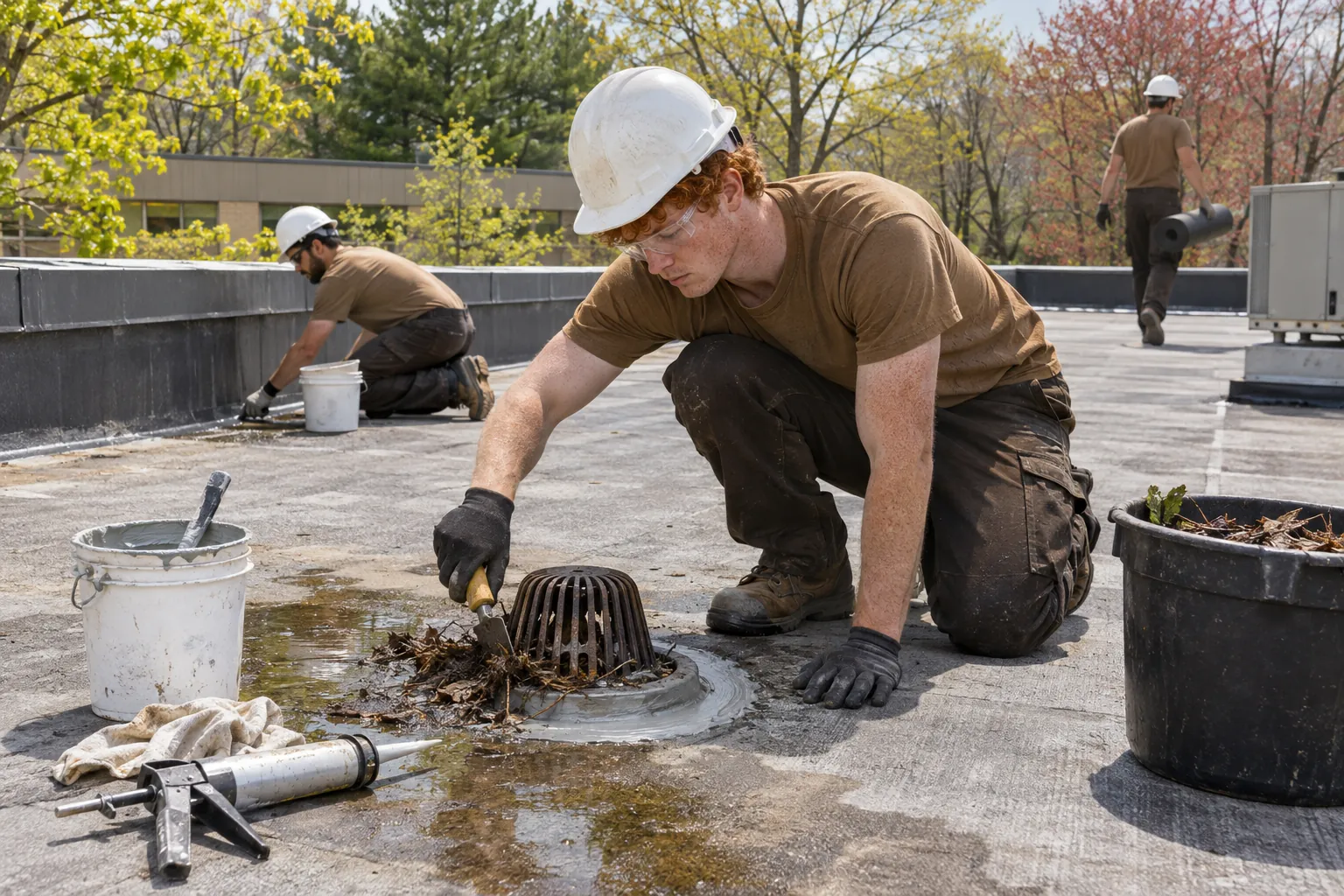
Ponding and wet insulation often sit beside a leak on a low-slope roof, and flat roof repair corrects both during the same visit.
Flat Roof Repair details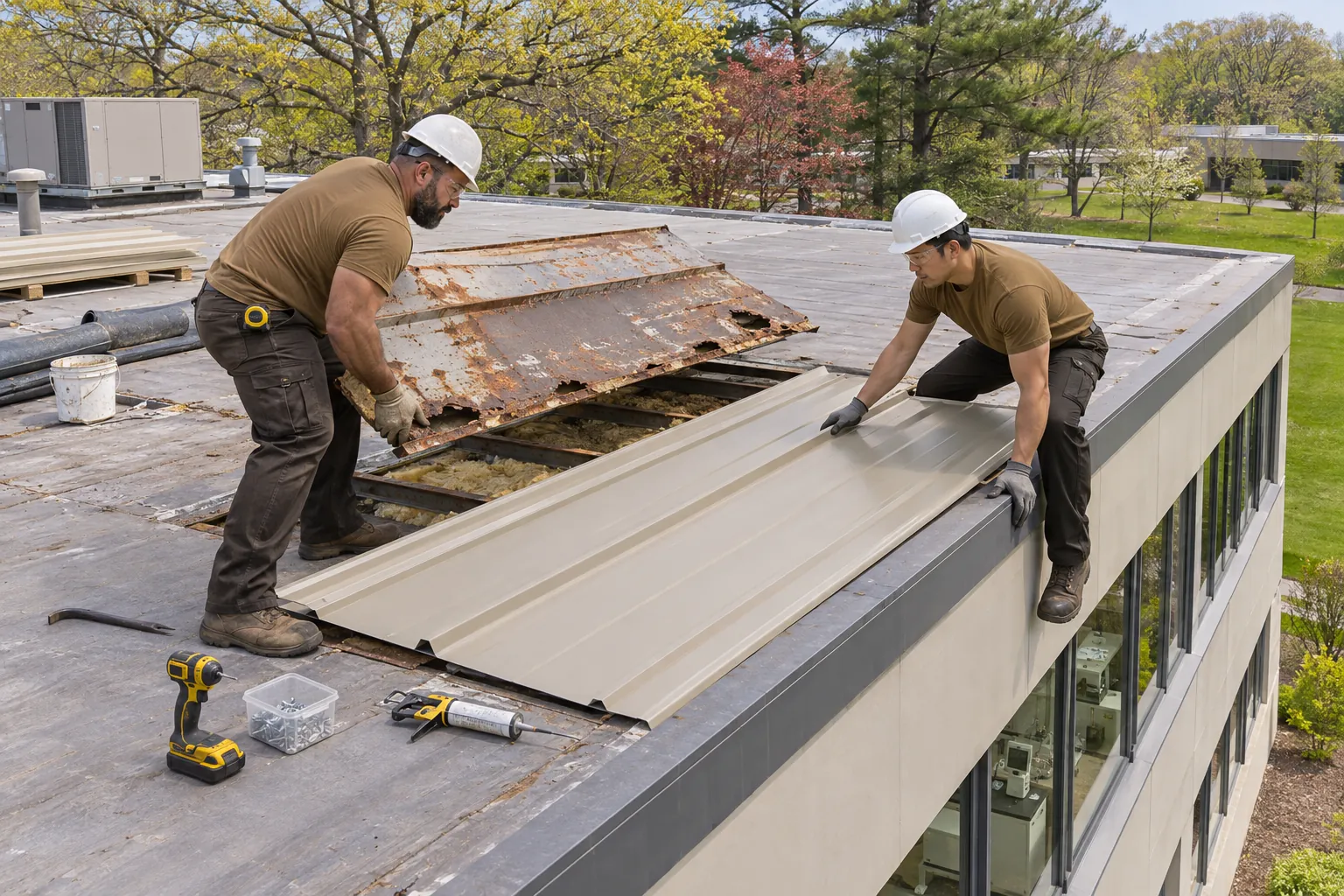
Under metal roofs, most drips start at screws, end laps, or trim, so the fix moves into fastener and lap repair.
Commercial Metal Roof Repair details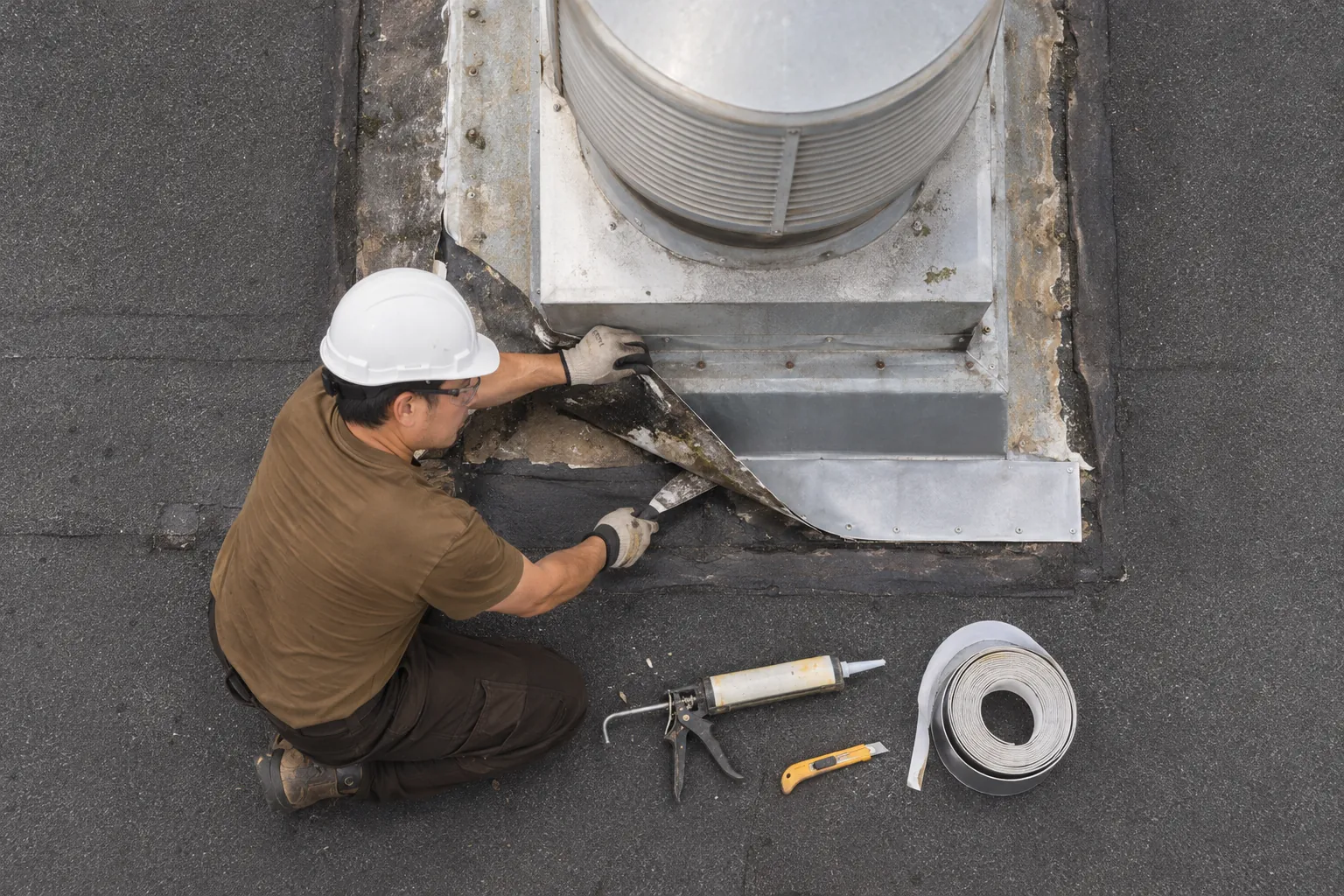
Plant leaks often trace to fan curbs and service routes, where industrial repairs stage the work around production.
Industrial Roof Repair detailsCost
How long the leak ran. A loose flashing caught after one storm is a small repair, while weeks of water soaking the insulation around it means cutting out and replacing that area. Access, the roof system, and the number of openings found also change the price.
Leases
The lease does. Many commercial leases spell out who repairs the roof and require written notice from the tenant first. Report the leak in writing, take photos of the damage, and share our findings with whoever arranges the repair.
Tracing
Because the opening was somewhere else. Water often enters at a seam or curb several feet uphill, then travels along the deck. Patching above the stain covers a dry spot, so we trace the path before any repair goes down.
Rooftop Units
Curb flashing, counterflashing, and the membrane around the unit are roof work, and we repair those. Leaks from inside the unit cabinet or its condensate pan are mechanical, so we point them out for your HVAC contractor.
First Steps
Move stock and equipment away from the drip, catch the water, and note where it shows and what the weather is doing. If someone can safely look at the roof, check that the drains and scuppers near that area are clear.
Tell us where the water shows up inside, and we will trace it to the opening on the roof and repair it.