Peeling Patch Layers
What Wears Out
Patch stacked on patch loses grip, and the whole stack lifts in wind and summer heat.
What The Repair Does
Cutting back to firm plies and making one repair that grips gives the patch something solid to hold.

As a Pawcatuck commercial roof repair contractor, we test old built-up roofs and patch layers before repairing blisters, splits, and wet areas.
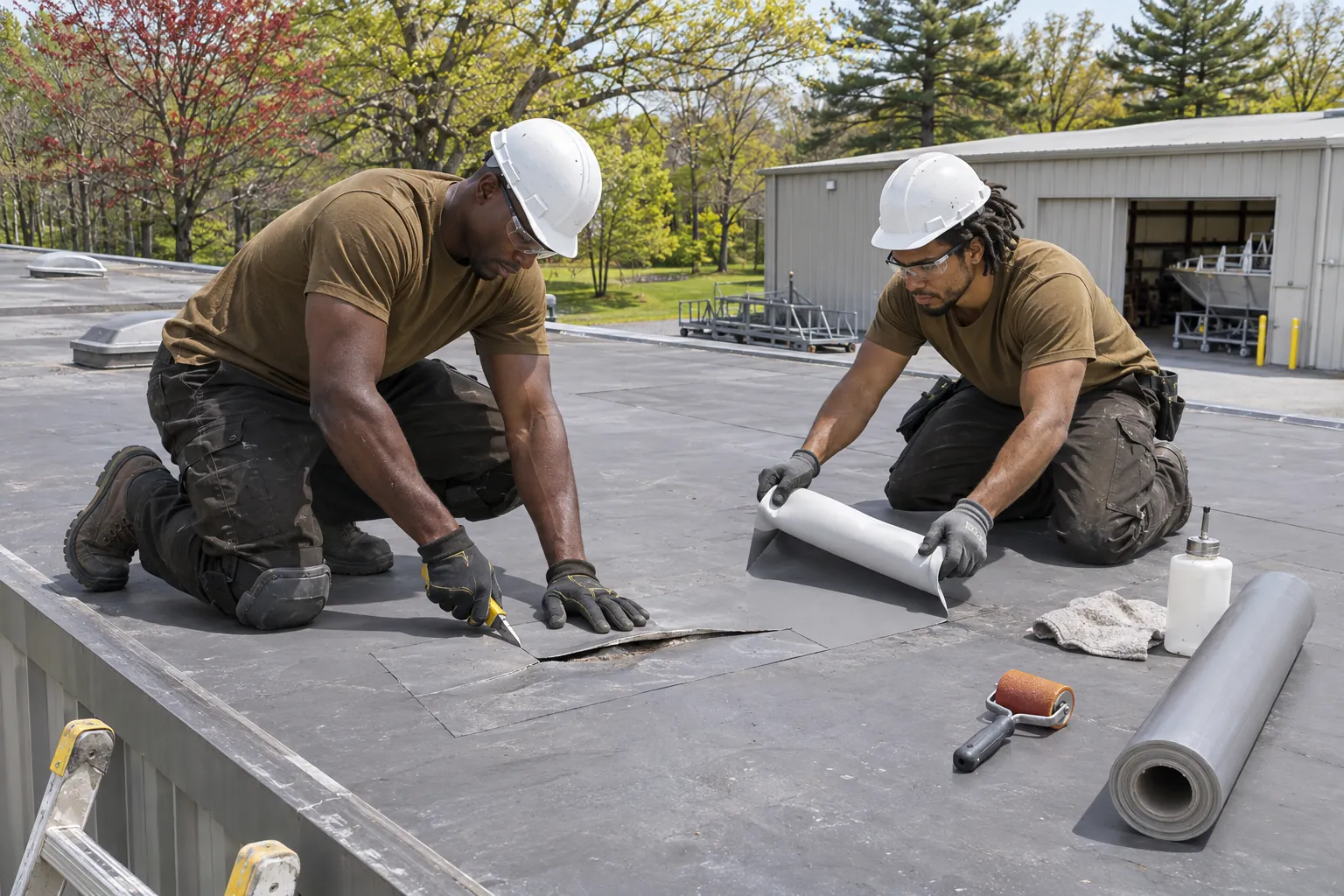
Pawcatuck commercial roof repair on older brick buildings often means working on a built-up roof covered in decades of patches. Asphalt, gravel, fabric, and mastic layers pile up, and each new patch bonds only as well as the layer under it.
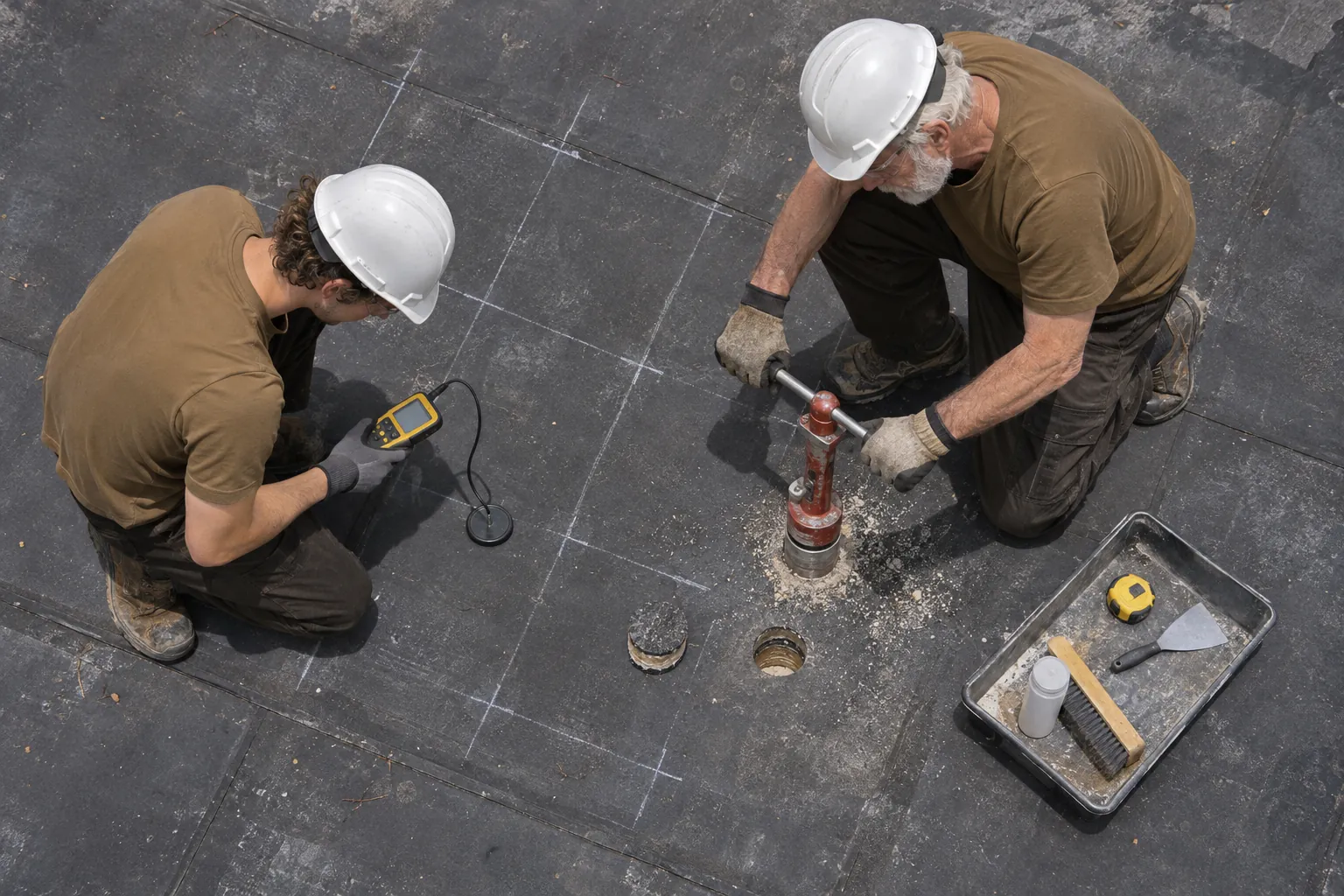
Before adding anything, we test how well the old layers hold, take core cuts to find wet insulation, and decide where a patch will grip. Areas that fail the test get cut back to a firm surface first.
Older built-up roofs show their age in a few telltale ways. Each one tells us what to test before a repair goes on.
Trapped moisture or air between felt plies expands in summer heat and lifts the layers into blisters.
We cut each blister open, let the plies dry, and repair it with new felt and mastic set on firm, dry layers.
Sun dries the top asphalt layer until it shrinks and cracks into a scaly pattern that lets water reach the felts.
Cracked areas are cleaned, primed, and covered with a reinforced repair layer where the plies below still hold.
Mastic laid over dusty gravel or a weak old patch never bonds, so it lifts at the edges within months.
Loose gravel and failed patches come off, the surface is tested for grip, and the repair bonds to clean, firm plies.
Built-up flashing at brick walls and old drains splits as the building moves through hot and cold seasons.
Crews replace the split flashing, reset the drain clamping ring, and tie the new plies into the existing roof.
Testing first means each repair grips the roof under it, so patches stop peeling and leaks stop returning.
Patch stacked on patch loses grip, and the whole stack lifts in wind and summer heat.
Cutting back to firm plies and making one repair that grips gives the patch something solid to hold.
Water under the surface soaks insulation for years before a ceiling stain shows inside.
Core cuts locate the wet boards, and replacing them stops the blisters and soft spots they cause.
Sun and age dry the top layers of a built-up roof until they crack and shed gravel.
Reinforced repair layers over cleaned, primed areas seal the cracks and protect the felts underneath.
Flashing up the brick walls splits and pulls away as the mortar joints behind it weaken.
New flashing tied into the plies, with counterflashing set in the wall, closes the joint where water often enters on older blocks.
Four repair services cover the brick blocks, warehouses, and shop buildings we work on in Pawcatuck.
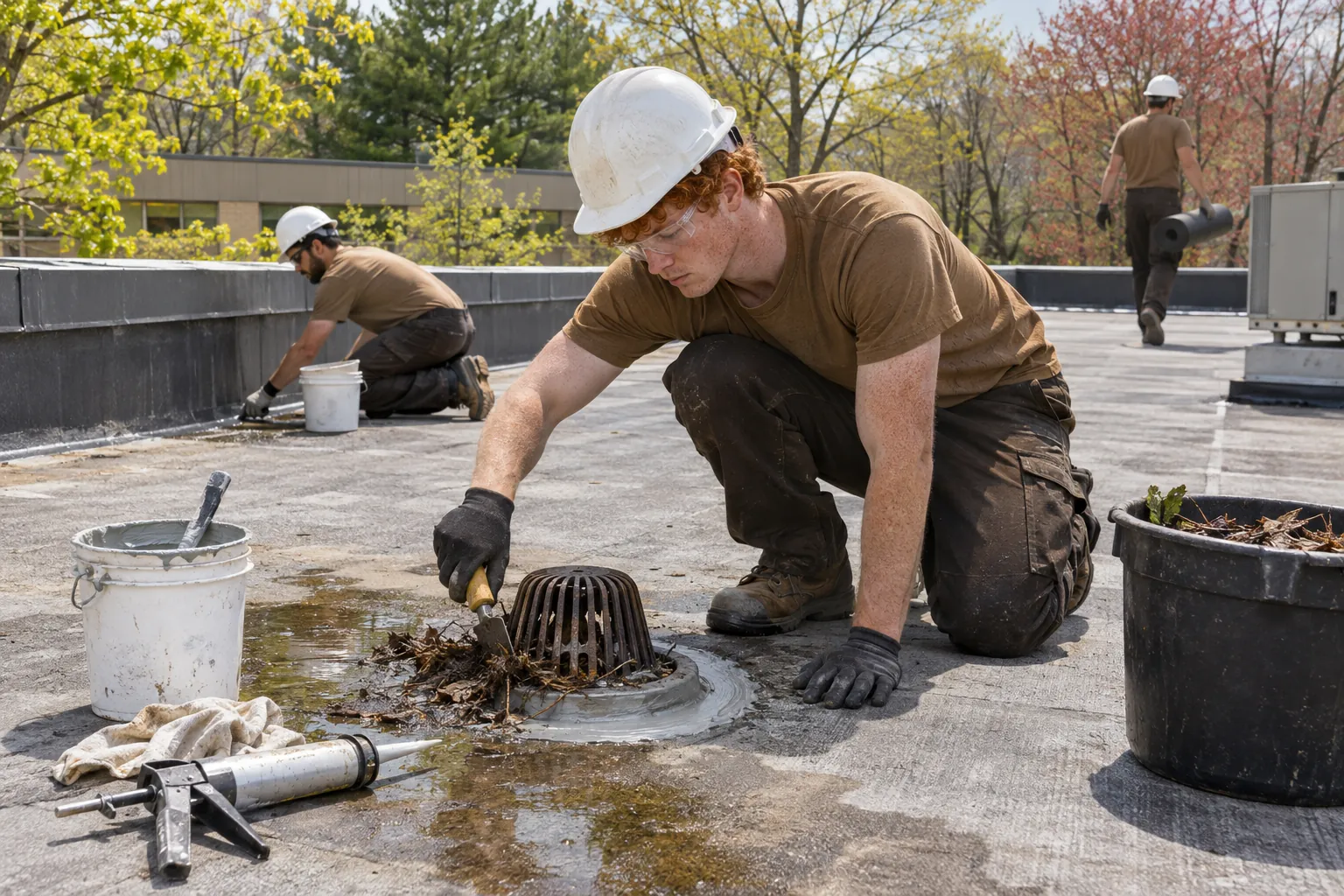
Built-up and membrane roofs on brick blocks get flat roof repair: blisters, cracked asphalt, wall flashing, and drains, each tested for bond before new material goes on.
Flat Roof Repair details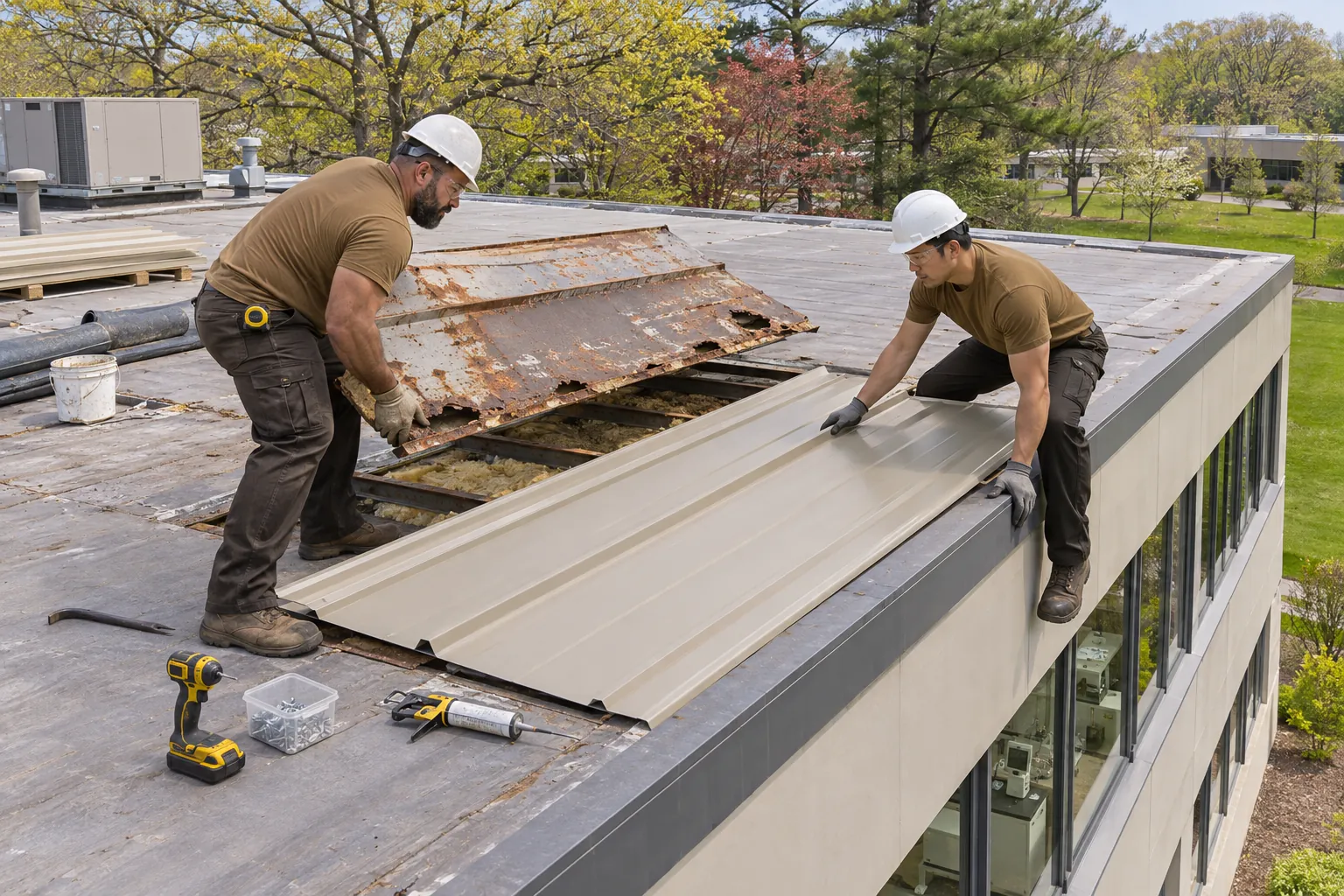
Metal additions and warehouse roofs leak at screws, end laps, and rusted panels. We replace fasteners, reseal laps, and swap panels rusted through.
Commercial Metal Roof Repair details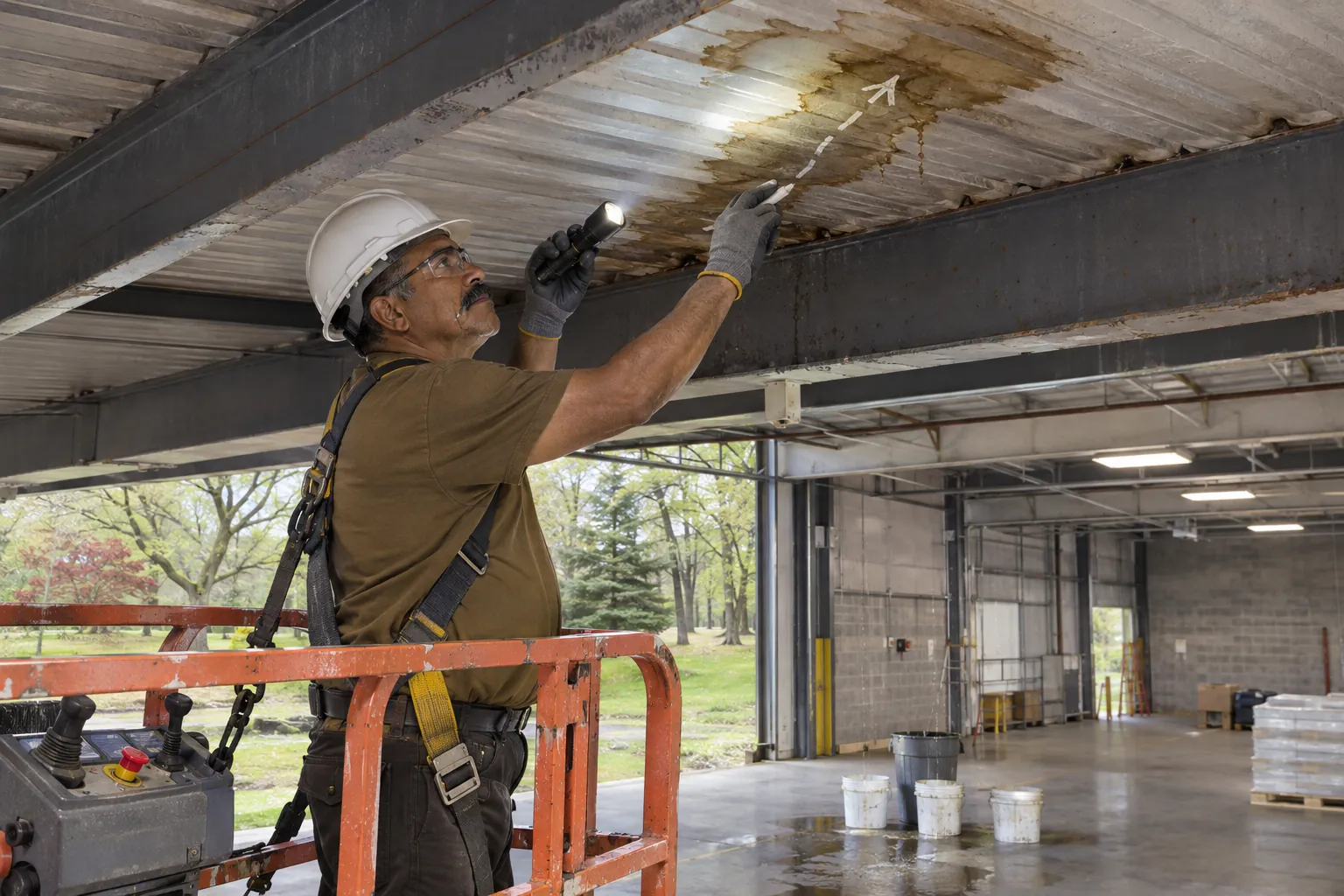
Leaks in older blocks travel along beams and plank decks, so each one gets traced from the ceiling back to its opening before we cut into the roof.
Commercial Roof Leak Repair details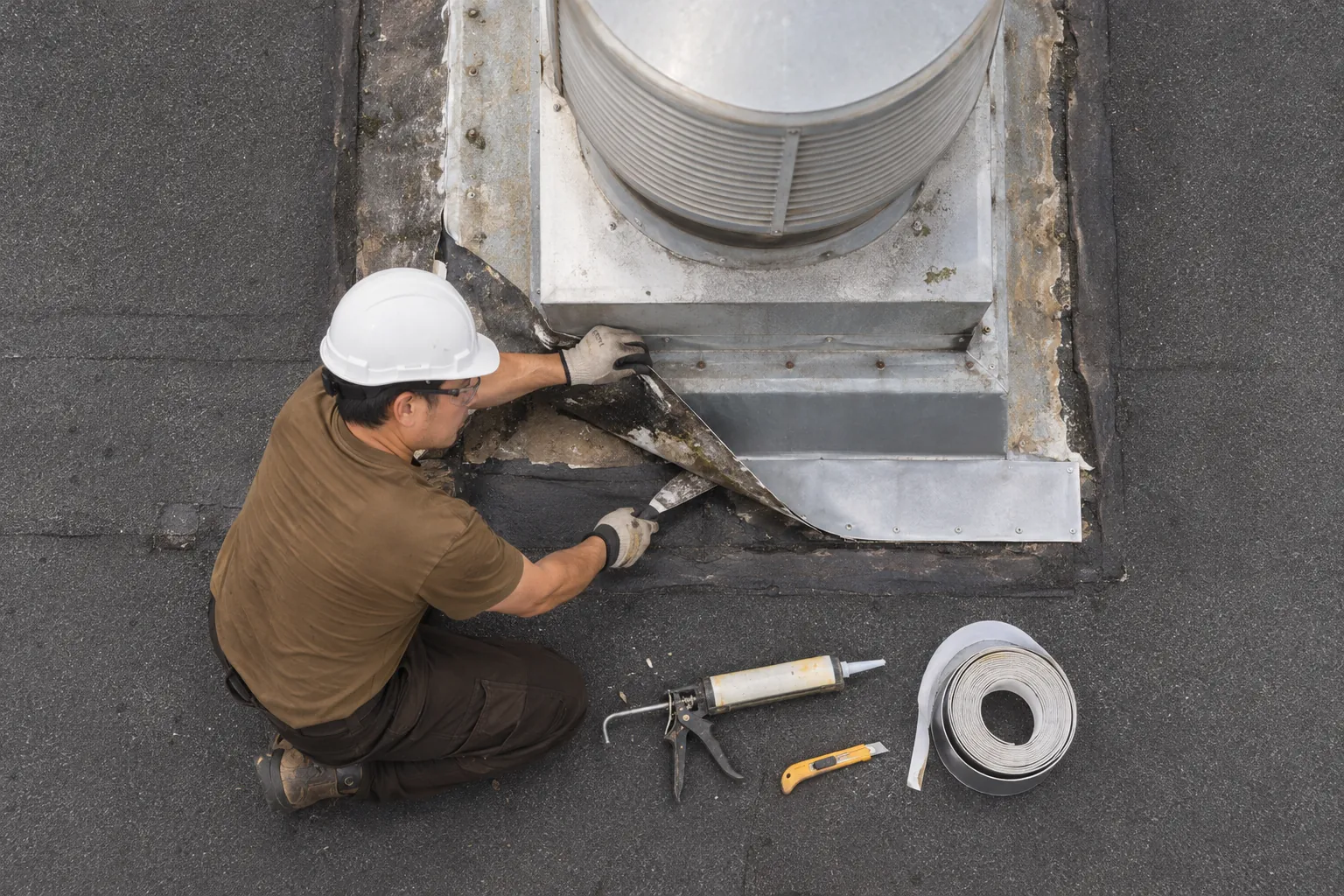
Shop buildings with fans and process vents need industrial roof repair at their curbs, with flashing rebuilt where heat has dried out the old plies.
Industrial Roof Repair details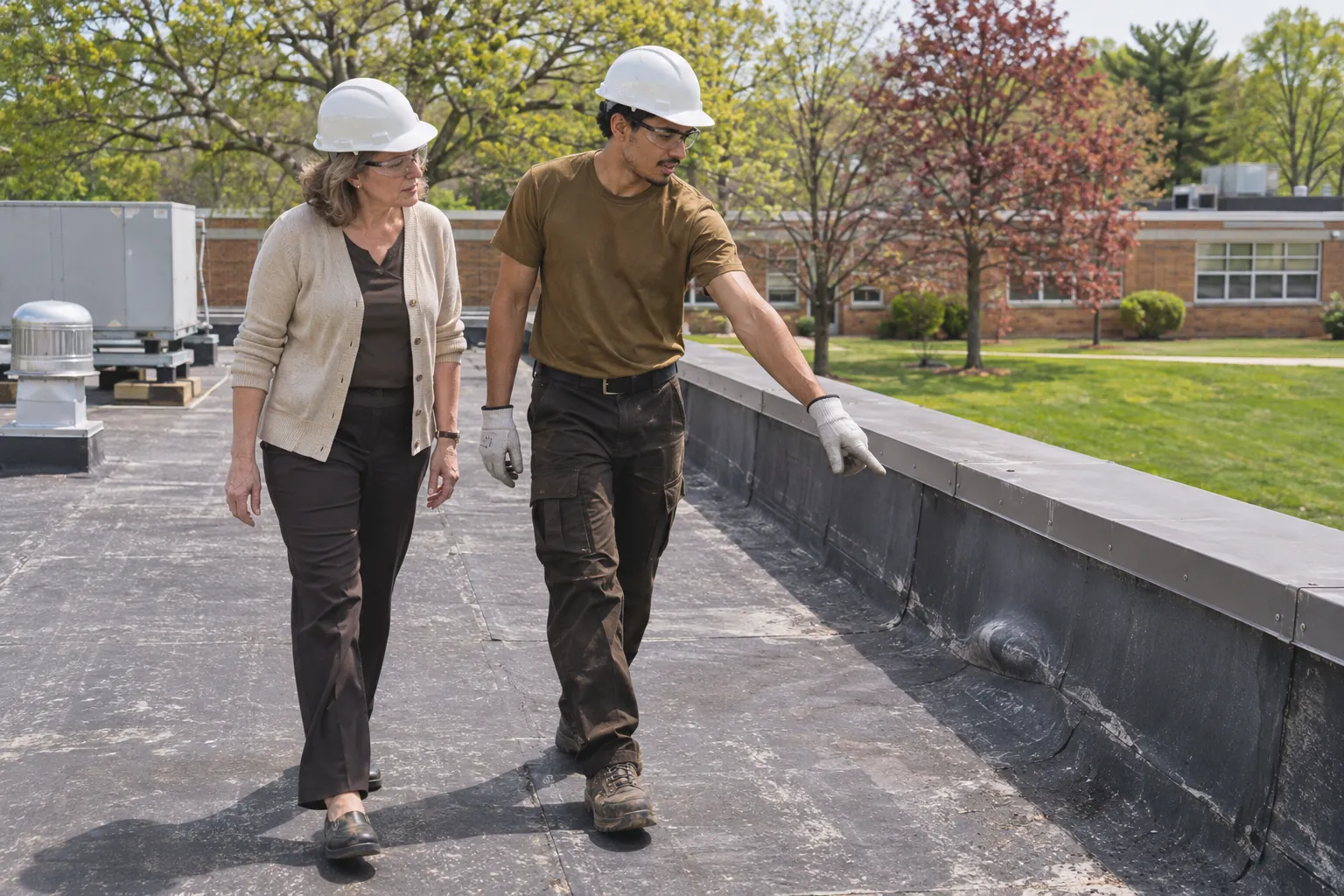
Call and tell us about how many patch layers you can see, where the water shows inside, and whether the roof has gravel on it.
Built-up roof repairs follow four steps, with testing before any new layer goes down and photos kept at each stage for the owner.
First we probe patches and mastic for grip and mark which areas of the roof hold firmly and which lift away under light pressure.
Small core cuts show the ply count and whether insulation is wet, and each cut is sealed before we leave the roof.
Weak layers come off down to firm plies, wet insulation is replaced, and new felt and mastic go on clean surfaces.
Photos and notes list the roof areas still holding and those likely to need work next, so the owner can plan ahead.
Groton plus fourteen towns near Pawcatuck make up our commercial roof repair area. If your building is farther out, call us or send us a message.
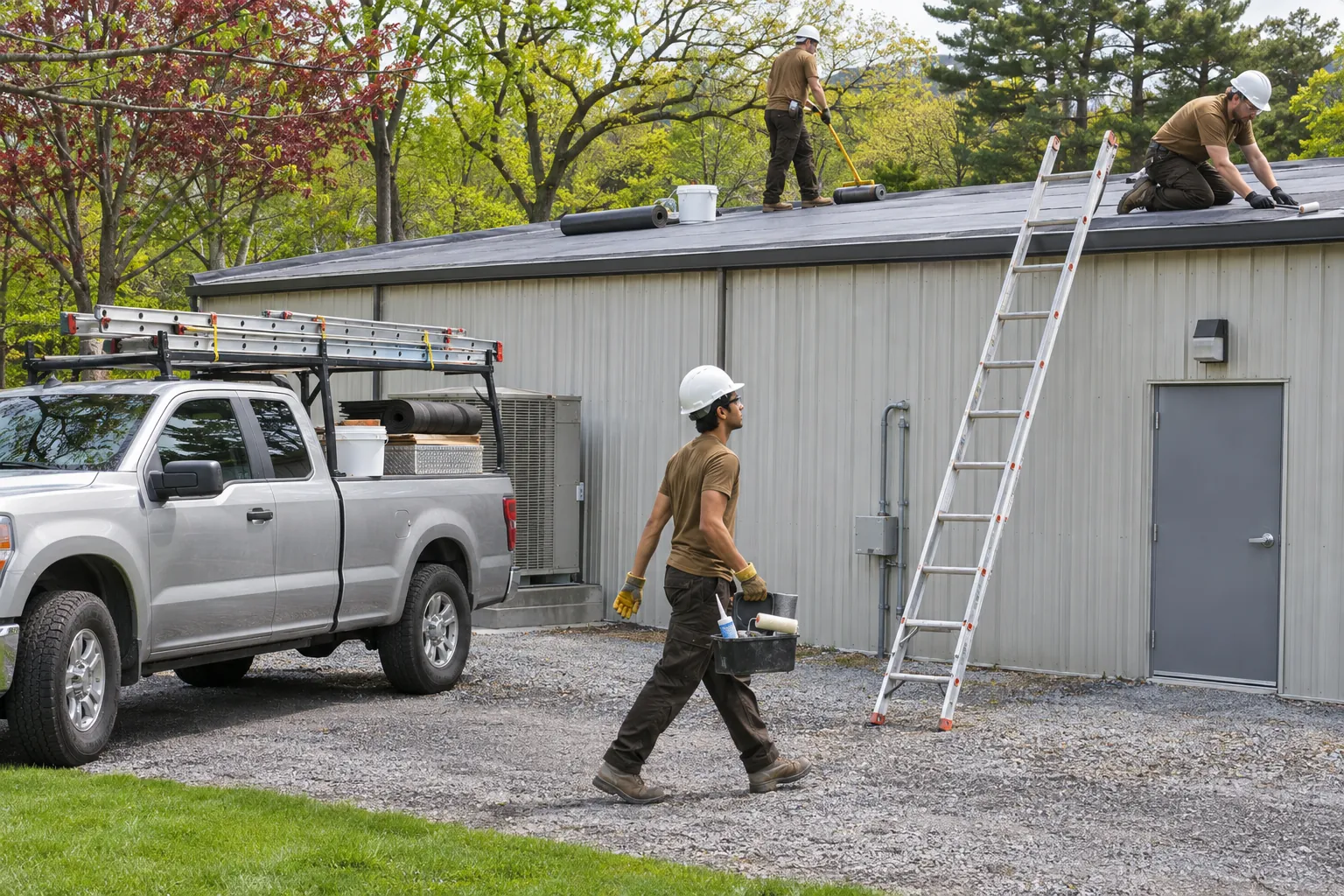
Repair Cost
The amount of wet insulation and the number of failed patch layers matter most. Cutting back several old layers takes more labor than patching a single split, and wet boards found by core cuts add material. Wall flashing, drains, roof height, and access for hauling debris also change the price.
Local Businesses
Most repairs cover blisters, cracked asphalt, wall flashing, drains, and failed patches on built-up roofs, plus fasteners and laps on metal additions. We test the old layers, cut out wet areas, and bond each repair to firm plies so it holds through summer heat and freezing nights.
Adhesion
We test first. Light probing and a small pull test on old mastic and patches show whether they hold firmly, and core cuts show the plies and insulation underneath. Areas that fail come off before any repair, so new material bonds to a clean, firm surface.
Blisters
Small, firm blisters can be watched, but soft ones, cracked ones, and any near seams or drains should be repaired. A cracked blister lets water straight into the plies. We cut it open, dry the layers, and rebuild it with new felt and mastic set on firm plies around it.
Repair Or Replace
Replacement makes more sense when core cuts find wet insulation across large areas, when blisters and splits keep returning in new places, or when patch layers no longer bond anywhere. Until then, targeted repairs keep the roof working. We map the problem areas so you can see how much of the roof is affected.
Get a free estimate or call us to test the old layers and repair what is failing.