Standing Water
What Wears Out
Ponds that sit more than two days wear the membrane faster and add weight to the deck.
What The Repair Does
Correcting slope and drain height moves water off, so the membrane in that area stops breaking down.

As a Groton flat roof repair contractor, we fix ponding, open seams, punctures, and drain leaks on low-slope commercial roofs over offices, shops, and warehouses.
Groton flat roof repair covers more than small patches. This table shows where a repair holds and where the roof has moved past it.
A puncture, blister, or one open seam
Dry insulation around the spot
Clean, prime, and heat-weld or adhere a matching patch
Recent damage on a roof that drains well
Ponding rings, soft spots, or a leak near a drain
Wet insulation in one bay or around one drain
Cut out wet layers, add taper, reflash the drain, tie in new membrane
A roof that is dry everywhere else
Leaks moving around the roof every season
Wet insulation across large areas
Tear-off and a new roof system
Brittle, cracking membrane across the field
Each sign below points to a different part of a low-slope roof.
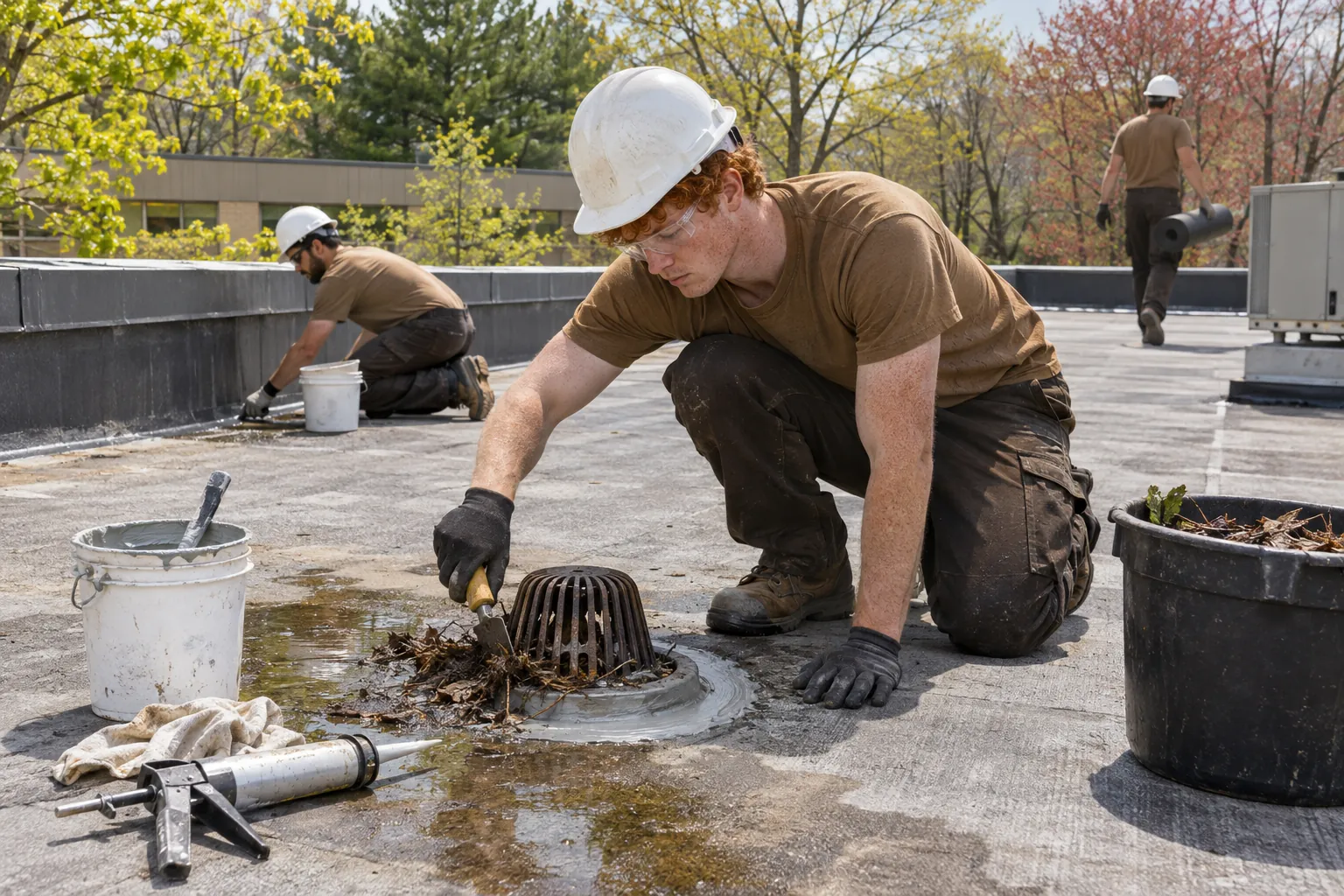
Strainers packed with leaves, a drain bowl set higher than the field, or insulation crushed by foot traffic leaves water sitting for days.
We clear and reset the drain, cut out the crushed or wet insulation, and add tapered pieces or a cricket so water runs to the outlet.
Moisture trapped between layers swells under summer heat, and a soft spot underfoot means the insulation below has taken on water.
Moisture readings map the wet area, then the damaged layers come out and new insulation and membrane go back in flush with the field.
Wind lifts loose perimeter sheets during nor’easters and works the seams apart where the membrane turns up the parapet.
Seams are cleaned, dried, and rewelded or re-adhered, and loose edge metal is fastened down so wind stops lifting the sheet.
A loose or cracked clamping ring lets water slip between the membrane and the drain, and it drips through the deck below.
Flat roof drain repair means resetting or replacing the ring, reflashing the membrane into the bowl, and fitting a new strainer.
Low-slope roofs wear out in four places first. Each repair below targets one of them.
Ponds that sit more than two days wear the membrane faster and add weight to the deck.
Correcting slope and drain height moves water off, so the membrane in that area stops breaking down.
Thermal movement pulls at every seam, and the ones near edges and curbs open first.
Rewelded or re-adhered seams close the path, and the repair ties into dry membrane on both sides.
Insulation under a leak soaks up water quietly, loses its value, and rots the deck if left alone.
Cutting out the wet boards and replacing them keeps the damage from spreading under dry membrane.
Grit, leaves, and loose clamping rings slow drainage and let water back up into the roof edge.
Clear outlets, reset rings, and reflashed bowls carry storm water off the roof again.
Call and describe where the pond sits, how long it stays after rain, and whether the drain strainer is visible or buried in debris.
Every flat roof repair runs in this order so the new material goes over a dry, solid base.
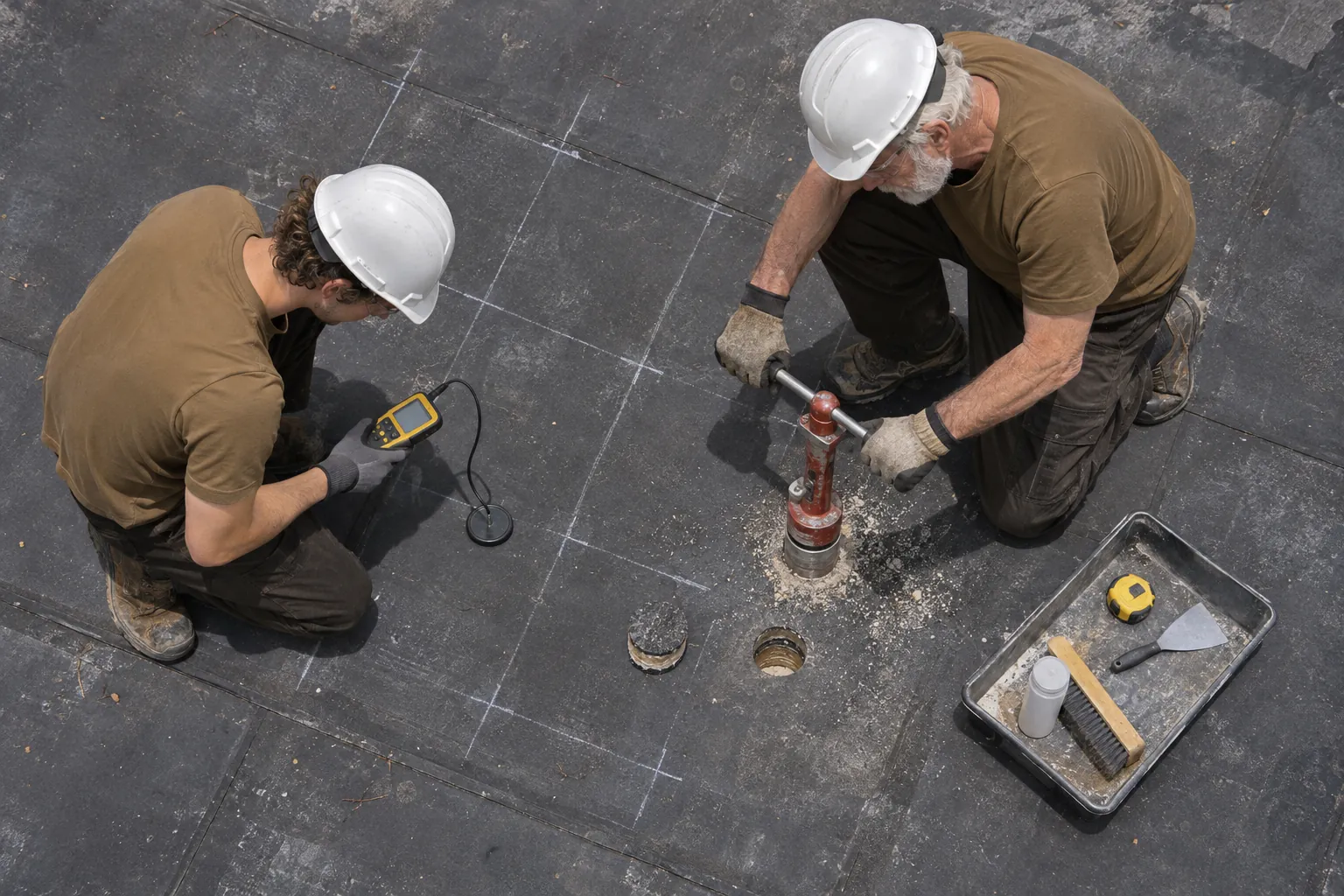
Moisture readings across the field and core cuts at the suspect spots show where insulation is wet and how far the damage reaches.
Wet insulation, failed membrane, and loose flashing come out down to a dry deck, and the edges of the cut are squared for a clean tie-in.
New insulation, tapered pieces, and a reset drain ring go in, so water heads to the outlet instead of collecting in the repair.
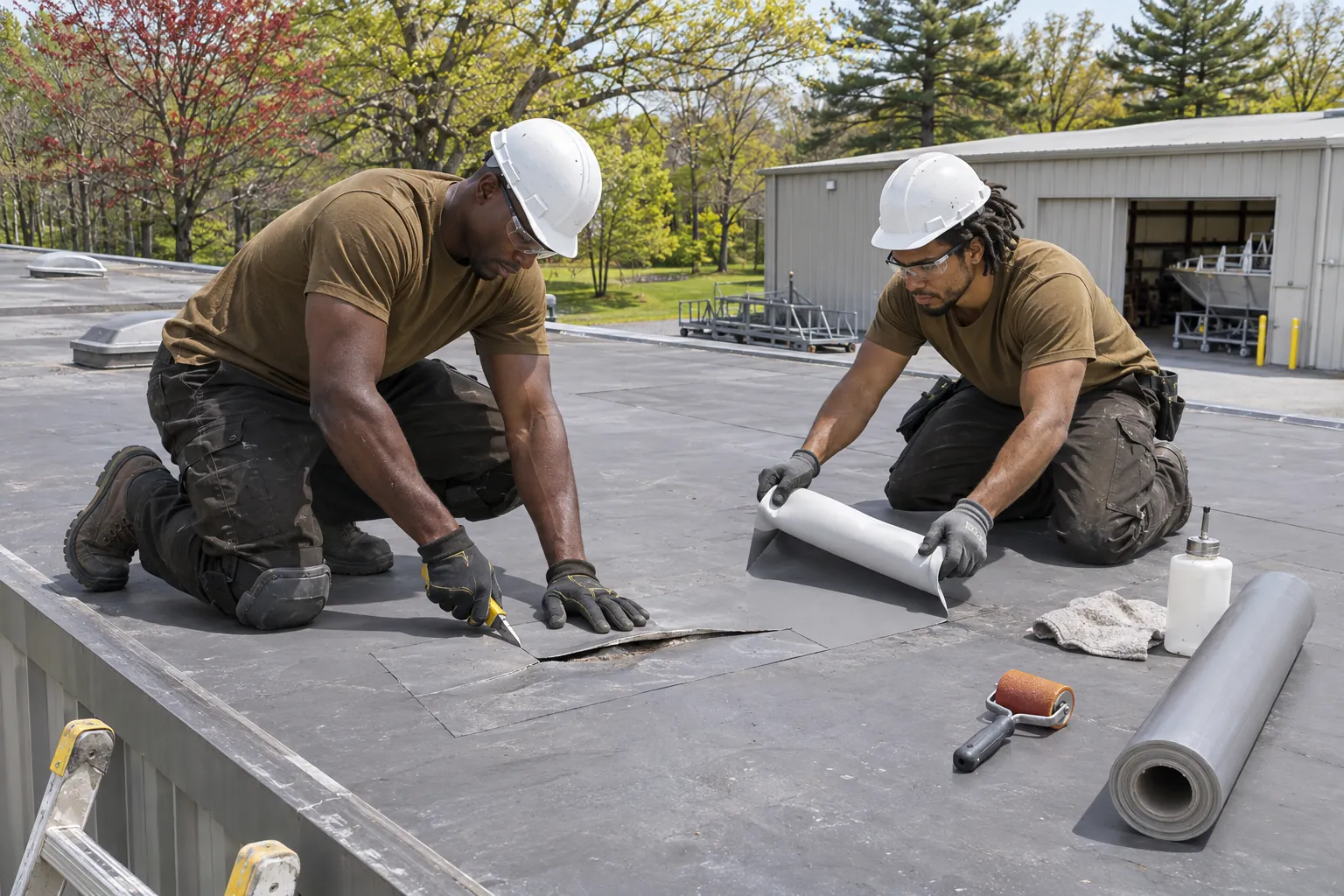
Matching membrane is welded or adhered over the section, seams are probed, and photos show the finished repair before we leave.
Flat roof calls often turn up metal, leak, or equipment problems on the same building, so these repairs come up too.
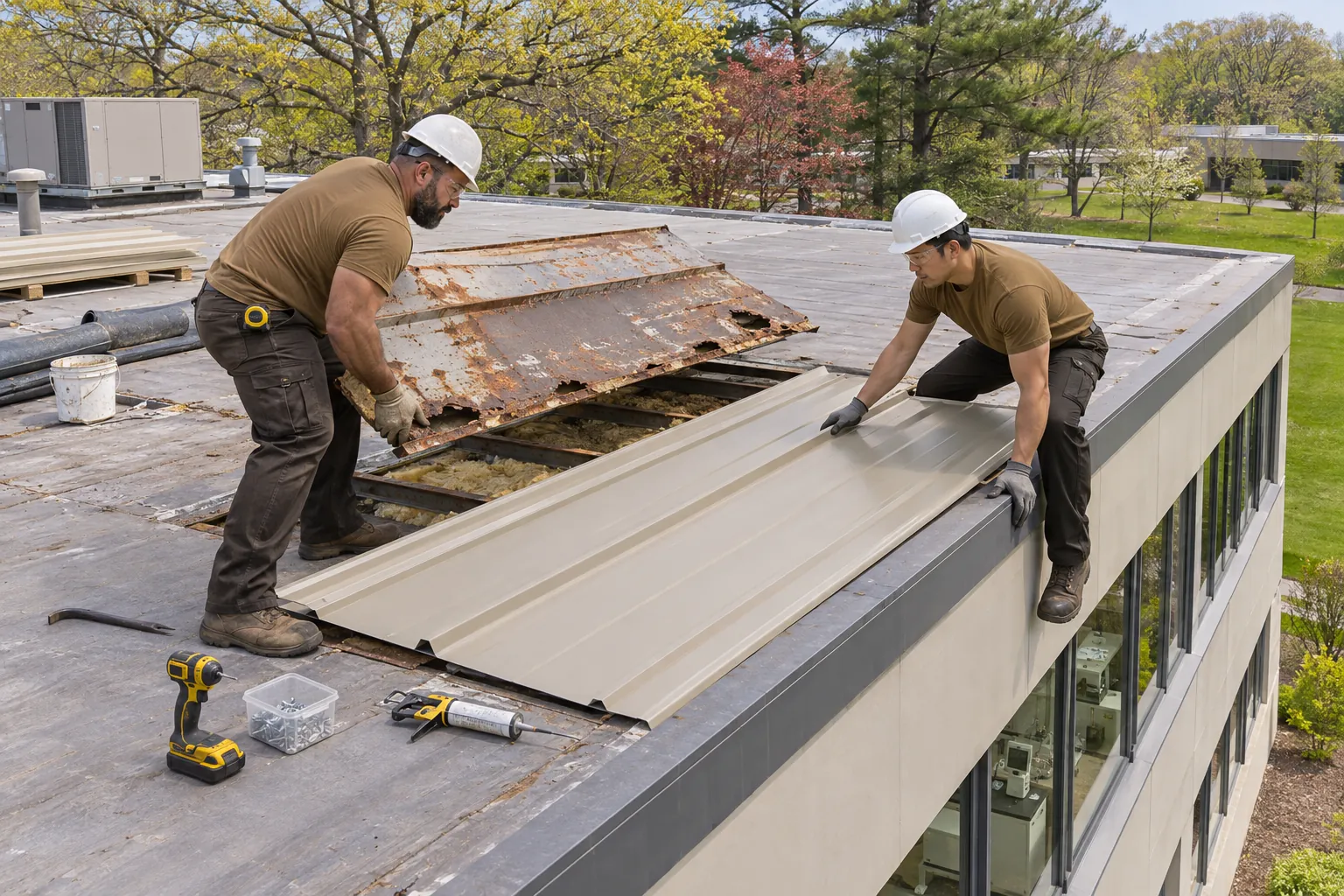
Some flat roofs sit beside metal additions; leaks at the joint between them often trace to metal end laps and loose trim.
Commercial Metal Roof Repair details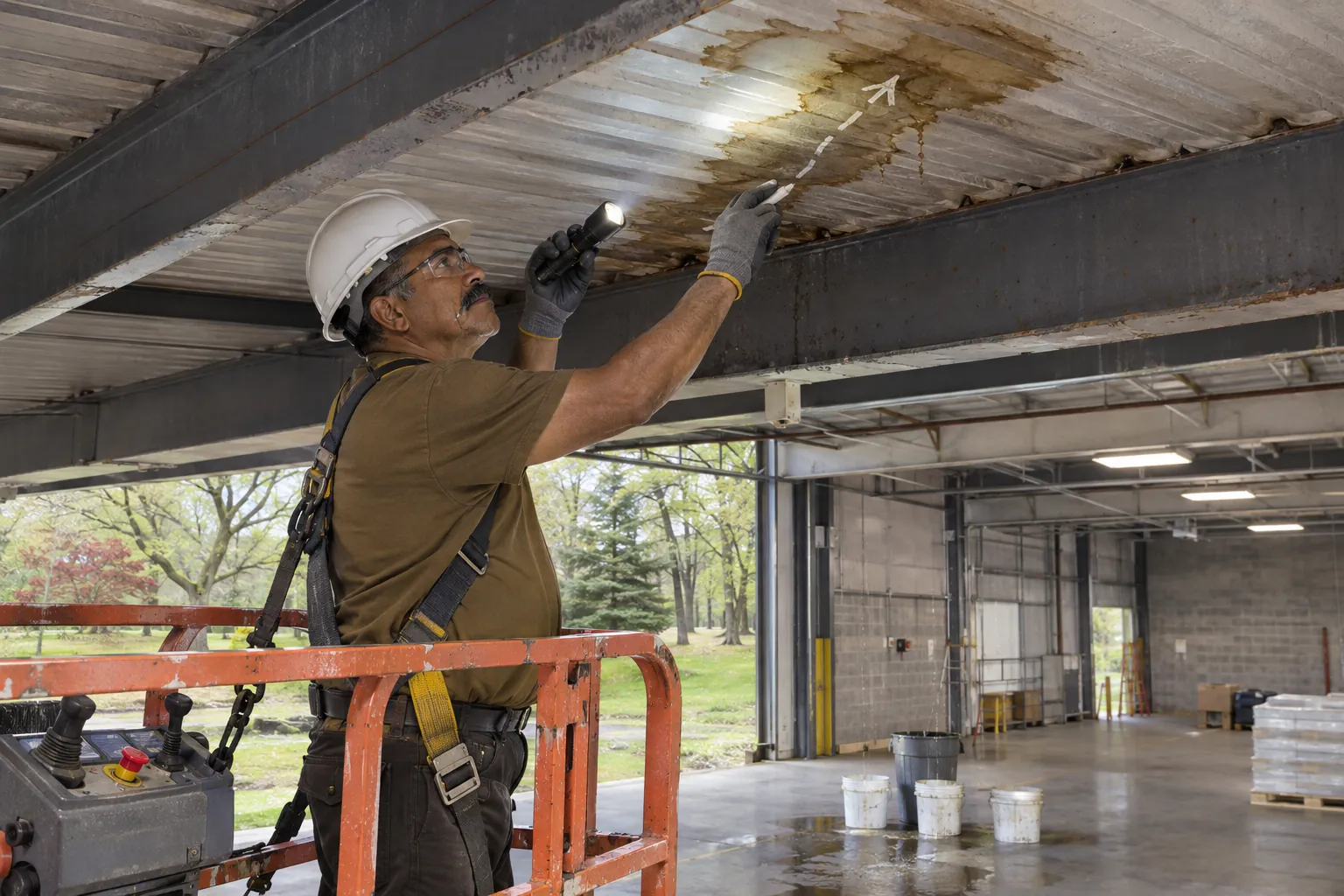
When a stain inside does not line up with an obvious opening, leak tracing finds the seam or curb that is actually letting water in.
Commercial Roof Leak Repair details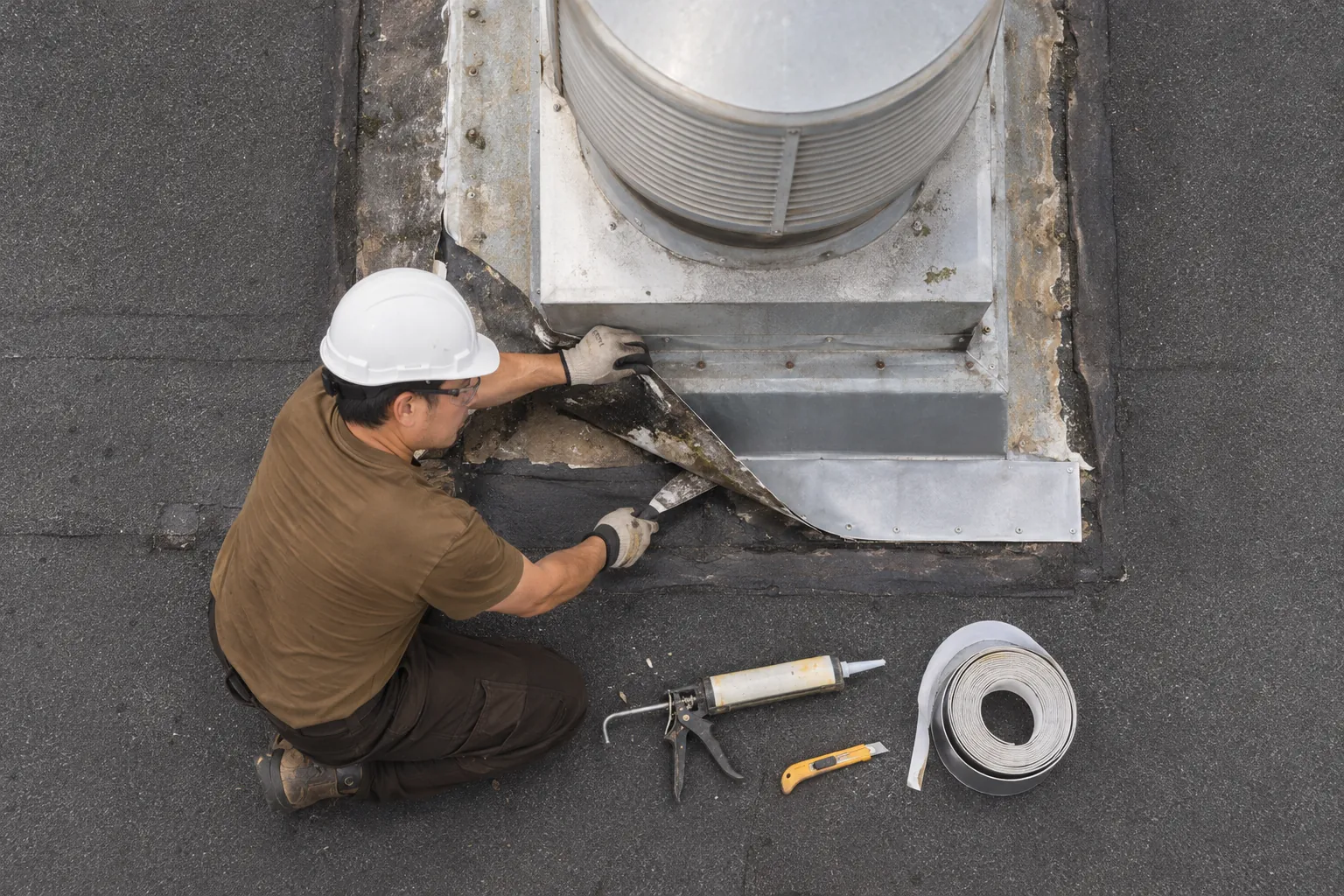
Plant roofs add fans, heavy curbs, and service traffic on top of membrane, so their repairs are staged around production.
Industrial Roof Repair detailsPatch Or Replace
Core cuts settle it. A small, dry area with one puncture or seam gets a patch. When insulation is wet across several bays, or the membrane cracks when folded, replacement is the honest call, and we show you the readings that support it.
Cost
Size of the wet area matters most, followed by how many drains, curbs, and walls need new flashing. Membrane type, the number of old layers, and access for material also change the price. Each repair is priced after the roof is inspected.
Drains
Most drain repairs finish in one visit when the bowl and the pipe below it are intact. Resetting the clamping ring, reflashing the membrane, and adding a strainer happen together. A drain set too high needs tapered insulation around it, which adds a day of work.
Storms
Perimeter edges, parapet flashing, and drains first. Wind lifts loose edge metal and blows debris into outlets, so water backs up where it normally drains away. From the ground, look for flapping metal at the roof edge, then call so the roof gets checked up close.
Ponding
Small puddles that dry within two days after rain are common on low-slope roofs. Larger ponds that linger, leave dirt rings, or grow each year point to a drain or slope problem. Those areas wear out first and deserve a repair before the membrane fails.
Tell us where water sits or drips, and we will set up a visit to check the drains, seams, and insulation in that area.